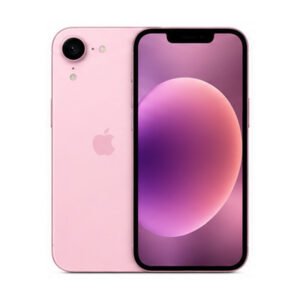

Apple iPhone Air Key Features
Apple iPhone Air Specifications
Build & Design
- Dimensions
- 156.2 × 74.7 × 5.64 mm
- Weight
- 165 g
- Build materials
- Titanium frame; Ceramic Shield back
- Available colors
- Space Black, Cloud White, Light Gold, Sky Blue
Network & Frequency
- Network technology
- GSM / UMTS / LTE / 5G
- SIM configuration
- Dual eSIM (model dependent)
- eSIM support
- eSIM only
Processor & Software
- Operating system
- iOS
- Chipset / SoC
- Apple A19 Pro
- CPU
- 6-core CPU
- GPU
- 5-core GPU
Display
- Display technology
- Super Retina XDR OLED
- Screen size
- 6.5 inches
- Resolution
- 2736 × 1260 pixels
- Pixel density (ppi)
- 460 ppi
- Refresh rate
- Adaptive up to 120 Hz (ProMotion)
- Brightness (nits)
- 1000 nits typical; 3000 nits outdoor peak
- Display protection
- Ceramic Shield 2
- Always-on display
- Supported
Memory & Storage
- Internal storage
- 256GB, 512GB, 1TB
Cameras & Video
- Rear camera setup
- 48MP Fusion main camera, f/1.6
- Telephoto camera
- Optical-quality 2× crop from main sensor
- Optical stabilization
- Sensor-shift optical image stabilisation
- Rear video recording
- 4K Dolby Vision video up to 60 fps
Connectivity
- Wi-Fi
- Wi-Fi 7
- Bluetooth
- Bluetooth 6
- USB
- USB-C
Sensors & Security
- Biometrics
- Face ID
Battery & Charging
- Battery type
- Built-in rechargeable lithium-ion
- Wired charging
- Up to 50% in around 30 minutes with suitable adapter
- Published battery-life test
- Up to 27 hours video playback (Apple rating)
Durability & Repairability
- IP rating
- IP68 (up to 6 m for 30 minutes, laboratory rating)
Additional Information
- Model numbers
- A3260, A3516, A3518, A3517
Apple iPhone Air: what matters before buying
Apple iPhone Air is an unusually thin iPhone with a single main rear camera. Its most persuasive features are 5.64 mm titanium body, A19 Pro chip and ProMotion OLED display. The buying decision is less straightforward if you care about its single rear lens, eSIM-only setup and unusually slim construction. This guide considers the actual hardware and the implications for Pakistan instead of promising performance scores that have not been measured.
The Air is a deliberate trade: exceptionally slim hardware and flagship-level responsiveness in exchange for a narrower rear-camera system. It is especially relevant to someone who values a lighter premium iPhone more than having every camera focal length. The specifications should be read as the referenced regional device, not permission to assume that every locally advertised unit is identical.
Apple iPhone Air price and variants in Pakistan
The Pakistani reference listing for the base Apple iPhone Air is Rs. 479,999. That is a reference-market price, not a guaranteed offer for every storage option or seller. A precise purchase decision still needs the storage configuration, IMEI status and warranty terms shown together.
The listed Pakistani reference price is for the base storage configuration, not a universal rate for every capacity or tax status. The 512GB and 1TB versions should be compared separately. Do not assume a sealed imported unit has the same warranty arrangements as locally distributed stock; a written invoice, clear IMEI history and genuine warranty terms matter more than a surprisingly low quotation.
Storage choices listed for the reference device include 256GB, 512GB, 1TB. More capacity normally matters most to people recording lots of video, storing offline maps or keeping large games installed. Compare equivalent capacities rather than relying on two prices attached to the same model name.
Design, screen quality and everyday handling
The central display specification is 6.5 inches with a Super Retina XDR OLED panel. A panel specification tells you about the technology and size, but comfort also depends on body width, weight, the case and your typical viewing distance. For frequent readers, a crisp screen and predictable outdoor visibility can matter more than a marketing peak-brightness figure.
The high pixel density makes text look particularly crisp, and the adaptive refresh rate matters whenever you scroll long pages or move between apps. The display has an always-on mode and an anti-reflective coating. It is a large panel in a phone that feels lighter than the dimensions suggest; people shopping principally for one-handed comfort should still handle the width before deciding.
Processor, memory and gaming expectations
The referenced version runs on Apple A19 Pro. Chip families give a useful indication of the class of work a phone is designed for, but they cannot establish an exact game frame rate, benchmark number or operating temperature on their own. Software updates, graphics presets, connectivity and heat all influence real use.
Apple pairs the A19 Pro with a six-core CPU and five-core GPU. Those are high-end components for normal app use, photo editing and demanding games, but sustained gaming comfort cannot be inferred from a processor name alone. The Air has less physical space for thermal management than a thick gaming handset, so avoid treating its chipset as a promise of identical long-session behaviour.
Cameras, photos and video
The camera system starts with 48MP Fusion main camera, f/1.6. It is worth examining what each additional rear lens actually does: an ultra-wide lens provides a genuinely broader field of view, a telephoto lens changes distant framing, and a small monochrome or depth helper does not replace either one. For selfies, video calls and casual social posting, processing and exposure control are often just as important as nominal pixel count.
The 48MP Fusion main camera provides sensor-shift optical stabilisation and an optical-quality 2x option derived from the main sensor. It does not turn the phone into a conventional multi-lens camera: there is no separate ultra-wide rear camera. Landscapes in cramped spaces and close-up creative perspectives require more planning than they would with a wider camera selection.
Battery endurance and charging trade-offs
The battery specification is expressed through manufacturer usage ratings, with Up to 50% in around 30 minutes with suitable adapter. A large capacity can reduce charging anxiety, but battery-life comparisons are meaningful only under similar workload, network and brightness conditions. Do not equate the maximum advertised charger wattage with a guaranteed constant power draw across an entire charge.
Apple gives video-playback figures rather than a public milliamp-hour figure on the specifications page. That is a useful distinction: buying guides should not convert advertised playback into a fabricated battery capacity. Apple states up to 27 hours of local video playback and fast charging to around half in 30 minutes under specified conditions. Real endurance varies with cellular signal, display brightness and usage.
Software, connectivity and local usability
The software reference is iOS, and the network specification includes GSM / UMTS / LTE / 5G. That describes the model family, not a guarantee that all carrier bands and services are enabled for every import. Whether local mobile data, voice features, eSIM activation or a regional app works can depend on the exact hardware variant and firmware.
Face ID, iOS, Apple Intelligence capability and integration with other Apple devices remain central to the experience. The iPhone Air uses eSIM rather than a removable physical SIM. Before importing or purchasing one in Pakistan, check the exact regional model, network support and whether the intended operator can activate an eSIM on that device.
Important checks for Pakistani buyers
Before paying, compare the complete model identifier with the seller listing, check the actual memory variant in settings and ask what warranty organisation will honour a claim. Confirm the handset’s IMEI and PTA position independently. Neither a product photo nor the presence of a local SIM proves approval for a particular device. A warranty described only as “shop warranty” deserves a clear written scope.
Also inspect charging compatibility and the physical condition of seals, screen, buttons and camera rings on any open-box or imported unit. Keep a dated invoice and avoid confusing preinstalled virtual-memory settings with installed physical RAM. A credible price comparison should match condition, capacity, taxes, accessories and support, not just the headline asking price.
Who should choose this model?
Choose iPhone Air for its unusually light, slim feel and premium display, especially when most photos come from the main lens. Move toward a more traditional iPhone if ultra-wide images, a thicker battery-focused design or a physical-SIM tray is a must-have.
A conventional multi-camera iPhone is more flexible for frequent ultra-wide photography.
Apple iPhone 16 Plus
Apple iPhone 16 Pro

Apple iPhone 16 Pro Max
Apple iPhone 16e
Apple iPhone 17
Apple iPhone 17 Pro
Apple iPhone 17 Pro Max