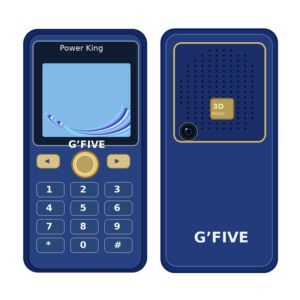
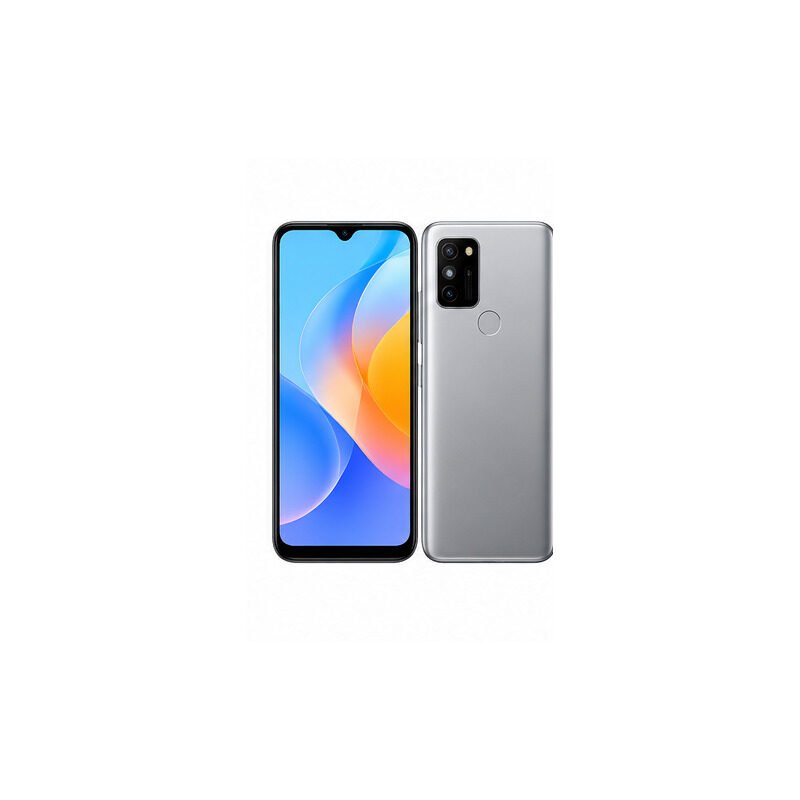
G'Five GFive Pro 16 Key Features
G'Five GFive Pro 16 Specifications
Body & Design
- Available colors
- Silver Gray, Purple, Dark Blue, Blue, White
Network & Cellular
- Network technology
- GSM / HSPA / LTE
- SIM configuration
- Dual Nano-SIM
Launch & Status
- Availability
- Out of Stock
Software & Processor
- Operating system
- Android 14
RAM & Storage
- RAM
- 4GB physical RAM + 4GB extended RAM
- Internal storage
- 64GB
- Memory card slot
- microSD
Display
- Display technology
- IPS LCD
- Screen size
- 6.528 inches
- Resolution
- 720 × 1600 pixels
Battery & Charging
- Battery capacity
- 5000 mAh
Wireless & Connectivity
- Wi-Fi
- Wi-Fi
- Bluetooth
- Bluetooth
- Positioning / GNSS
- GPS
Sensors & Security
- Fingerprint reader
- Side-mounted
Price last checked: 2026-10-30
Prices may vary by variant and local market.
GFive Pro 16: who this phone suits
The GFive Pro 16 is a budget Android handset rather than a basic calling phone. Its main attraction is a full-size 6.528-inch IPS LCD, 64GB of storage and a 5000mAh battery. It is worth considering if WhatsApp, maps, web browsing and ordinary apps matter more than premium cameras or demanding mobile games.
A Pakistan retailer lists the model at Rs. 22,999. That figure is a store listing, not proof of a nationally fixed official price or guaranteed supply. A buyer should compare the exact 64GB version, the box seal and the warranty before using that number as a purchase decision.
Screen and handling
The advertised 720 × 1600 IPS panel provides enough space for messages, maps and readable menus. Its resolution is below that of many more expensive Full HD screens, so fine text and small details are not quite as sharp when viewed closely. An IPS panel also does not imply OLED contrast or the same brightness as a premium handset.
Screen size is not everything. In a shop, raise the brightness, view text from an angle and test one-handed reach. A tall display can be comfortable for videos yet awkward for smaller hands. Check for touch dead zones, light bleed and a factory-fitted screen protector rather than judging the panel from a promotional render.
Memory, apps and the processor question
The manufacturer describes 4GB physical RAM plus 4GB memory extension with 64GB internal storage. That means the extra 4GB is not another physical RAM chip. Extended memory uses storage to help with some background tasks and does not turn a budget phone into a high-performance device.
Public technical references disagree over the precise MediaTek chip used in this model. For that reason, the safest performance assessment is modest: routine apps and web browsing are realistic uses, while intensive gaming and heavy multitasking need a demonstration on the exact retail unit. Avoid relying on advertised benchmark points for an unidentified hardware revision.
For storage planning, 64GB leaves less than the headline capacity after system files and apps. People who capture long videos or keep large offline maps should consider a microSD card, and should check the supported capacity on the phone before buying an expensive card.
Cameras and practical photo expectations
The listed camera figures vary between catalogues, including which resolution belongs to the front and rear cameras. Rather than presenting a disputed megapixel number as a settled fact, assess actual camera output from the unit offered. Open the camera in indoor light, take an outdoor sample and inspect faces and text at full size.
Camera performance depends on optics, sensor processing and stability, not merely the resolution stated on a retail card. For family photographs in daylight, consistent focus and exposure are more useful than an impressive-looking camera island. Low-light photography and stabilised video should not be assumed without evidence.
Battery and charging considerations
The 5000mAh battery is a promising capacity for a budget device, but it does not guarantee a particular screen-on time. Signal strength, display brightness, app activity and battery condition all affect endurance. The most useful shop checks are whether charging starts normally, the USB connector fits cleanly and the box contains the expected charger.
Do not assume a fast-charging wattage or wireless charging capability from the battery size. When buying an older-stock phone, inspect the battery for swelling, unusual heating or unexpectedly fast percentage drops, and favour an item with a clear replacement or warranty route.
Connectivity and Pakistan buying checks
The Pro 16 belongs to the 4G-capable Android category and supports dual Nano-SIM use. Before purchase, insert your own network SIM if the shop permits it and make a call, use mobile data and check Wi-Fi reception. A generic 4G claim does not prove every regional frequency or every operator feature will work in every location.
Verify the IMEI of the actual handset through the official PTA device verification process instead of relying on a general seller statement. Compare the IMEI on the box, dial screen and receipt. Confirm service-centre access, replacement terms and whether a storage or memory configuration differs from the product listing.
Software expectations and longevity
Android software gives a budget smartphone a wider range of possibilities than a traditional feature phone, but app compatibility changes over time. Check the Android version visible in Settings on the unit in your hand and confirm that the specific apps important to you can still be installed. Support for a banking application, a video-call service or a payment wallet cannot be established from the Android label alone.
There is no dependable public commitment here to a particular number of future operating-system upgrades. If long software support matters, compare phones with explicit update policies. Also inspect storage after installing necessary apps; a modest storage configuration can feel restrictive when several apps store downloads and cached media.
Verdict and alternatives
Choose the GFive Pro 16 when you specifically need entry-level smartphone features and Rs. 22,999 makes sense beside other available devices. It is less appropriate for someone whose priority is high-refresh gaming, advanced video recording or long guaranteed software-update support.
If you only need telephone calls and FM listening, a conventional keypad handset can be much cheaper and easier to operate. If you need better cameras or sustained multitasking, compare a recent budget Android model with clearly documented chipset and update support. The deciding factor is what you actually do every day, not the largest number printed on a box.
G'Five GFive Magic

G'Five G’Five Note 25

G'Five G’Five Note 25 Ultra
G'Five G’Five Vision 1
G'Five G’Five Vision Pro

G'Five G’Five Big Falak