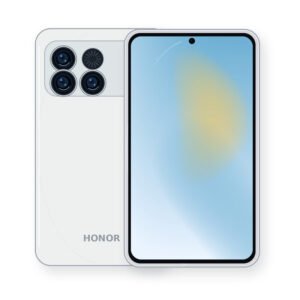
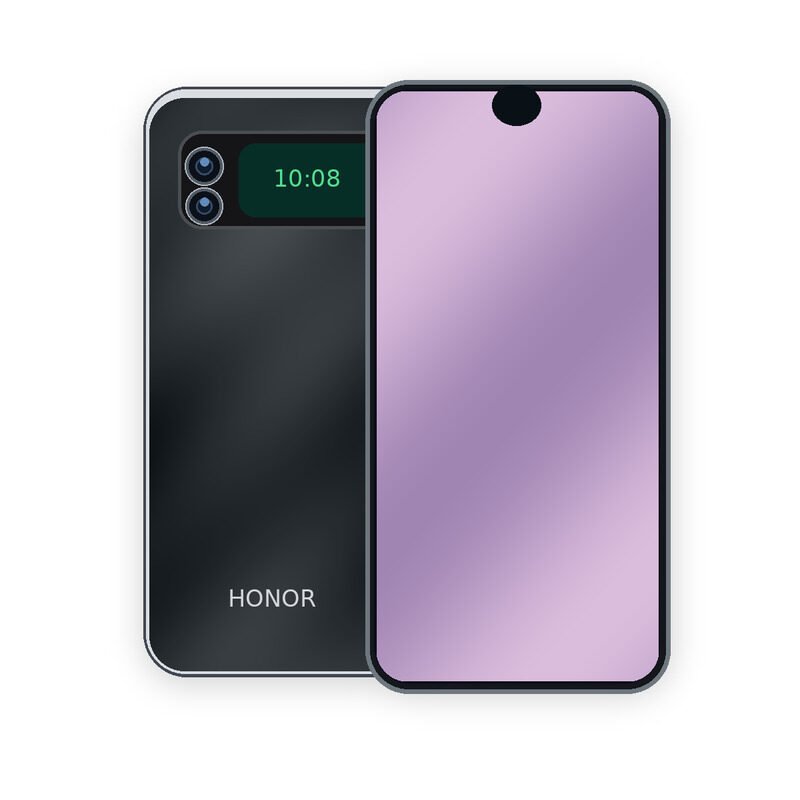
HONOR Play20C Key Features
HONOR Play20C Specifications
Body & Design
- Available colors
- Forest Green, Sunrise Gold, Midnight Black
Network & Cellular
- Network technology
- 2G / 3G / 4G
- SIM configuration
- Dual Nano SIM
Launch & Status
- Availability
- Available
Software & Processor
- Operating system
- Android 16 (Go edition)
- Chipset / SoC
- UNISOC T610 / UNISOC T615 (4GB+128GB)
- GPU
- Mali-G52 / Mali-G57 by variant
- Extra Features
- UNISOC T615 on 4GB+128GB version only
RAM & Storage
- RAM
- 3GB / 4GB
- Internal storage
- 32GB / 64GB / 128GB
- Expandable storage
- microSD card support
- Memory configurations
- 3GB RAM + 32GB storage, 4GB RAM + 64GB storage, 4GB RAM + 128GB storage
Display
- Display technology
- LCD
- Screen size
- 6.78 inches
- Resolution
- 720 x 1576
- Refresh rate
- 90Hz
- Secondary display
- 2.01-inch LCD, 240 x 296 pixels
- Extra Features
- Rear touch display
Camera & Video
- Rear camera setup
- 13MP autofocus rear camera
- Front camera
- 5MP fixed-focus
Battery & Charging
- Battery capacity
- 6000mAh typical
- Wired charging
- 15W wired
Durability & Repairability
- IP rating
- IP52
Price last checked: 2026-10-30
Prices may vary by variant and local market.
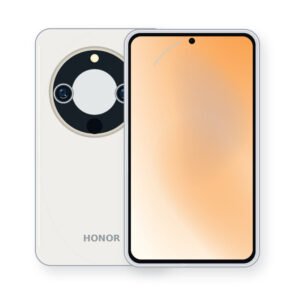
HONOR Play20C is a 4G smartphone built around a 6.78-inch LCD, UNISOC T610 / UNISOC T615 (4GB+128GB), and a 6000mAh typical battery. Its most distinctive trait is its 2.01-inch rear touch display is unusually useful for notifications, music information and composing rear-camera selfies in this class. A buyer in Pakistan should judge the exact RAM and storage version, actual local price and handset registration before deciding whether it fits the budget.
Play20C price in Pakistan and what you are paying for
The Pakistan price reference for the listed configuration is Rs 34,500, but it is not an official price guarantee. Price comparisons only make sense against the same RAM, storage, condition and warranty arrangement. A suspiciously low figure can refer to a previously used phone, an overseas variant or a phone with different network registration. This distinction matters especially when catalogues mix official pricing, expected pricing and individual shop listings.
Display and build: what the screen feels like in regular use
The Play20C uses a 6.78-inch LCD with 720 x 1576 resolution and a 90Hz refresh rate. In practical terms, screen size determines how much of a message, map or webpage can be seen at once; resolution determines how finely text and icons can be drawn. Brightness, screen calibration and software settings influence visibility as much as the diagonal measurement.
A 90Hz panel can make navigation and scrolling appear smoother than a conventional lower-refresh display when an app supports that speed. It should not be confused with a promise of high frame rates in games: graphics performance, game settings and heat management still decide the result.
Chipset, software and realistic performance expectations
The processor is the UNISOC T610 / UNISOC T615 (4GB+128GB), paired with the Mali-G52 / Mali-G57 by variant graphics unit. The chip is relevant to app opening, background activity, navigation and image processing; RAM still affects how many applications remain ready to resume. No model-specific gaming frame rates or synthetic performance scores are being asserted here because those require documented testing of the exact configuration.
This chip is intended primarily for calling, messaging, web browsing, navigation, videos and everyday apps. Light games may be reasonable at moderate settings, but it would be unfair to equate it with the Snapdragon-equipped Magic7 family. A buyer who plays graphics-heavy titles for long periods should prioritise stronger hardware instead.
The software baseline is Android 16 (Go edition). Software versions are not guaranteed upgrade promises. The availability of particular applications, security patches and features depends on the individual device and its software channel, which is especially relevant for imported or older handsets.
RAM, storage and which configuration makes sense
Known device configurations include 3GB RAM with 32GB storage, 4GB RAM with 64GB storage, 4GB RAM with 128GB storage. Physical RAM and built-in storage serve different purposes: RAM is working space for open apps, while storage holds photos, downloaded files, installed applications and offline videos. A model with more storage is often worth prioritising if the phone will be used for many school documents or large media downloads.
Consider the exact configuration rather than selecting the largest advertised number automatically. The smallest storage variant leaves less room as applications and downloaded data accumulate, while the bigger option matters most for people who keep files locally. If expandable storage is available, it usually suits media and documents better than demanding apps.
On this particular model the 4GB RAM and 128GB storage variant uses a UNISOC T615; the other listed versions use a UNISOC T610. A change in processor across storage variants is significant. Before comparing reviews or asking about gaming, establish which version is actually being offered.
Cameras: useful capabilities and clear limitations
The principal rear setup includes a 13MP autofocus rear camera. The front camera is 5MP fixed-focus. Those figures describe hardware and capture options; they are not direct evidence that one phone will always take better photographs than another. Lens quality, exposure, stabilization, subject movement and processing matter enormously.
Without a dedicated optical telephoto lens, zooming mainly means cropping from the main camera and losing detail as magnification increases. For documents, receipts and people in good light, the primary sensor is the important camera. Check sample results from the exact model rather than assuming a higher megapixel count automatically guarantees clearer photos.
The camera arrangement is aimed at straightforward photography rather than specialized zoom or advanced cinematic features. For video, steady hands and adequate light are important. A named capture mode does not by itself prove a particular recording quality, and no camera samples are presented as if WhatMobilez personally tested the handset.
Battery, charging and daily power management
The published battery specification is 6000mAh typical, with 15W wired charging. Capacity is a useful comparison point, but it is not a dependable measure of exact hours of screen time. Signal strength, refresh rate, brightness, video usage and the age of the battery can change endurance substantially.
For a busy day, a substantial battery can reduce charging anxiety, but the best habit is to keep brightness sensible and watch which applications run continuously in the background. If the charging figure is not confirmed for the exact retail unit, do not assume that a third-party adapter will achieve a particular speed.
The dual-screen design makes this model unusual: brief checks of the rear display can sometimes avoid activating the large front screen. However, the second display is a convenience feature, not proof of extraordinary measured battery life.
Network support, PTA checks and ownership in Pakistan
The Play20C is a 4G LTE phone. Local connectivity depends on the supported radio bands, the SIM package and the coverage of the operator at the place the device is used. Do not assume that the same-looking overseas version has identical band support or official warranty coverage. If the device is imported, verify its exact model identifier before relying on retailer descriptions.
PTA registration is a separate issue from manufacturer identity and phone specifications. Verify the IMEI status through the official Pakistan registration process before purchasing or activating an unfamiliar handset. A description such as “patch approved” is not equivalent to documentary proof of official PTA approval. For dual-SIM devices, each IMEI should be checked independently.
The 4GB+128GB version uses a UNISOC T615, while other listed versions have a UNISOC T610; treating them as one chip would be misleading. The practical next step is to compare the full cost of the correct configuration, working SIM functionality, receipt and return terms before treating an offer as good value. A cheap handset with registration or service complications can be more expensive to own than a properly documented alternative.
How it compares with nearby HONOR alternatives
Within HONOR’s budget range, the X5b and X5b Plus emphasise basic battery life and the Helio G36. The X5c family moves to a Helio G81, a larger screen and newer software, while X6b moves to Helio G85 and 35W charging. Play20C is a separate choice because its rear mini-display is more distinctive than a small difference in camera pixels.
The right comparison is based on the feature you will use: a clearer camera, more internal storage, better display behavior or faster charging. Its 2.01-inch rear touch display is unusually useful for notifications, music information and composing rear-camera selfies in this class. For the opposite trade-off, remember that the 4GB+128GB version uses a UNISOC T615, while other listed versions have a UNISOC T610; treating them as one chip would be misleading.
Is the Play20C worth considering?
The Play20C is most sensible for budget buyers who value a large battery and an unusual second screen more than high display sharpness. Choose it because the actual listed hardware matches those priorities, not because a store description claims spectacular performance. The specification profile makes its strengths and compromises clear without inventing game scores, camera rankings or personal testing experiences.
Before making a decision, compare the physical device against the advertised storage version, verify its IMEI, check whether the box and accessories match, and evaluate the local warranty. With those checks complete, the Play20C can be judged on what it actually offers rather than on a generic price headline or a marketing memory number.

HONOR Win Pro

HONOR Play 70C
HONOR Play 10A

HONOR X60 GT
HONOR GT Pro

HONOR 600 Pro
HONOR X70