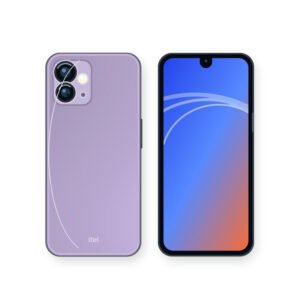
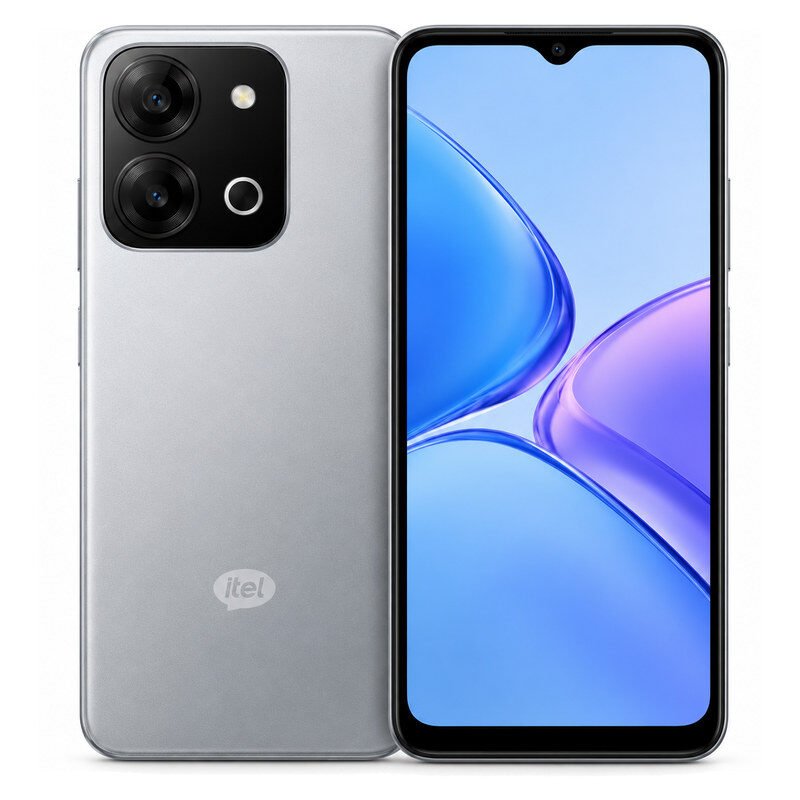
itel A300C Key Features
itel A300C Specifications
Body & Design
- Dimensions
- 8.49 mm thick
- Available colors
- Comet Orange, Lavender Purple, Classic Black, Silver Mist
Network & Cellular
- Network technology
- GSM / HSPA / LTE
Launch & Status
- Availability
- Available
Software & Processor
- Operating system
- Android 16 (Go edition)
- Chipset / SoC
- Unisoc T7100
RAM & Storage
- RAM
- 3GB / 4GB physical
- Internal storage
- 64GB / 128GB
- Memory configurations
- 3GB RAM + 64GB storage; 4GB RAM + 64GB storage; 3GB RAM + 128GB storage; 4GB RAM + 128GB storage
Display
- Display technology
- LCD
- Screen size
- 6.6-inch
- Resolution
- 720 × 1612
- Refresh rate
- 90Hz
- Brightness (nits)
- 480 nits typical
Camera & Video
- Rear camera setup
- 8MP main
- Front camera
- 5MP
Battery & Charging
- Battery capacity
- 6000mAh (typical)
- Wired charging
- 18W USB-C
Wireless & Connectivity
- USB
- USB Type-C
- Infrared port
- Infrared remote control
Sensors & Security
- Face unlock
- Supported
- Biometrics
- Side fingerprint and face unlock
Prices may vary by variant and local market.
Buying assessment
itel A300C is a low-cost endurance phone with everyday conveniences rather than demanding gaming hardware. Its defining points are 6000mAh battery, 90Hz screen and an infrared remote feature. The sensible way to assess this model is to match those strengths with the work you actually do, rather than selecting it from the A-series name alone.
There are limits worth putting beside those strengths. The camera sensors are basic, and 18W charging is modest for a 6000mAh battery. These are purchasing trade-offs, not results of independent laboratory testing. The detailed product table above is useful for exact component labels; this guide explains what those labels mean in normal use.
Pakistan price and the right variant
There is no sufficiently verified Pakistan selling price for the exact itel A300C configuration described here. International catalogue amounts and estimates do not establish a local selling price. Use the specification details as a product reference and verify model identity and applicable warranty before treating an import listing as local stock.
Variant check: itel lists 3+5GB and 4+8GB memory combinations; only the first figure is physical RAM. Compare the printed model identifier, physical RAM and internal storage, since names in different countries can refer to different products. Imported sets may also have different warranty routes and supported cellular bands.
Screen, size and handling
The phone has a 6.6-inch screen, 90Hz with a stated 720 × 1612 resolution. That gives ample physical space for reading messages, looking at maps and watching video. Resolution and refresh rate answer different questions: one governs the number of screen pixels, while the other affects how frequently the image can update.
For readers who spend long sessions scrolling social feeds, the screen characteristics matter as much as a camera megapixel figure. Infrared remote control, UltraLink Bluetooth calling and Dynamic Bar. A bright-screen claim should not be mistaken for an independent measurement in daylight. Also consider whether the phone’s size fits a pocket, a motorcycle mount or single-handed use.
Processor, software and daily responsiveness
The processing platform is the Unisoc T7100, paired with Android 16 (Go edition). For calls, messages, navigation and ordinary streaming, the combination gives a reasonable basis for judging the phone’s intended class. It does not establish a measured gaming frame rate, an app-launch time or guaranteed long-term speed.
Smoothness depends on memory headroom, storage fill level, background activity and the particular app. Downloading many large games or switching between numerous demanding tasks can expose limits that are not obvious from an octa-core label. The more useful question is whether your regular apps are light or demanding.
An infrared remote control is unusual in this class and can be useful with compatible household appliances. Its usefulness depends on the appliance and the supported control app, not merely the presence of the infrared emitter.
RAM and storage: read the numbers carefully
The documented memory offering is 3GB / 4GB physical, with 64GB / 128GB of storage. These figures describe configurations rather than a promise that every shop stocks all of them. Storage is for applications, files and downloads; RAM affects how much active work the phone can keep ready without repeatedly reloading it.
A 64GB unit can be workable for messaging and occasional photos but fills faster once application updates, media and offline maps accumulate. A larger version is attractive for people who keep video, large WhatsApp histories or downloaded course material. Always distinguish actual onboard memory from a software RAM-extension feature.
Before transferring data from an older handset, inspect the remaining free space on that device and decide whether a memory card is needed. Where the manufacturer explicitly supports expandable storage, it can help with media files, but it is not a replacement for adequate built-in space for applications.
Photo and video expectations
The camera hardware is 8MP main at the back and 5MP at the front. This specification describes the sensors and stated functions; it cannot establish how a particular image will look under streetlights or indoors. Camera processing, focus, motion and lighting can affect the result more than headline megapixels.
The stated video capability is not sufficiently documented for this exact regional variant. Even when Full HD capture is supported, the phone should not be described as having 4K video or optical image stabilization unless the manufacturer actually lists those features. Buyers who record school events or family clips should check recording modes and available storage.
Document photography and QR-code scanning usually place different demands on the camera than fast-moving children, pets or night scenes. An autofocus main lens is helpful for close subject framing where provided, while an entry-level fixed-focus selfie camera needs more care with distance and lighting.
Battery, charging and practical endurance
A 6000mAh battery is paired with 18W USB-C. Capacity describes the energy reserve, while a charging wattage describes a maximum supported power profile. Neither number by itself proves how many hours of screen-on time a particular person will achieve or how quickly every third-party adapter will charge the device.
Poor cellular reception, extended hotspot use, navigation and high screen brightness can shorten battery life. More basic activities usually place less demand on the cell. If power reliability matters, compare the battery capacity and charging protocol together rather than choosing the largest battery alone.
Use compatible charging equipment, keep the charging connector clean and avoid leaving the phone in direct heat during long sessions. Fast charging is particularly convenient for short breaks, but the benefit depends on the correct power adapter and cable.
Connectivity and ownership in Pakistan
The documented cellular generation is 4G LTE. The phone also uses USB Type-C; additional wireless and biometric features vary by the documented regional model. Local SIM performance depends on supported frequency bands, signal quality, operator provisioning and the condition of the network, not just a 4G or 5G label.
For a handset being brought into Pakistan from overseas, check its exact model number against the box and phone settings. PTA compliance is device and IMEI specific; a manufacturer’s international specification does not prove that a particular unit is registered or approved. Verify the actual device through official channels before making a local-network assumption.
Warranty coverage matters for screens, ports, charging equipment and batteries. An imported unit may not receive identical support to a locally distributed model. Keep the invoice and confirm what the claimed warranty actually covers.
Strengths, compromises and alternatives
The UltraLink Bluetooth feature is another specific reason to consider A300C. It is not a substitute for mobile-network calling in all circumstances: both parties need compatible devices and range depends on obstacles and surroundings.
The strongest case for this model is 6000mAh battery, 90Hz screen and an infrared remote feature; its clearest reservation is this: The camera sensors are basic, and 18W charging is modest for a 6000mAh battery. Neither point makes the handset universally good or bad. A better-value alternative depends on the price of the exact memory version and the features your routine genuinely uses.
For comparison, itel A300+ has a larger 7000mAh battery and rear screen; the A50C uses a smaller 4000mAh battery. These comparisons focus on the official equipment differences rather than speculative benchmark rankings, camera samples or promises about future software support.
Who should choose it?
Choose itel A300C when its particular mix of 6000mAh battery, 6.6-inch screen, 90hz and 3gb / 4gb physical memory suits your normal work. It is easier to make a sound decision after separating essential features from desirable extras. A user who mainly calls, messages and navigates may value endurance more than a higher camera count.
For a Pakistan-based comparison of a simpler budget Android device, see our itel A50 overview. Its different battery and memory profile helps show what is gained or lost between entry-level configurations.
itel City 200s
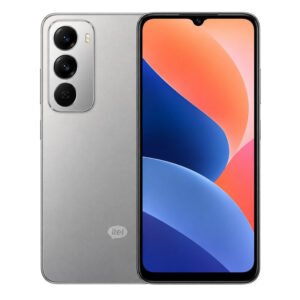
itel City 100
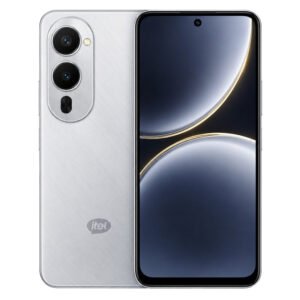
itel City 200

itel A70
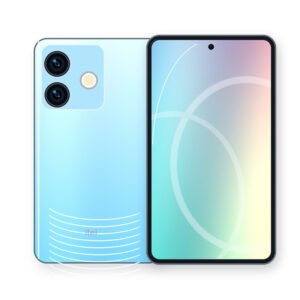
itel A80

itel A90
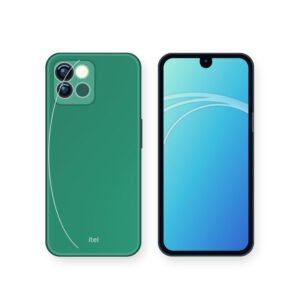
itel A50Cs