

POCO X8s Key Features
POCO X8s Specifications
Body & Design
- Dimensions
- 151.1 × 71.8 × 8.06 mm
- Weight
- 187g
- Available colors
- Black / White / Blue
Network & Cellular
- Network technology
- GSM / HSPA / LTE / 5G
- 5G bands
- 5G SA/NSA
- SIM configuration
- Dual Nano-SIM / eSIM in supported markets
Software & Processor
- Operating system
- Android 16
- User interface
- Xiaomi HyperOS 3
- Chipset / SoC
- Qualcomm Snapdragon 7 Gen 4
RAM & Storage
- RAM
- 8GB / 12GB
- RAM type
- LPDDR4X
- Internal storage
- 256GB / 512GB
- Storage technology
- UFS 2.2
- Memory configurations
- 8GB+256GB; 12GB+512GB
Display
- Display technology
- 6.35-inch LTPO AMOLED
- Screen size
- 6.35 inches
- Resolution
- 2656 × 1220
- Refresh rate
- 1–120Hz adaptive
- Touch sampling rate
- Up to 480Hz in supported games
- Brightness (nits)
- Up to 3500 nits peak
- HDR formats
- Dolby Vision, HDR10+
- Display protection
- POCO Shield Glass
Camera & Video
- Rear camera setup
- 50MP Light Fusion 800 OIS + 50MP telephoto + 8MP ultra-wide
- Ultrawide camera
- 8MP, f/2.2
- Telephoto camera
- 50MP, 57mm equivalent, about 2.5× optical
- Optical stabilization
- Yes, Light Fusion 800 main camera
- Rear video recording
- 4K at 30fps
- Front camera
- 20MP
- Front video recording
- 1080p at 30/60fps
Battery & Charging
- Battery capacity
- 6330mAh
- Battery type
- Silicon-carbon
- Wired charging
- 100W
- Reverse charging
- 22.5W
Audio
- Speakers
- Stereo speakers; Dolby Atmos
Wireless & Connectivity
- Wi-Fi
- Wi-Fi 6
- Bluetooth
- 5.4
- NFC
- Yes (market-dependent)
Sensors & Security
- Fingerprint reader
- Ultrasonic in-display fingerprint
Gaming
- Cooling system
- POCO 3D IceLoop
Durability & Repairability
- IP rating
- IP68
- Glass / frame durability
- POCO Shield Glass
Price last checked: 2026-10-30
Prices may vary by variant and local market.
POCO X8s is a 5G smartphone with a 6.35-inch LTPO AMOLED, Qualcomm Snapdragon 7 Gen 4 processor, 6330mAh battery and 100W charging. Its strongest reason to consider it is 6.35-inch compact display, ip68 and 2.5× optical telephoto camera, while the main decision comes down to the balance between screen size, imaging flexibility and local buying terms.
POCO X8s price in Pakistan and buying position
A confirmed Pakistan retail price has not been established for this exact model and configuration. Expected figures circulating in catalogues are not the same as a retailer quotation for a device you can purchase. For that reason, this profile does not treat a speculative rupee amount as its price. Check the physical RAM and storage, seller warranty, PTA registration and regional model identification before comparing offers.
This page compares device information rather than offering a phone for sale. Match any quote to the exact POCO X8s variant, its PTA status and written warranty. Similar-looking devices and regional variants can have different hardware.
Screen, design and everyday handling
The 6.35-inch LTPO AMOLED has a stated resolution of 2656 × 1220 and a 1–120Hz adaptive refresh rate. Refresh rate affects how smoothly the interface moves when scrolling and navigating supported apps; it does not increase image sharpness or guarantee that games will run at the same frame rate. Screen type and brightness can matter more than the refresh number when reading outdoors, following maps or watching video.
The narrower 71.8mm width and 187g weight make this the easiest X8 option to hold. The compact 6.35-inch LTPO screen is ideal for people who dislike carrying a wide phone.
The AMOLED technology produces dark blacks and strong contrast, which suits subtitles, night-mode reading and films. POCO Shield Glass provides an additional protection consideration, but any protective specification should be understood as a tested capability rather than immunity from scratches or impacts.
Processor, applications and realistic performance
The POCO X8s uses the Qualcomm Snapdragon 7 Gen 4 chipset. The Snapdragon 7 Gen 4 uses a 4 nm process and pairs with POCO 3D IceLoop cooling. However, the official listing specifies LPDDR4X RAM and UFS 2.2 storage, so its memory subsystem is less aggressive than the X8 Pro even if the chip is efficient for everyday tasks.
If you regularly keep navigation, messaging and work apps active together, installed RAM and storage speed both influence how quickly the phone switches between tasks. A higher-resolution screen also gives the chipset more pixels to render in games. Read official graphics support as a feature claim, not as a verified frame-rate test for a particular game or update.
Cooling, software background limits and ambient temperature can change sustained performance. Without a controlled test of the exact retail version, claims about benchmark totals, thermal behavior and frame rates would be guesses. For mobile gaming, assess whether a stable frame rate at realistic graphics settings is more useful to you than a larger advertised number.
RAM, storage and software differences
The documented memory options include 8GB / 12GB RAM and 256GB / 512GB storage. The exact combinations matter more than a simple maximum figure: not every RAM amount is sold with every storage capacity. For photos, offline maps, downloaded lessons and app updates, usable storage is lower than the number printed on the packaging because the operating system occupies part of it.
This model uses LPDDR4X memory and UFS 2.2 storage. These are physical hardware technologies, unlike virtual memory settings that borrow some phone storage. Its supplied software interface is Xiaomi HyperOS 3; feature availability and updates can vary by region and build.
More storage helps with offline files and video. Check software-update support and application compatibility for your particular market variant.
Main camera, selfie photography and video
The reported rear camera configuration is 50MP Light Fusion 800 OIS + 50MP telephoto + 8MP ultra-wide, while the front camera is 20MP. Its photography system is unusually versatile within the family. The 50MP main sensor is joined by a 50MP telephoto camera with a 57mm equivalent focal length, giving approximately 2.5× optical reach, plus an 8MP ultra-wide. That is a meaningful distinction from the two-lens X8 Pro.
Official video specifications include 4K at 30fps. Resolution and frame rate describe the recording format, not the smoothness of handheld movement, autofocus reliability or night detail. Optical stabilization on the main lens is valuable for reducing shake, but it cannot replace sufficient light or guarantee sharp moving subjects.
Consider where you take photographs. Outdoor daylight generally gives small phone sensors a better opportunity to produce sharp images than dark indoor scenes. A dedicated telephoto or ultra-wide sensor changes framing possibilities; digital zoom and software scene labels do not automatically add equivalent camera hardware.
Battery capacity, charging and daily endurance
A 6330mAh battery and 100W are specified for this phone. Battery capacity indicates the energy available, but real runtime depends on signal strength, screen brightness, refresh settings, background traffic and the apps used. Video streaming on Wi-Fi and navigation on a weak mobile signal can have markedly different power demands.
POCO X8s also supports up to 22.5W wired reverse charging to compatible accessories. The maximum charging rating does not mean the device receives that power continuously; temperature, charger protocols and battery level affect the charging curve. Use a compatible charger and cable, and do not assume every regional box includes a power adapter.
A practical battery comparison looks at your routine, not marketing endurance slogans. Users who spend hours on mobile data, camera use or maps will value a different balance from those mainly receiving calls and messages. Check charging-port condition on an older unit and avoid using a phone while a damaged cable is connected.
Connectivity, PTA status and Pakistan-specific checks
This model supports 5G alongside 4G services and uses Dual Nano-SIM / eSIM in supported markets. Wireless features documented for this version include Wi-Fi 6, Bluetooth 5.4. 6.35-inch compact display, IP68 and 2.5× optical telephoto camera. Having a 5G capable modem does not guarantee 5G coverage or an active local service plan.
A handset bought in Pakistan should be assessed for its actual IMEI registration and local network compatibility, rather than assuming every imported unit is PTA approved. Confirm the specific device status through the authorized registration route, and check that the SIM slots, data bands and warranty apply to the unit in hand. Global specification pages cannot establish an individual device’s approval.
Regional NFC and eSIM functionality depends on the exact variant and carrier. An IP rating represents laboratory resistance, not a guarantee that liquid damage receives warranty coverage.
Advantages, limitations and sensible alternatives
The clearest advantage here is 6.35-inch compact display, ip68 and 2.5× optical telephoto camera. Its compact body, telephoto camera and 100W charging are compelling, but the slower UFS 2.2 storage is a real compromise beside the Pro and Pro Max.
Within the POCO X8 family, think about the decision in terms of personal priorities rather than the largest suffix: the standard X8 emphasizes battery capacity; the X8 Pro brings a faster performance and storage combination; the Pro Max prioritizes heavy workloads and a very large battery; and the X8s trades screen size for a more compact body and genuine telephoto optics. Their differences are large enough that a cheaper variant can be the better match.
Before deciding, compare the physical RAM, the exact screen, the camera arrangement, the charging cable and the written local warranty. These checks distinguish useful features from copied specifications. An attractive price means little without clear product and warranty details.
Who should consider the POCO X8s?
POCO X8s is most sensible for a buyer who specifically values 6.35-inch compact display, ip68 and 2.5× optical telephoto camera and accepts the trade-offs described above. A buyer who wants different priorities should compare its nearby family members on verified hardware, not on assumed reputation or a speculative rupee figure.
Use the WhatMobilez phone directory to compare other models by your budget and practical requirements. Specifications describe what a phone supports; they do not replace examining the exact device before buying, particularly when regional variants or retailer information disagree.
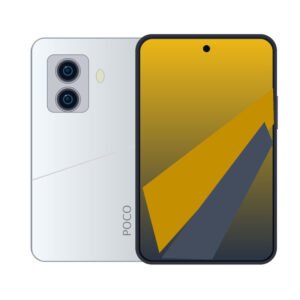
POCO X8

POCO X8 Pro

POCO X8 Pro Max

POCO F7

POCO F6 Pro
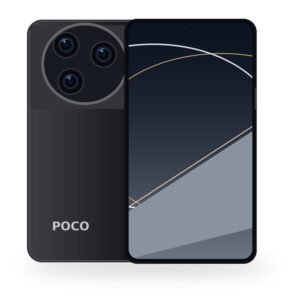
POCO F7 Pro

POCO F7 Ultra