Samsung Galaxy A26 5G Key Features
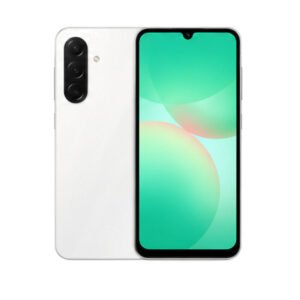
Samsung Galaxy A26 5G Specifications
General & Launch
- Announcement date
- 2 March 2025
- Release date
- 28 March 2025 (global launch)
- Availability
- Available
- Markets / regions
- Global launch; specific countries vary
- Regional model codes
- SM-A266B
Processor & Software
- Operating system
- Android 15
- User interface
- One UI 7
- Software update commitment
- up to six operating-system generations and six years of security support
- Chipset / SoC
- Samsung Exynos 1380
Performance Benchmarks
768,287
AnTuTu
Version v11
Total scoreAnTuTu
Version v11
Geekbench 6
Version v6
Scores reflect the listed benchmark versions; results from different tests are not directly comparable.
Build & Design
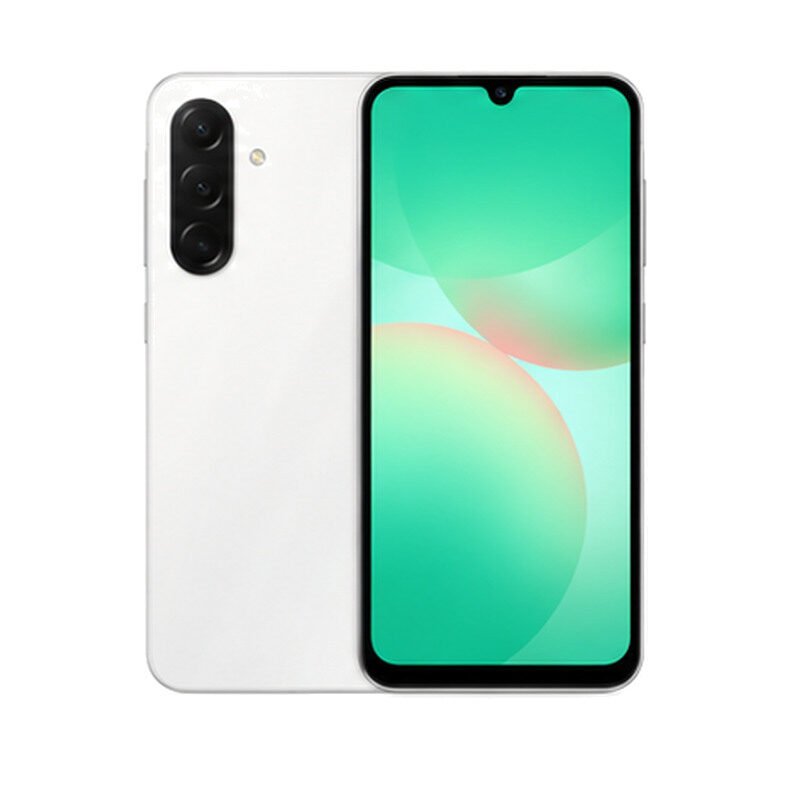
- Dimensions
- 164.0 × 77.5 × 7.7 mm
- Weight
- 200 g
- Available colors
- Black, White, Mint, Peach Pink
Display
- Display technology
- Super AMOLED
- Screen size
- 6.7 inches
- Resolution
- 1080 × 2340
- Refresh rate
- 120 Hz
Network & Frequency
- Network technology
- 2G / 3G / 4G LTE / 5G
- SIM configuration
- Dual nano-SIM
Memory & Storage
- RAM
- 8GB
- Internal storage
- 256GB
- Memory card slot
- microSDXC (hybrid slot)
Cameras & Video
- Rear camera setup
- 50 MP wide (OIS) + 8 MP ultrawide + 2 MP macro
- Ultrawide camera
- 8 MP
- Macro / depth camera
- 2 MP
- Optical stabilization
- Yes, main camera
- Rear video recording
- 4K at 30 fps
- Front camera
- 13 MP
Connectivity
- Wi-Fi
- Dual-band Wi-Fi
- Bluetooth
- 5.3
- Positioning / GNSS
- GPS
- USB
- USB Type-C
Sound & Multimedia
- Speakers
- Mono speaker
- Stereo speakers
- No
Durability & Repairability
- IP rating
- IP67
Additional Information
- Model numbers
- SM-A266B
Battery & Charging
- Battery capacity
- 5000 mAh (typical)
- Wired charging
- 25 W wired
- Removable battery
- No
Samsung Galaxy A26 5G is built around IP67 protection, 120 Hz AMOLED, OIS, 4K video and longer software maintenance. The Galaxy A26 5G has several tangible upgrades over the A17 class: a 120 Hz Super AMOLED panel, an Exynos 1380 chip, an optically stabilised 50 MP camera and IP67 dust-and-water resistance. Its 4K video recording and long update policy make it a more complete mid-range option. The buying decision is less about the longest specification list and more about which differences will be noticeable when making calls, viewing videos, using navigation and storing photos.
Price in Pakistan and the version to check
Pakistan reference price: PKR 94,999, based on the WhatMobile listing for the applicable configuration. This is a listed price, not a promise that every shop will charge the same amount. Storage, warranty channel and promotions can change the quote.
The available family configurations include 8GB RAM and 256GB storage in the documented product range. That does not mean every combination is sold in Pakistan. Start by checking the RAM printed on the retail label, not advertising that combines physical RAM with temporary memory extension. Also check whether the storage amount corresponds to the exact device being quoted.
Screen quality, size and daily viewing
The 6.7-inch Super AMOLED uses 1080 × 2340 resolution and a 120 Hz maximum refresh rate. The AMOLED panel can produce deeper blacks and stronger contrast than a basic LCD, which helps movies, dark interfaces and reading against a dark background.
The 120 Hz option can make scrolling feel more fluid than 60 Hz or 90 Hz on supported interfaces. That does not mean every app or game renders at 120 frames per second; performance and refresh behaviour are separate things.
Processor, everyday speed and storage
The Samsung Exynos 1380 is the documented platform for the version described here. For typical Android tasks such as WhatsApp, banking, browser tabs, online classes, streaming and map navigation, this hardware class is aimed at responsive everyday use. Heavy games, high graphics presets and sustained multitasking put more pressure on the processor, memory and cooling than light tasks do.
8GB is the documented memory range, with 256GB listed as the storage range. Apps consume RAM while they run; photos, downloads and installed software consume storage. Choosing more storage is usually more useful than buying a small-capacity variant and relying on a memory card for everything. System software occupies part of the advertised total.
Samsung Galaxy A26 5G supports microSDXC (hybrid slot) storage expansion. A microSD card can help with compatible media files and offline content, but it is not a substitute for adequate internal storage. Some SIM configurations use a shared or hybrid tray, meaning a second SIM and storage card may compete for the same slot. Verify the tray layout on the exact purchased variant.
Rear cameras, selfies and video
The main rear camera is a 50 MP unit with optical image stabilisation (OIS). OIS can compensate for small hand movements, particularly useful when the shutter must remain open longer; it cannot freeze fast-moving subjects.
An additional 8 MP ultrawide camera gives a broader composition for groups, interiors and buildings, although its smaller sensor offers less detail than the main camera. The 2 MP macro camera is a small specialist sensor for very close subjects, not an alternative to the primary sensor.
The front camera is 13 MP. For selfie and video-call results, light on the face matters at least as much as megapixel count. The documented rear video capability includes 4K at 30 fps. 4K recording at 30 fps gives extra pixels for detail or cropping, assuming the scene is well lit. File sizes also grow, so adequate free storage matters. None of these specifications should be read as a claim about tested image quality or measured low-light performance.
Battery life and charging expectations
A 5000 mAh typical battery and 25 W wired charging support define this phone’s power setup. The battery is intended to cover routine communications, browsing and media, but its actual runtime depends on signal strength, screen brightness, hotspot use, the apps installed and battery wear. A capacity figure alone cannot establish a guaranteed number of hours.
Charging at the rated speed requires a compatible charger and cable, and the device may slow charging as the battery becomes fuller or warmer. The quoted wattage is a supported maximum, not a promise of a constant power draw. If buying a new sealed set, check what charging accessories are included because bundles differ across sales channels.
Software, security and longer-term use
The documented launch software is Android 15; One UI 7. Samsung states a support policy of up to six operating-system generations and six years of security support for this model range. That matters for a phone kept over several device-upgrade cycles because security patches and Android compatibility can be just as important as the hardware on purchase day.
Network support and practical connectivity
It supports 5G alongside earlier cellular generations. Real speeds depend on Pakistan network rollout, local frequency bands, coverage, SIM provisioning and the exact regional SKU. A 5G label by itself cannot guarantee service on every operator.
With Wi-Fi, Bluetooth 5.3 and USB-C connectivity, the handset covers the everyday basics of home internet, wireless accessories and cable data transfer. Features such as NFC can depend on the sold regional version. Imported units should be checked against their exact radio capabilities, especially when the listing provides only a model-family name.
The documented audio provision includes a mono speaker. If you use wired earphones, check USB-C audio accessory compatibility because a traditional 3.5 mm output is not part of the verified specification. For Pakistani buyers, PTA registration is a handset-specific matter. Do not confuse a listing that says PTA approved with verification of the individual device IMEI. Confirm the IMEI using the official PTA verification method before relying on uninterrupted cellular service.
Trade-offs that are easy to miss
The Galaxy A26’s protection is not a license to use it underwater, and water-resistance can diminish with age or damage. Samsung does not list stereo speakers for this model, unlike the A25, and charging stays at 25 W.
The listed protection level is IP67.
Dust or splash resistance is a limited lab rating, not an unconditional warranty against liquid damage. Repairs, drops and normal wear can affect protective seals. The practical approach is to keep charging ports dry and avoid treating a phone as waterproof, even when an IP figure appears in the specifications.
How it compares with nearby Samsung choices
For a sensible short list, compare the Samsung Galaxy A26 5G with Galaxy A25 5G for stereo speakers and an audio jack or Galaxy A17 5G for a less expensive 5G AMOLED alternative. Those are meaningful alternatives because the trade-offs change screen quality, network capability, camera usefulness or software support rather than just the model number.
This phone’s strongest case is IP67 protection, 120 Hz AMOLED, OIS, 4K video and longer software maintenance. Buyers should be wary of treating a 50 MP label, a high refresh rate or a 5G badge as an all-purpose quality score. Each describes one characteristic; camera processing, sustained workload, local radio support and the chosen memory option all affect how useful the complete device will feel.
Buying recommendation
Best suited to: Buyers looking for the most rounded display, durability and camera package within this ten-phone group. The model makes the most sense when its verified strengths match those needs and when the actual local price is acceptable for the precise RAM/storage variant.
Before committing, inspect the box seal and warranty document, compare the seller’s device identifier with the phone’s settings, confirm the PTA registration of the individual IMEI, and inspect the return terms. These checks are particularly worthwhile when an older 4G model and a newer 5G variant have very similar names.
Bottom line: Samsung Galaxy A26 5G deserves consideration for IP67 protection, 120 Hz AMOLED, OIS, 4K video and longer software maintenance, not because it wins every category. The documented compromises remain part of the decision. A buyer focused on sustained high-end gaming or professional-grade camera work should be looking above this hardware tier rather than assuming marketing numbers replace a proper comparison.