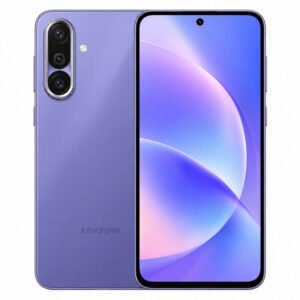
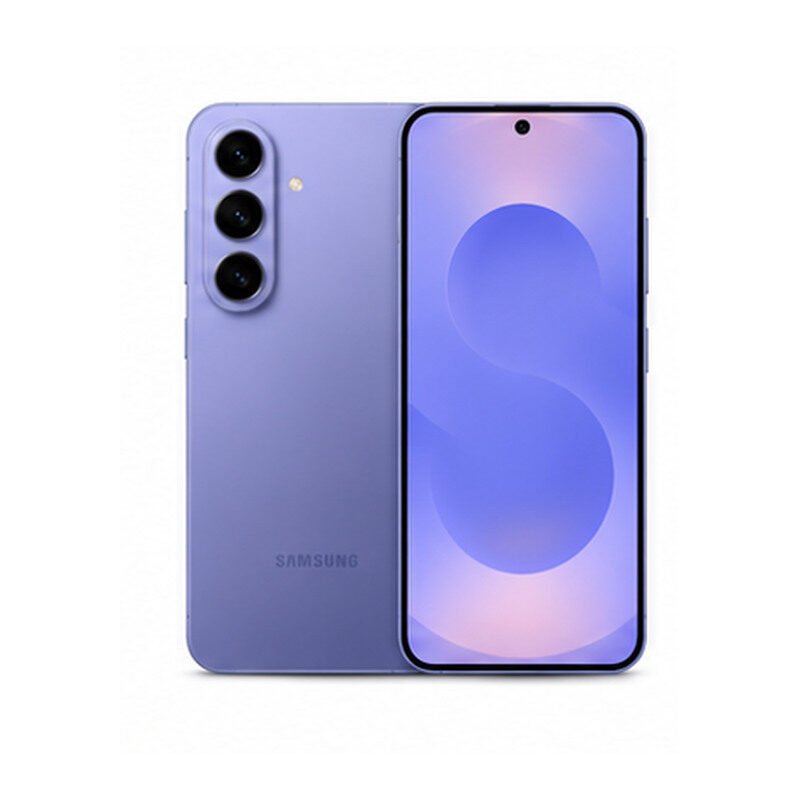
Samsung Galaxy S26+ Key Features
Samsung Galaxy S26+ Specifications
Body & Design
- Dimensions
- 158.4 × 75.8 × 7.3 mm
- Weight
- 190g
- Available colors
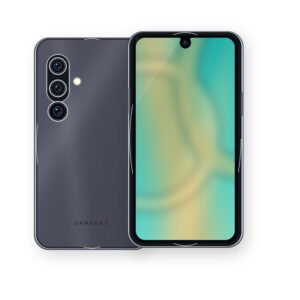
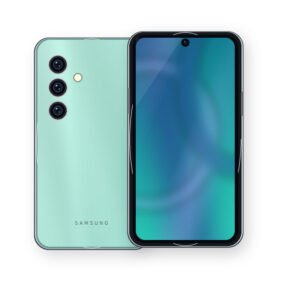
- Cobalt Violet, Sky Blue, Black, White
- Water / dust resistance
- IP68
Network & Cellular
- Network technology
- GSM / HSPA / LTE / 5G
- SIM configuration
- Nano-SIM / eSIM
- eSIM support
- Supported
- VoLTE / VoWiFi
- Supported
Launch & Status
- Availability
- Available
- Regional model codes
- SM-S947B
Software & Processor
- Operating system
- Android
- User interface
- One UI
- Chipset / SoC
- Exynos 2600
RAM & Storage
- RAM
- 12GB
- Internal storage
- 256GB / 512GB
- Memory card slot
- No
Display
- Display technology
- Dynamic AMOLED 2X
- Screen size
- 6.7 inches
- Resolution
- QHD+
- Refresh rate
- 1–120 Hz
Camera & Video
- Rear camera setup
- 50MP wide + 12MP ultra-wide + 10MP 3x telephoto
- Ultrawide camera
- 12MP
- Telephoto camera
- 10MP, 3x optical
- Optical stabilization
- Yes
- Front camera
- 12MP
Battery & Charging
- Battery capacity
- 4,900mAh (typical)
- Wired charging
- 45W wired
- Wireless charging
- 20W wireless
- Reverse charging
- Wireless PowerShare
- Removable battery
- No
Audio
- Stereo speakers
- Yes
Wireless & Connectivity
- Wi-Fi
- Wi-Fi 7
- Positioning / GNSS
- GPS, GLONASS, Galileo, BeiDou
- NFC
- Yes
- USB
- USB Type-C
Sensors & Security
- Fingerprint reader
- Under-display ultrasonic
- Desktop mode
- Samsung DeX
Durability & Repairability
- IP rating
- IP68
Additional Information
- Model numbers
- SM-S947B
Price last checked: 2026-10-30
Prices may vary by variant and local market.
Samsung Galaxy S26+ is a balanced big-screen flagship with a 6.7-inch Dynamic AMOLED 2X, Exynos 2600 and a 4,900mAh typical battery. Its appeal depends on what you need most: a high-end screen, long software support and practical camera options. This guide explains the useful differences rather than treating every headline feature as equally important.
The configuration is important. The model family lists 12GB RAM and 256GB / 512GB storage; not every memory option is necessarily sold in Pakistan. Compare the exact capacity printed on the handset box and receipt, because two listings with the same model name can be priced very differently.
Price in Pakistan and the configuration to compare
The Pakistan reference price used in the structured listing is Rs. 384,999 for an entry configuration. It is a listing reference, not a promise about the price at every shop or every storage option.
Pakistan buyers should distinguish a genuine local-warranty unit from an imported phone, and should verify PTA registration for the actual device identifier. Being 5G-capable or carrying a Samsung logo is not proof that a particular handset has a valid PTA approval. A very low price deserves a careful check of model code, physical condition, warranty responsibility and included accessories.
The reference model identifier for this family is SM-S947B. Regional versions can vary in SIM arrangement, supported bands and software configuration, so match that code rather than accepting a generic listing for ‘Galaxy S26+’. Storage capacity, condition and official warranty can make a bigger difference to the purchase than a small discount shown in an advertisement.
Display, handling and build quality
The 6.7-inch Dynamic AMOLED 2X has QHD+ resolution and an adaptive 1–120 Hz refresh rate. Text and maps benefit from the pixel density, while scrolling through articles and menus can feel smoother than on a basic 60Hz panel. The display can adjust refresh behavior with compatible content, so a higher maximum refresh rate does not mean that every frame of every app runs at that speed.
The handset measures 158.4 × 75.8 × 7.3 mm and weighs approximately 190g. Think about reachability as well as diagonal size: a large screen helps with documents and split-screen tasks but is less comfortable for one-handed typing. Display quality also needs to be judged in daylight, not only against a demonstration wallpaper indoors.
Samsung lists IP68 for this model. The rating relates to defined laboratory test conditions, not permanent protection from every drop, dirty pool, sand exposure or water-related accident. Water resistance can diminish with age and damage. For everyday use, a secure grip and the right protective accessory may matter more than the rating printed in the specification table.
Processor, memory and day-to-day software
The Exynos 2600 works alongside 12GB RAM. This is intended for fluid app switching, photo processing and demanding Android tasks. Ordinary messaging, navigation and streaming are not difficult workloads for such hardware; the more important question is whether sustained gaming, creative editing or desktop-style multitasking are central to your use.
Samsung’s software interface is listed as One UI in the launch configuration. Interface revisions can arrive later and differ by market. Some Galaxy AI functions are device-specific or depend on supported languages, accounts and network access. Judge those tools by the tasks they genuinely simplify, not by assuming every advertised demonstration is available offline.
With 256GB / 512GB listed, file space deserves attention. System files, downloaded media and camera footage consume part of the nominal capacity, so the free space after setup will be lower than the box figure. This phone is not a microSD-storage upgrade proposition; select the built-in capacity you can live with before purchase. A reliable backup routine matters whatever capacity you choose.
Cameras: what the hardware actually changes
The rear camera hardware is 50MP wide + 12MP ultra-wide + 10MP 3x telephoto, with a 12MP front camera. These are distinct lenses and sensors, not a promise that every mode produces the same quality. Stabilization, lighting, the selected zoom level and how the image is processed all influence what a photograph looks like.
Three useful focal lengths matter more than a long list of decorative lenses: wide, ultra-wide and a true 3x telephoto.
A telephoto lens helps when framing is important, but digital zoom beyond the optical range relies increasingly on processing and cropping. Compare realistic indoor photos and moving subjects rather than judging the camera only from megapixel counts.
For video, resolution is only one consideration. Stabilization, available frame rates, microphone quality and storage use can make a bigger difference to a useful clip. Camera modes and recording limits can also vary with the selected lens, so do not assume every resolution works with every zoom option.
Battery endurance and charging in practice
Samsung specifies a 4,900mAh typical battery. Its 4,900mAh typical battery and 45W wired charging are practical upgrades over the compact S26. Wired charging is specified at up to 45W, and 20W wireless charging is supported. Peak wattage is not a fixed charging speed throughout an entire session.
A claimed maximum power rating depends on charger compatibility, cable, temperature and battery state. Wireless charging is convenient on a desk but changes heat and efficiency considerations. If you travel frequently, factor in the adapter and cable you already own instead of assuming the retail box contains everything required for its maximum charging rate.
For meaningful battery comparisons, look for tests that disclose screen settings, active radios and workload. A quoted video playback figure cannot predict a day of weak-signal mobile data, navigation and camera recording. Turning off an unnecessary hotspot or limiting background activity often changes your experience more than a small capacity difference between models.
Connectivity, durability and Pakistan-specific checks
With 5G, NFC and modern wireless networking, connectivity is more than a checkbox. The actual mobile experience depends on operator coverage, regional frequency bands, signal strength and how the network is provisioned. A locally supported model code is a more useful purchase check than simply reading “5G” in an advertisement.
Security and software support matter particularly for a phone expected to handle banking, work accounts and personal photographs for several years. Keep automatic updates enabled, configure a secure screen lock and confirm that the device is genuine and eligible for updates in its intended market.
Other stated capabilities include UWB, Samsung DeX, wireless charging. Each should be judged in context: a company may value a dedicated hardware key, a commuter might prefer an easy cover screen, and a frequent document editor may appreciate desktop support or a stylus. The best feature is the one that removes a real inconvenience, not merely the one that looks impressive on a spec sheet.
Should you choose this model?
The Galaxy S26+ makes most sense for someone who wants a balanced big-screen flagship and appreciates the combination of display, cameras and software features. It is not necessary to pay for a more expensive model just to handle calls or social apps; the premium becomes easier to justify when photography, multitasking or daily screen use is important.
For comparison, Galaxy S26 is smaller and lighter; Galaxy S26 Ultra adds the S Pen, Privacy Display and longer-range camera hardware. That distinction should lead the decision more than a small theoretical benchmark difference. When several models seem equally capable, prioritize comfortable size, the storage tier you really need, reliable warranty coverage and the intended length of ownership.
The practical checklist is straightforward: confirm the full SM-S947B identifier, the memory variant, device condition, IMEI and PTA status, and the responsible warranty provider. Test the display and cameras on the specific unit if it is open-box or used. A carefully verified device is better value than a suspiciously cheap listing with incomplete details.
For a buyer deciding purely from specifications, the strongest reason to consider this model is its balance of large-screen quality, processing hardware and capable camera choices. Its main compromise is premium pricing and the size or charging compromises of its particular tier. Match those two points to your habits before deciding.

Samsung Galaxy M15 5G
Samsung Galaxy M16 5G
Samsung Galaxy M35 5G
Samsung Galaxy M36 5G
Samsung Galaxy M55 5G
Samsung Galaxy F36 5G
Samsung Galaxy F55 5G