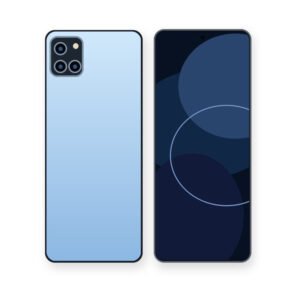

RAM & Storage Variants
Xiaomi Poco C71 Key Features
Xiaomi Poco C71 Specifications
Build & Design
- Dimensions
- 171.79 x 77.8 x 8.26 mm
- Weight
- 193 g
- Available colors
- Black, Blue, Gold
Network & Frequency
- Network technology
- GSM / HSPA / LTE (4G)
- SIM configuration
- Dual Nano-SIM + microSD
Processor & Software
- Operating system
- Android 15 (Go edition)
- Chipset / SoC
- UNISOC T7250
- Fabrication process (nm)
- 12 nm
- CPU
- Octa-core (2x1.8 GHz Cortex-A75 + 6x1.6 GHz Cortex-A55)
- GPU
- Mali-G57
Display
- Display technology
- IPS LCD
- Screen size
- 6.88 inches
- Resolution
- 720 x 1640 pixels
- Pixel density (ppi)
- 260 ppi
- Refresh rate
- Up to 120 Hz
- Brightness (nits)
- 450 nits typical
Memory & Storage
- RAM
- 3GB / 4GB physical RAM
- RAM type
- LPDDR4X
- Internal storage
- 64GB / 128GB
- Storage technology
- eMMC 5.1
- Memory card slot
- Dedicated microSD slot
- Memory configurations
- 3GB + 64GB; 4GB + 128GB
Cameras & Video
- Rear camera setup
- 32MP main camera, f/2.0
- Rear video recording
- 1080p at 30fps
- Front camera
- 8MP f/2.0
- Front video recording
- 1080p at 30fps
Connectivity
- Wi-Fi
- Dual-band Wi-Fi
- Bluetooth
- Bluetooth 5.2
- Positioning / GNSS
- GPS, GLONASS, Galileo, BeiDou
- USB
- USB Type-C
- FM radio
- FM radio (headphones required)
Sound & Multimedia
- 3.5mm headphone jack
- 3.5 mm headphone jack
Sensors & Security
- Fingerprint reader
- Side-mounted fingerprint sensor
Battery & Charging
- Battery capacity
- 5200 mAh typical
- Wired charging
- 15W wired
Why this phone stands out
The POCO C71 is a large-screen entry-level 4G phone with Android Go, a 120Hz LCD and a 5200mAh battery. It is not built around the chipset described in some early speculative Pakistan listings. A sensible comparison begins with the actual processor, screen technology, camera hardware and charging capabilities rather than the number of camera rings or a promotional memory figure. For readers in Pakistan, market availability and device identity are separate matters: a phone appearing in a global specification database does not automatically mean an officially warranted local unit is on sale. The figures below describe the stated hardware, not hands-on laboratory results.
Screen and handling
The Xiaomi Poco C71 has a 6.88 inches IPS LCD with 720 x 1640 pixels resolution and a refresh specification of Up to 120 Hz. The wide 6.88-inch panel is helpful for reading and watching clips. Its HD+ pixel count is modest, which explains why fine details may not be as crisp as on a pricier Full HD screen. The refresh rate reaches 120Hz only where supported. Screen dimensions alone do not determine comfort: frame width, overall weight, curved or flat glass, and the type of protective case will change daily handling. When comparing two phones with similar diagonal sizes, look at both pixel resolution and panel technology. Higher refresh and resolution ratings are distinct features; neither promises that every app or video uses the maximum setting.
Processor, software and realistic speed
The hardware platform is the UNISOC T7250, running Android 15 (Go edition). The manufacturer specifies a UNISOC T7250 processor, not the Helio G85 quoted by some expectation-based pages. It is paired with LPDDR4X RAM and eMMC 5.1 storage, so the phone should be evaluated for daily tasks rather than performance-intensive applications. A processor name describes the platform, not a guaranteed gaming frame rate. Software versions, background activity, device temperature and installed applications all affect the experience. If a phone has a power-saving mode, it may reduce peak activity to extend use between charges. These limits matter particularly when a buyer relies on a promotional benchmark without checking the exact variant or software build.
RAM, storage and choosing the right variant
The published memory choices include 3GB / 4GB physical RAM, with 64GB / 128GB of storage. The catalogued combinations are 3GB + 64GB; 4GB + 128GB. A higher storage option matters to people who shoot lots of videos, keep downloaded lessons, or use several large applications. Actual free capacity is always lower than the box figure because system software occupies space. Do not add expanded or dynamic RAM to the physical figure when comparing specifications. Where microSD expansion is supported, check whether it shares a SIM slot; using the card can affect a dual-SIM setup. For long-term use, available storage can be more consequential than a small increase in theoretical processor speed.
Rear cameras, selfies and video
The principal rear camera specification is 32MP main camera, f/2.0, while the front-facing camera is 8MP f/2.0. The main 32MP camera is a more important specification than the decorative look of the rear module. The front camera is 8MP, and published video recording is 1080p at 30fps. These figures do not establish low-light photographic quality. Published rear-video modes include 1080p at 30fps. Resolution is only one part of image quality. Sensor size, lens optics, focus accuracy, processing and available light make a noticeable difference. A high megapixel count can help with detail in favourable light, but does not guarantee good low-light images. Shoppers comparing camera phones should focus on which lens actually takes each picture, whether stabilization is optical or electronic, and which video modes are supported by the specific camera, rather than assuming all lenses share the same capabilities.
Battery capacity and charging
Battery capacity is stated as 5200 mAh typical, with 15W wired charging. The 5200mAh typical battery supports 15W charging. For a phone with a large display, that means keeping realistic expectations about recharge time; a big battery does not make 15W as fast as modern 45W or 60W standards. Charging specifications describe supported electrical power, not a promise that the battery draws its maximum from empty to full. Cable quality, adapter compatibility, thermal controls and charge level can change the actual rate. For practical ownership, consider the complete combination of screen, processor, battery and charger rather than treating capacity as a stand-alone score. Wireless or reverse charging, when listed, should be checked separately because supporting one does not mean the phone offers the other.
Connections, calls and everyday features
Network capability is listed as GSM / HSPA / LTE (4G). This distinction matters for people who need to use a local 4G or 5G connection. Cellular generation does not tell the whole story: individual band support, the operator’s coverage and the registered status of the exact handset all influence use in Pakistan. Wi-Fi support is described as Dual-band Wi-Fi. Bluetooth support is Bluetooth 5.2. The phone uses USB Type-C for its wired connection. Its listed fingerprint method is Side-mounted fingerprint sensor. Do not infer local eSIM compatibility, NFC payments or VoLTE functionality merely because a global family shares a similar name. For an imported variant, the model number and modem bands are more useful than a seller’s generic claim of worldwide compatibility.
Strengths and limitations worth understanding
Android Go is a meaningful software detail, not a minor label. It indicates an Android configuration intended for lower-memory hardware. Memory extension is a separate software feature and cannot substitute for the installed 3GB or 4GB RAM. It also helps to separate specifications from real-life testing. A splash-resistance rating is not a warranty against liquid damage, a refresh-rate rating is not a universal game frame rate, and an advertised memory-extension number is not physical RAM. These distinctions are especially important for buyers comparing listings with slightly different model titles. A clear explanation of what is absent or unverified is more useful than presenting every option as equally capable. Consider repair support and replacement accessories before relying on a phone for several years.
Price and ownership considerations in Pakistan
No sufficiently verified current Pakistan selling price has been assigned to this entry; expected-price advertisements are not used as a substitute for a confirmed retail offer. Buyers should confirm the exact RAM and storage option, whether the package carries a recognized local warranty, and whether the individual device IMEI is PTA compliant before committing. A model can have genuine manufacturer specifications while its Pakistan retail status remains unclear. Check what comes in the box, particularly the charger, USB cable and case, since packaging differs between regions. Imported units can also have different service policies, cellular-band combinations and software channels. These checks protect buyers from confusing a global launch with local distributor support.
The buying decision
This model is most sensible for light communication, basic apps and watching videos on a large screen. Students or families choosing a first smartphone should compare storage capacity carefully rather than assuming every market offers the same memory version. A useful final comparison is to write down the three activities that matter most: for example extended calls, frequent navigation, photos of children, large offline files or graphically intensive games. Then compare the screen, chipset, cameras and battery against those tasks instead of ranking phones by a single headline number. Buyers with a fixed budget should pay attention to the complete supported package and not merely a large RAM or megapixel claim. This is a specification-led assessment, not an assertion that the phone has been personally tested.
For related product listings, see the Xiaomi phone index on WhatMobilez.
Xiaomi 18
Xiaomi 18 Pro Max

Xiaomi 18 Pro

Xiaomi Redmi Note 17 Pro Max 5G

Xiaomi Redmi Note 17 Pro 5G
Xiaomi Redmi 17C

Xiaomi Redmi Note 17