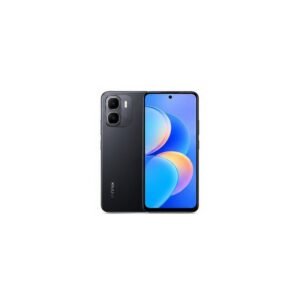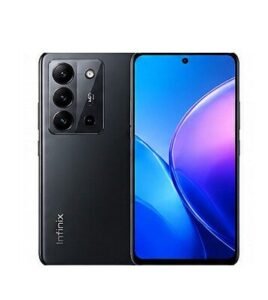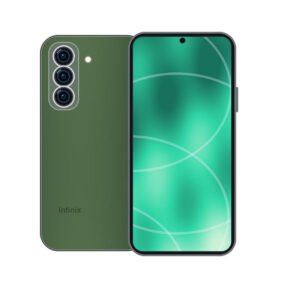
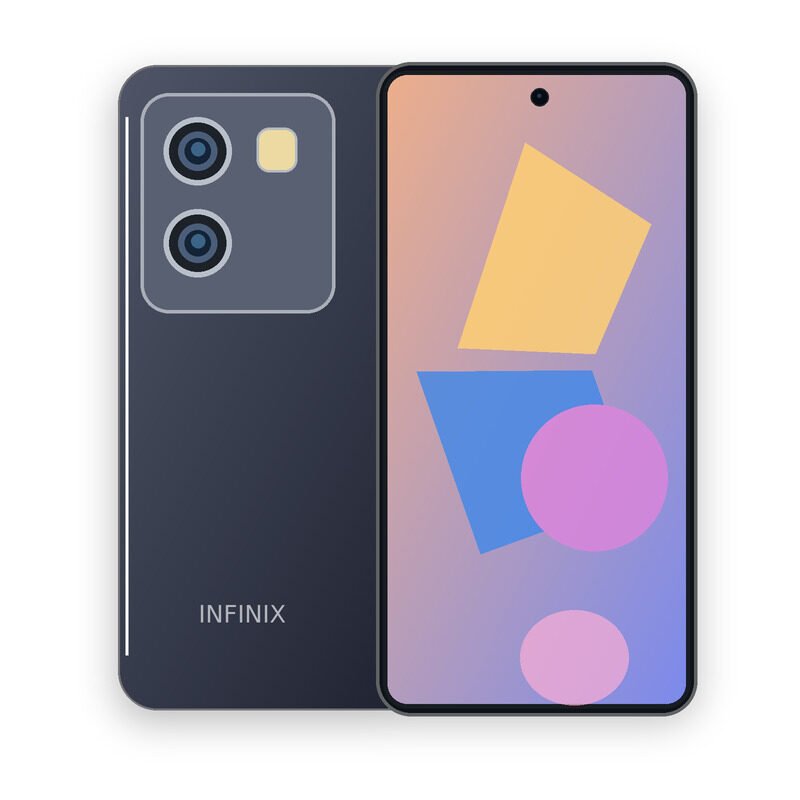
Infinix Hot 40i Key Features
Infinix Hot 40i Specifications
Processor & Software
- Operating system
- Android 13
- User interface
- XOS 13
- Chipset / SoC
- Unisoc T606
- Fabrication process (nm)
- 12 nm
- CPU
- Octa-core (2×1.6 GHz Cortex-A75, 6×1.6 GHz Cortex-A55)
- GPU
- Mali-G57 MP1
Performance Benchmarks
250,000
AnTuTu
Version v10
Total scoreAnTuTu
Version v10
Geekbench 6
Version v6
Scores reflect the listed benchmark versions; results from different tests are not directly comparable.
Build & Design
- Dimensions
- 163.6 × 75.6 × 8.3 mm
- Weight
- 190 g
- Available colors
- Starlit Black, Palm Blue, Horizon Gold, Starfall Green
Display
- Display technology
- IPS LCD
- Screen size
- 6.56 inches
- Resolution
- 720 × 1612 pixels
- Refresh rate
- 90 Hz
Network & Frequency
- Network technology
- GSM / HSPA / LTE
- SIM configuration
- Dual Nano-SIM
Memory & Storage
- RAM
- 4GB / 8GB
- Internal storage
- 128GB / 256GB
- Memory card slot
- microSD
- Memory configurations
- 4GB + 128GB, 8GB + 256GB
Cameras & Video
- Rear camera setup
- 50MP main
- Rear video recording
- Up to 1080p at 30fps rear video
- Front camera
- 32MP
Connectivity
- Wi-Fi
- 802.11 a/b/g/n/ac
- USB
- USB-C
Sound & Multimedia
- Speakers
- Single loudspeaker with volume boost
- 3.5mm headphone jack
- 3.5mm jack
Sensors & Security
- Fingerprint reader
- Side-mounted
Battery & Charging
- Battery capacity
- 5000mAh
- Wired charging
- 18W wired
Infinix Hot 40i in Pakistan: the buying picture
The Infinix Hot 40i is best understood as a phone for first-time smartphone owners, learners and callers who want affordable storage and a front-facing camera. The 32MP selfie sensor is a notable part of this lower-priced model, while the smaller HD+ screen reduces processing demands. Its Pakistan reference price is Rs. 30,999; the figure represents a listed retail reference rather than a promise of store availability or a price for every memory option. Looking at the chipset, screen and model identifier together is the safest way to distinguish it from similarly named handsets.
The main specifications are a 6.56 inches IPS LCD display, a Unisoc T606 processor, 50MP main camera hardware, and a 5000mAh battery. These facts explain its positioning more clearly than marketing descriptions or a claimed combined RAM figure. The important buying question is whether those strengths match how the phone will actually be used.
Screen quality, handling and design
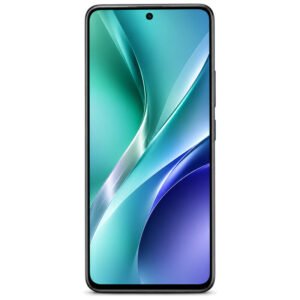
The panel measures 6.56 inches, with a 720 × 1612 pixels resolution and a 90 Hz refresh rate. Refresh rate affects how often the display updates during scrolling and compatible animations; it does not guarantee that games will run at the same number of frames per second. Pixel resolution, brightness and panel technology matter at least as much for reading, photos and watching video.
This is an LCD rather than an AMOLED phone. That is not automatically a disadvantage for web browsing or studying, but black levels will differ from self-emissive displays. The HD+ pixel count is adequate for everyday interfaces, although small text and intricate video detail will look less fine than on an FHD+ panel of similar size. The refresh option is helpful only when the application and system settings actually use it.
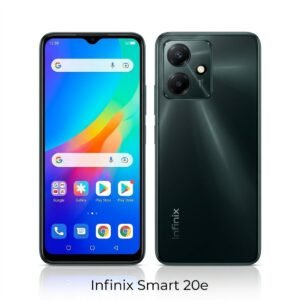
The handset is listed at 163.6 × 75.6 × 8.3 mm and about 190 g. Those dimensions make more sense when considered against hand size, case thickness and daily pocket use. Available finishes include Starlit Black, Palm Blue, Horizon Gold, Starfall Green. A glossy back may display fingerprints more easily, while a textured or matte finish may feel more secure; personal handling is more useful than appearance alone.
Processor, practical speed and everyday tasks
Inside is the Unisoc T606 with Mali-G57 MP1 graphics. That determines the general class of workloads the phone can handle, but it should not be confused with a laboratory performance result for this specific unit. For calls, WhatsApp, maps, short videos, browsing and document apps, storage condition, memory capacity, background tasks and software optimization all influence responsiveness.
The Unisoc T606 aims at the everyday end of the market. Messaging, learning apps, music and web pages make more sense as expectations than maximum graphics settings in demanding games. Performance can also deteriorate when storage becomes nearly full or several heavy apps remain active. Keep system software current and remove unused applications before assuming that a slow phone needs replacing.
Memory is listed as 4GB / 8GB RAM and 128GB / 256GB internal storage. The manufacturer or market may offer different combinations, so the box label and device settings are decisive when comparing offers. A microSD option provides another way to store media, although an SD card is not a replacement for fast internal app storage. Save backups of important photographs and documents regardless of the nominal capacity.
Camera decisions beyond the megapixel count
The principal rear camera is listed as 50MP main; the front camera is 32MP. A larger megapixel figure can capture greater detail under the right conditions, but it does not guarantee cleaner night photography or a better portrait. Lens quality, sensor size, autofocus, exposure and image processing play a substantial role, particularly in low indoor light.
The principal sensor is the sensible starting point for everyday pictures such as receipts, documents, family moments and outdoor scenes. Decorative rear lens shapes should not be treated as proof of extra useful cameras. For portraits, software blur can help separate the subject, but hair and glasses may expose processing mistakes. A steady hand and good light make a larger difference than digital zoom at the far end of its range.
For moving images, the stated rear-video capability reaches Up to 1080p at 30fps rear video. That is a format limit, not a guarantee of stabilization, sharp footage after dark or the same options on every auxiliary lens. If you record school events, family clips or social video, also check microphone sound, available storage and how the camera behaves in the lighting you commonly use.
Battery, charging and long-term use
The 5000mAh battery supports 18W wired. Capacity is a useful starting point for judging endurance, but screen brightness, modem signal, application behavior and gaming time determine actual hours away from the charger. Quoted battery-life figures from controlled tests should not be mistaken for guaranteed personal results.
A five-thousand-milliamp-hour cell is common in this class, so charging power, processor efficiency and daily use are often the more useful comparison points. Short charging sessions are convenient, but speed depends on using a compatible cable and adapter. Keep charging ports dry and clean; avoid damaged cables or adapters of uncertain origin.
The 18W charging rating is adequate for planned top-ups, but it is not the quickest option within this group. If frequent short charging breaks are part of your routine, the 33W Hot 40 or a higher Hot 50 variant is worth comparing. A larger charger cannot force the phone to accept more power than its charging system allows.
Software, connectivity and local buying checks
The original software platform is Android 13 with XOS 13. Interface features may differ between firmware revisions and regions. The installed Android version on a particular unit matters more than what a shop advertises, and a future major update should not be assumed without an explicit support commitment for that specific model.
Connectivity includes 4G LTE, dual-SIM operation where supported, Wi-Fi and a USB-C port. This model does not have a verified 5G modem, so the discussion of fast wireless data should refer to its LTE and Wi-Fi capabilities. If hotspot sharing, mobile payments or particular frequency bands matter, verify support on the exact box and firmware rather than assuming all country versions are identical.
For Pakistan, check the precise model number, IMEI-based PTA status, warranty provider, seal condition and seller invoice before committing. A statement that a phone is available locally does not prove that every international version has identical cellular bands or official approval. If the device is an import, compare the total legally usable cost rather than only the sticker figure.
Strengths, compromises and better alternatives
The most convincing reason to consider the Infinix Hot 40i is entry-level budget, 32MP selfie, 90Hz screen. The 32MP selfie sensor is a notable part of this lower-priced model, while the smaller HD+ screen reduces processing demands. A useful purchase comparison should ask whether these particular strengths save time or improve an activity you already perform, rather than whether the specification sheet contains the greatest number of features.
The important compromise is straightforward: The HD+ panel, Unisoc T606 chip and 18W charging clearly position it below the Hot 40 and Hot 40 Pro. This does not necessarily make it poor value; it tells you what should be checked against the asking price and against the phones available in the same budget. A good buying choice is the one whose weaknesses you can tolerate.
Practical alternatives include the Hot 40 for FHD+ and 33W charging, or Hot 50i for 120Hz scrolling. Compare the exact RAM/storage variants and official warranty terms rather than matching only the product-family name. For similar money, a sharper display can matter more than extra software RAM, while a stronger camera or larger battery can be worthwhile for someone who uses those parts every day.
Buying verdict
The Infinix Hot 40i makes the most sense for first-time smartphone owners, learners and callers who want affordable storage and a front-facing camera. Choose it because its actual hardware suits your routine, not because a product card promises universal gaming speed or all-day performance under every condition. Before paying, match the box to the documented model, inspect the screen, camera and charging port, and check local network approval. That short verification is especially important when two Hot-series names differ by only one suffix.