
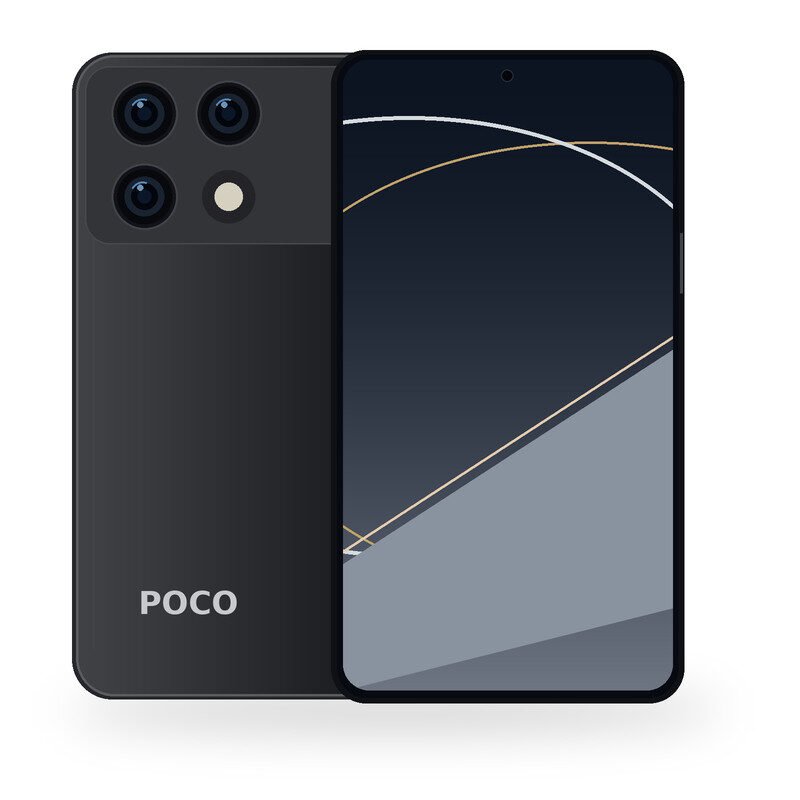
POCO F8 Pro Key Features
POCO F8 Pro Specifications
Body & Design
- Dimensions
- 157.49 × 75.25 × 8.0 mm
- Weight
- 199g
- Available colors
- Black, Titanium Silver, Blue
Network & Cellular
- Network technology
- 5G / 4G / 3G / 2G
- SIM configuration
- Dual SIM; eSIM option varies by region
Software & Processor
- User interface
- Xiaomi HyperOS 3
- Chipset / SoC
- Snapdragon 8 Elite
- Fabrication process (nm)
- 3nm
- CPU
- Octa-core, up to 4.32GHz
- GPU
- Adreno GPU
RAM & Storage
- RAM
- 12GB
- RAM type
- LPDDR5X
- Internal storage
- 256GB / 512GB
- Storage technology
- UFS 4.1
- Memory configurations
- 12GB + 256GB; 12GB + 512GB
Display
- Display technology
- AMOLED
- Screen size
- 6.59 inches
- Resolution
- 2510 × 1156
- Refresh rate
- 120Hz
- Brightness (nits)
- 3500 nits local peak; 2000 nits HBM
Camera & Video
- Rear camera setup
- 50MP Light Fusion 800, f/1.88, OIS
- Ultrawide camera
- 8MP
- Telephoto camera
- 50MP telephoto, 60mm
- Optical stabilization
- Main camera
- Rear video recording
- 8K at 30fps; 4K up to 60fps
- Front camera
- 20MP
- Front video recording
- 1080p up to 60fps
Battery & Charging
- Battery capacity
- 6210mAh (typical)
- Wired charging
- 100W wired HyperCharge
- Reverse charging
- Up to 22.5W wired reverse charging
Audio
- Speakers
- Symmetrical stereo speakers; Sound by Bose
- Stereo speakers
- Yes
- Audio codecs / features
- Sound by Bose
Wireless & Connectivity
- Wi-Fi
- Wi-Fi 7
- Bluetooth
- 6.0
- NFC
- Yes
- USB
- USB Type-C
Sensors & Security
- Fingerprint reader
- Ultrasonic in-display fingerprint
- Face unlock
- AI face unlock
Durability & Repairability
- IP rating
- IP68
Price last checked: 2026-10-30
Prices may vary by variant and local market.
POCO F8 Pro is aimed at people who want top-tier processing and useful portrait zoom without the weight of an Ultra handset. It combines a Snapdragon 8 Elite, a 6.59-inch AMOLED running at up to 120Hz, and a 6210mAh battery. A relatively compact 6.59-inch body, 6210mAh battery and 60mm telephoto lens make the Pro more balanced than a pure gaming phone. The important question for a Pakistani buyer is whether those strengths match personal use and the cost of a correctly identified, supported handset. A bigger number in one specification does not automatically settle that decision.
POCO F8 Pro price and buying position in Pakistan
No confirmed Pakistan retail price is entered for this particular model, so any figure quoted without a matching local configuration should be treated cautiously. The same phone name can appear as an imported global unit, a locally warranted unit or a different memory configuration. That distinction influences value as much as the headline number. For buyers in Pakistan, ask for the exact device name on the box, physical RAM, built-in storage, seller warranty and PTA registration position before paying. A missing number here is deliberate: a speculative quote would make the comparison less useful.
A lower online price can apply to a different variant or warranty package. Browse Xiaomi and related phone listings on WhatMobilez for more context, then judge this POCO on its own hardware.
RAM, storage and the right variant
The confirmed configurations use 12GB RAM and 256GB / 512GB storage, with LPDDR5X memory and UFS 4.1 storage technology. Capacity matters for keeping photographs, offline maps, downloaded video and large apps; storage technology affects how quickly files and applications are accessed, although actual results depend on software and workload. The available memory pairings are 12GB+256GB/12GB+512GB. Do not mistake a software memory-expansion setting for extra physical RAM.
The largest memory version is sensible for users keeping games and video locally. Before choosing a tier, check whether a memory-card slot exists rather than assuming expansion. Compare the price difference with your storage needs; unused capacity adds no value.
Display quality, size and day-to-day handling
Its 6.59-inch AMOLED has a stated resolution of 2510 × 1156 and a refresh ceiling of 120Hz. Higher refresh rates can make compatible animations and scrolling appear smoother, while a high resolution improves small text and fine image detail. The screen remains only one part of usability: viewing angles, interface scaling, automatic brightness and your preferred font size matter too.
Brightness specifications include 3500 nits local peak; 2,000 nits HBM. A local peak is usually measured over a limited area, so it should not be read as the brightness of the entire screen all the time. At 199g, the phone also has a distinct hand feel. Its documented dimensions are 157.49 × 75.25 × 8.0 mm; if you use a phone one-handed or keep it in a narrow pocket, check the width and weight as closely as the advertised diagonal.
Processor, gaming and realistic performance expectations
The Snapdragon 8 Elite uses a 3nm process and an octa-core, up to 4.32ghz CPU design, paired with Adreno GPU graphics. Its class suggests where the phone sits in the range, but a chipset name by itself does not establish a fixed frame rate, sustained peak speed or performance in every game. Settings, app versions, ambient temperature, charging state and cooling all influence actual behaviour.
For ordinary tasks, look beyond peak processor figures to smooth app switching, network reliability and enough internal space. Serious players should check whether their chosen titles offer the desired graphics settings on this specific model; a high-refresh screen does not force every game to run at that rate. Avoid treating quoted synthetic scores as a promise of performance during long sessions, especially when the phone is warm or charging.
Cameras: what the lenses actually offer
The principal camera is 50MP Light Fusion 800, f/1.88, OIS. Optical image stabilisation is confirmed on the main camera, helping control hand movement during capture. The 8MP ultra-wide camera expands framing options, especially for landscapes and group photographs. Its 50MP telephoto, 60mm provides an optical focal length that can frame portraits or distant subjects without relying entirely on digital cropping.
The front-facing camera is 20MP. The specified rear-video options include 8K at 30fps; 4K up to 60fps. These are recording modes, not proof of stabilisation quality, heat control or uninterrupted recording time. Front video reaches 1080p up to 60fps. In practical terms, strong light, stable handling and the chosen recording mode can have more impact on the finished clip than an impressive megapixel count. Anyone buying for portraits should inspect the actual focal length and stabilisation features rather than assuming every extra camera circle represents a useful zoom lens.
Battery, charging and longer ownership
The rated typical battery capacity is 6210mAh, with 100W wired HyperCharge. Capacity creates potential endurance, but real use varies with screen brightness, games, mobile signal, GPS, camera work and standby behaviour. A fast adapter specification also does not guarantee identical charging time under every condition. Charging speed can slow when the cell gets warm or approaches full capacity.
Wireless charging is not among the confirmed specifications, so wired charging remains the supported way to replenish the battery. Reverse charging is listed as Up to 22.5W wired reverse charging. That is a convenience feature for compatible devices, not a replacement for a dedicated power bank.
Software, connections and the Pakistan network
The phone is specified with Xiaomi HyperOS 3, and its published global connectivity class is 5G / 4G / 3G / 2G. The global model supports 5G and 4G, but 5G service, bands and network access depend on the exact regional hardware and operator. Bluetooth 6.0 and Wi-Fi 7 are listed features, but actual wireless capabilities can depend on the router, operating environment and a specific regional release. An advertised Wi-Fi generation should never be confused with guaranteed home broadband speed.
Biometric access includes Ultrasonic in-display fingerprint. Audio hardware is described as Symmetrical stereo speakers; Sound by Bose. These details influence everyday use: unlocking while commuting, hearing dialogue without headphones and connecting to local wireless networks. PTA registration is not assumed for an individual imported handset. Buyers should verify the actual IMEI status and compare official warranty coverage rather than relying on a generic approval claim attached to a model name.
Model-specific details worth considering
The F8 Pro illustrates why a smaller phone can still carry premium hardware. Its 6.59-inch panel and 199g body are more manageable than the Ultra’s 6.9-inch display and heavier build. It retains a 50MP telephoto at 60mm alongside a 50MP main camera with OIS. The 6210mAh typical battery is generous for its size, while Bose-tuned symmetrical speakers add interest for music and spoken audio. Its limit is the lack of the Ultra’s longer periscope and wireless charging, not a lack of ordinary flagship features.
Strengths, trade-offs and useful alternatives
Why it stands out: A relatively compact 6.59-inch body, 6210mAh battery and 60mm telephoto lens make the Pro more balanced than a pure gaming phone. A sensible purchase is one that takes advantage of those strengths regularly, not one that simply has the largest number on a comparison sheet.
What to weigh: The F8 Pro does not have the larger periscope telephoto system or wireless charging offered by the Ultra. The F8 Pro is smaller and lighter than the F8 Ultra. The F7 Pro offers a higher stated screen resolution; this model counters with an upgraded processor, telephoto lens and Bose-tuned audio. These alternatives change the balance of screen, camera, size and battery rather than offering one universally better answer. Buyers should compare identical storage tiers and the same warranty conditions before making a judgement.
Who should choose the POCO F8 Pro?
This phone is most convincing for people who want top-tier processing and useful portrait zoom without the weight of an Ultra handset. If that describes your usage, start by deciding which camera, battery and display qualities you would notice every day. The posted specification is a guide to hardware capability, not a substitute for checking the exact regional unit and the shop’s final terms.
Confirm the exact variant, IMEI/PTA position, warranty and charger package. An alternative may be more practical if this model sacrifices a feature you use daily.
POCO M8 5G
POCO M8 Pro 5G

POCO Xiaomi POCO C81
POCO Xiaomi POCO C85x 5G
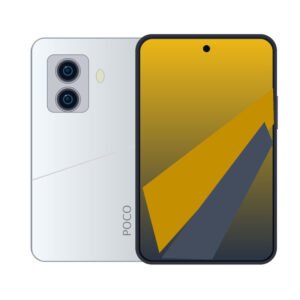
POCO X8

POCO X8 Pro

POCO X8 Pro Max