
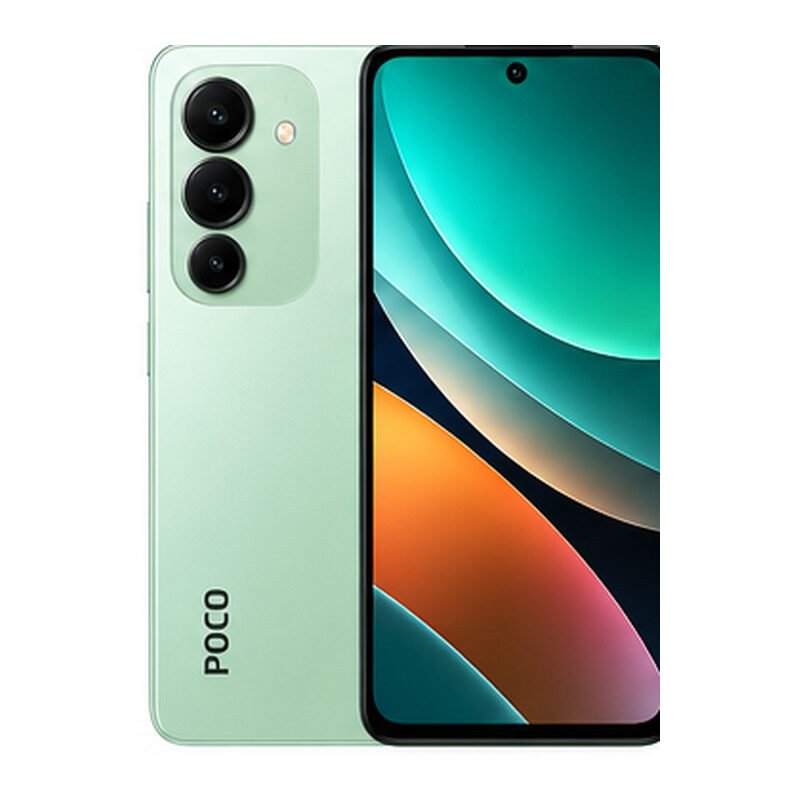
POCO M8s 5G Key Features
POCO M8s 5G Specifications
Processor & Software
- User interface
- Xiaomi HyperOS 2
- Chipset / SoC
- Snapdragon 6s Gen 3
Performance Benchmarks
450,000
AnTuTu
Version 11.0
Total scoreAnTuTu
Version 11.0
Geekbench 6
Version 6.0
Scores reflect the listed benchmark versions; results from different tests are not directly comparable.
Build & Design
- Weight
- 217 g
Display
- Display technology
- IPS LCD
- Screen size
- 6.9 inches
- Resolution
- 2340 × 1080 pixels
- Refresh rate
- up to 144 Hz
Network & Frequency
- Network technology
- GSM / HSPA / LTE / 5G
- SIM configuration
- Dual SIM
Memory & Storage
- RAM
- 6 GB / 8 GB
- RAM type
- LPDDR4X
- Internal storage
- 128 GB / 256 GB
- Storage technology
- UFS 2.2
- Expandable storage
- microSD up to 2 TB
Cameras & Video
- Rear camera setup
- 50 MP main camera with auxiliary lens
- Rear video recording
- 1080p at 30 fps
- Front camera
- 8 MP
Sensors & Security
- Fingerprint reader
- Side-mounted
Battery & Charging
- Battery capacity
- 7,000 mAh
- Wired charging
- 33 W wired
- Reverse charging
- Up to 18 W wired
POCO M8s 5G: The POCO M8s 5G is an officially documented POCO model, not a spelling variation of the M8 5G. Its Snapdragon 6s Gen 3 chipset, 6.9-inch FHD+ screen and 7,000 mAh battery put it in a very different category from the slimmer AMOLED M8. The model also supports expandable storage, which can be useful for offline media and document collections. It is best understood as an endurance-focused large phone with 5G.
POCO M8s 5G price in Pakistan and model identity
A reliable Pakistan price for the precise POCO M8s 5G version is not available in the checked import data, so this profile does not attach an arbitrary rupee figure. Ask whether the quote covers 6 GB / 8 GB RAM and 128 GB / 256 GB storage, and whether the unit is locally warranted or imported. Prices for different configurations and registration states should not be mixed together.
For a proper comparison, request the full model identifier from the box and the phone settings, plus a clear invoice showing the exact configuration. PTA registration must be verified using official processes for that device. Do not rely on a seller describing a model as approved without evidence, or on an online listing that may show another country version. These checks are especially useful when buying second-hand.
Display, design and day-to-day comfort
The headline hardware includes a 6.9-inch FHD+ DotDisplay with a up to 144 Hz refresh capability and 2340 × 1080 resolution. The LCD screen is designed for a large working area and fluid scrolling, rather than OLED-like black levels. A higher refresh setting can make compatible scrolling smoother, but it does not force streaming video, games or every app to run at the same rate.
At a broad 217 g chassis, this model is less suited to one-handed operation than a compact handset. A large display helps with spreadsheets, maps and long chats, yet the same size may make pocket carry or prolonged one-handed use less comfortable. If possible, compare the physical weight and grip before committing. Screen protection, curved edges, glare and replacement-panel costs all deserve consideration; a high resolution by itself says little about repair affordability.
Chipset, memory and realistic performance
POCO M8s 5G uses the Snapdragon 6s Gen 3, positioning it as a large-battery 5G device. That describes its general hardware direction, not a speed result from our own testing. Everyday behaviour also depends on background services, thermal management, signal conditions, operating-system updates and whether the chosen app is optimised for the processor.
Published memory options include 6 GB / 8 GB physical RAM and 128 GB / 256 GB internal storage. Check whether a listing describes actual installed RAM or software-based memory extension. Extra virtual memory uses storage and should never be counted as equal to physical RAM. The useful storage capacity is also less than the nominal total after system files. If you intend to save large videos, download games or keep a substantial photo archive, the storage configuration can matter more than a small change in headline camera resolution.
For gaming, check the specific game rather than assuming all demanding titles behave alike. Graphical settings, frame-rate caps and sustained load produce different results. None of the performance claims here are presented as independently measured FPS, benchmark scores or temperature readings. If stable long sessions matter, look for genuine independent tests of the exact chipset and storage variant.
Cameras and video recording limitations
The rear arrangement centres on a 50 MP main camera with auxiliary lens, with a 8 MP selfie camera. The camera setup lacks a confirmed main-camera OIS feature in this exact specification. Keep expectations grounded for moving subjects and difficult indoor light, and avoid judging the result solely by megapixel count. Daylight photography, portraits and indoor scenes challenge different parts of the imaging system, including autofocus, exposure control, image processing and the optics. The headline number should be read alongside the presence or absence of a genuine ultrawide lens.
The published rear video capability includes 1080p at 30 fps. Recording resolution alone does not determine stabilisation, dynamic range or microphone quality. A higher recording mode may consume storage quickly, so match capture settings to where you plan to share or edit the footage. A creator who needs a wider field of view should check for a true ultrawide camera, not assume that a depth sensor can provide it.
Battery capacity, charging and ownership costs
A 7,000 mAh battery and 33 W wired charging define the phone’s headline power setup. A high-capacity cell can be particularly appealing for long workdays, navigation or offline video, although a large screen also draws power. Battery capacity alone never confirms an exact number of hours between charges. Device age, weak signals, outdoor navigation, gaming and screen brightness can all affect battery drain; no fixed screen-on-time estimate is reliable without a documented test.
Charging speed is not constant from empty to full. It usually slows as the battery fills or warms, and actual results depend on a suitable adapter, cable and temperature. Check which accessories are supplied with the specific imported unit. Battery replacement availability, a reliable service centre and evidence of repairs can be more important than a charging speed claim on a used handset.
Software, connectivity and Pakistan compatibility
The software family is Xiaomi HyperOS 2. That identifies the documented platform or launch software, not a promise that every handset sold now has the same installed build. Updates depend on model, region and rollout. Before buying, open the device settings to see the actual Android level and security patch and confirm that apps essential to you are supported.
It supports 5G radio technology, but network availability depends on the SIM, location, operator and bands supported by the exact regional device. In Pakistan, a 5G-ready handset should not be bought on the assumption that every network or district delivers 5G service.
A practical Pakistan checklist covers SIM detection, voice calling, mobile data, Wi-Fi, Bluetooth, navigation accuracy, fingerprint access, microphone quality and speaker clarity. Do not assume NFC, eSIM, charger contents or a certain warranty duration without matching evidence for the exact regional SKU. If an imported handset is involved, confirm service and spare-parts options before paying.
Strengths, limitations and comparisons
The clearest attraction of the POCO M8s 5G is strong battery capacity with entry-level 5G connectivity. The corresponding compromise is its large weight and LCD panel rather than AMOLED. Those points should carry more weight than vague claims that a phone is best or “premium.” The sensible approach is to decide whether its strongest feature solves the problem you actually have, and whether the compromise would frustrate you every day.
Xiaomi lists a refresh rate up to 144 Hz for supported apps, but that does not promise matching game frame rates. The camera specification covers a 50 MP primary module plus an auxiliary lens; it should not be advertised as a dedicated ultrawide or telephoto system. Battery capacity is generous on paper, while the 217 g body and 33 W charging are trade-offs you notice when carrying and recharging it.
Compared with the POCO M7, the M8s adds 5G capability and changes to the Snapdragon 6s Gen 3 platform without giving up the 7,000 mAh capacity. The regular M8 5G is thinner, lighter and offers AMOLED plus higher-resolution rear video. Battery versus portability is the real decision.
Who should consider the POCO M8s 5G?
For Pakistani buyers, the POCO M8s 5G is worth considering if strong battery capacity with entry-level 5G connectivity matches the intended use and the verified selling price is competitive. It is less attractive if its large weight and LCD panel rather than AMOLED conflicts with a non-negotiable requirement. Compare actual screen feel, verified camera functions, physical weight and software condition instead of choosing from a single advertising figure.
Before finalising a purchase, inspect the IMEI information, display condition, charging port, battery behaviour and warranty documentation. For online transactions, keep proof of the exact variant, return terms and seller commitments. This article is an informational model guide, not a stock listing or a declaration that the device has official Pakistan market availability.
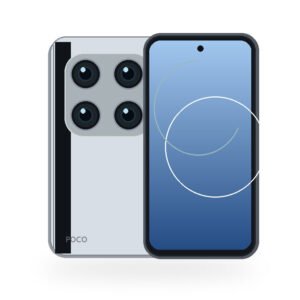
POCO M8 5G
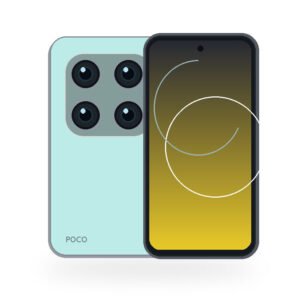
POCO M8 Pro 5G
POCO Xiaomi POCO C81
POCO Xiaomi POCO C85x 5G
POCO X8

POCO X8 Pro

POCO X8 Pro Max