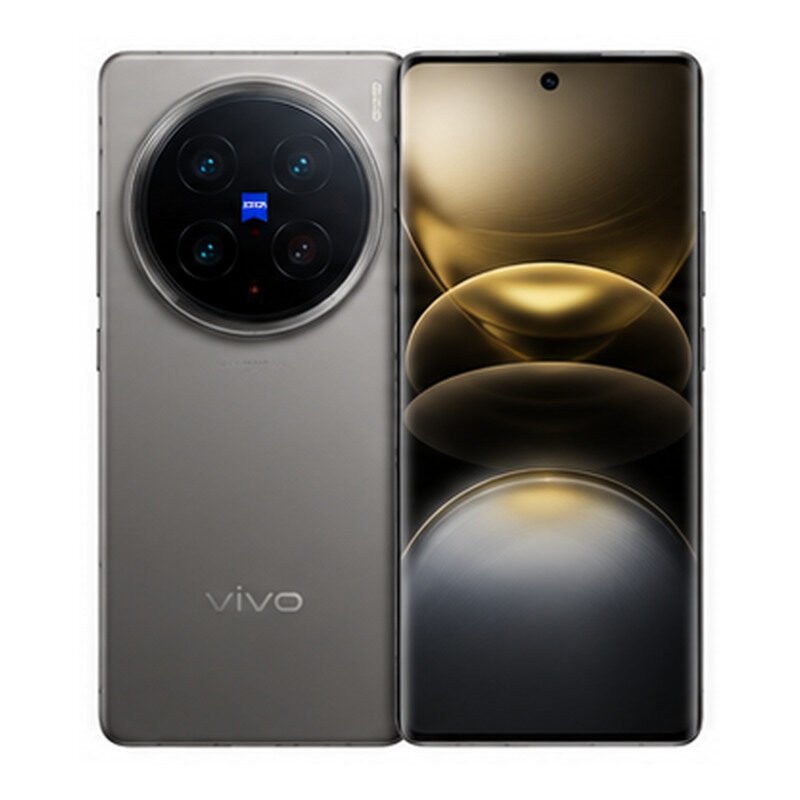
vivo X100 Ultra Key Features
vivo X100 Ultra Specifications
Processor & Software
- Operating system
- Android 14
- User interface
- OriginOS 4
- Chipset / SoC
- Snapdragon 8 Gen 3
- Fabrication process (nm)
- 4 nm
- CPU
- Octa-core
Performance Benchmarks
2,100,000
AnTuTu
Version v10
Total scoreAnTuTu
Version v10
Geekbench 6
Version v6
Scores reflect the listed benchmark versions; results from different tests are not directly comparable.
Build & Design
- Dimensions
- 164.07 × 75.57 × 9.23 mm
- Weight
- 229 g
- Available colors
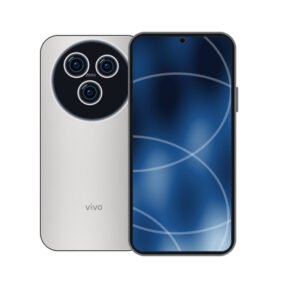
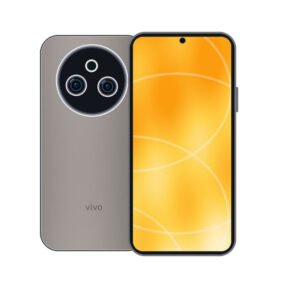
- Gray, White, Titanium
Display
- Display technology
- AMOLED
- Screen size
- 6.78 inches
- Resolution
- 3200 × 1440
- Refresh rate
- Up to 120 Hz
Network & Frequency
- Network technology
- GSM / HSPA / LTE / 5G
- SIM configuration
- Dual nano SIM
Memory & Storage
- RAM
- 12GB / 16GB
- Internal storage
- 256GB / 512GB / 1TB
- Memory configurations
- 12GB+256GB / 16GB+512GB / 16GB+1TB
Cameras & Video
- Rear camera setup
- 50 MP 1-inch main with OIS
- Ultrawide camera
- 50 MP ultrawide
- Telephoto camera
- 200 MP ZEISS APO periscope telephoto
- Front camera
- 50 MP
Sensors & Security
- Fingerprint reader
- In-display fingerprint sensor
Additional Information
- Model numbers
- V2366GA / V2366HA
Battery & Charging
- Battery capacity
- 5500 mAh
- Battery type
- Li-ion
- Wired charging
- 80W FlashCharge
- Wireless charging
- 30W wireless FlashCharge
vivo X100 Ultra is a large camera-first flagship built around Snapdragon 8 Gen 3, 6.78-inch AMOLED, and a 5500 mAh battery. The buying decision comes down to advanced mobile photography, especially high-resolution telephoto work. A verified official Pakistan selling price is not available for this exact version, so a fixed rupee figure would be misleading.
Who this phone is really for
The standout hardware is not the headline megapixel total alone: a large 1-inch-class main sensor works alongside an unusually high-resolution 200MP ZEISS APO telephoto system. Both have clear photographic roles. These are practical hardware distinctions rather than evidence of superior benchmark results in every app. Think about the tasks you perform most frequently before paying extra for another camera or a faster chipset.
For Pakistani buyers, the main question is whether vivo X100 Ultra suits daily phone use as well as its specialty. A buyer focused on advanced mobile photography, especially high-resolution telephoto work has a stronger reason to consider it than somebody who primarily sends messages, watches short clips and uses mobile banking. The latter workload rarely needs every premium feature.
The most relevant compromise is China-oriented software and a substantial 229 g weight. It is worth weighing against the camera and display benefits instead of treating the product name as a guarantee of value.
Screen size, design and one-handed comfort
The 6.78-inch AMOLED uses a 3200 × 1440 panel with Up to 120 Hz. That combination supports sharp text, detailed photographs and smooth interface motion when compatible software takes advantage of the refresh capabilities.
The larger screen offers more room for video timelines, photographs and reading, but it takes up more pocket space and can be harder to navigate one-handed.
Its 229 g weight and 164.07 × 75.57 × 9.23 mm dimensions give a concrete picture of handling. A bright panel may help visibility outdoors, but local sunlight, screen reflectivity and automatic brightness behaviour still affect the experience.
Processor, memory and real-world performance
Snapdragon 8 Gen 3 built on a 4 nm process places this phone in the performance-oriented segment. It should have the resources for demanding apps and multitasking, but that is a hardware-based assessment, not a claim that this specific sample achieved a measured frame rate.
The verified memory options are 12GB / 16GB RAM and 256GB / 512GB / 1TB storage. Faster storage and sufficient physical RAM are more meaningful for large photo collections and switching between heavy apps than software-advertised extended RAM. Virtual memory borrows storage space; it is not equivalent to another physical memory chip.
The version discussed here uses OriginOS 4 on Android 14 in the documented region. Software builds vary: an imported China-market phone and an official international model can offer different default services, app support and update arrangements. Confirm the software region and language before deciding on an imported unit.
What the cameras can actually do
The camera system consists of 50MP 1-inch main + 50MP ultrawide + 200MP ZEISS APO telephoto, with a 50 MP front arrangement. A higher pixel count is not a guarantee of better night photographs; sensor size, lens quality, optical stabilization and image processing influence what the camera delivers.
The 200MP periscope offers more cropping flexibility than a conventional low-resolution zoom camera, although final detail still depends on lighting, processing and optical reach. This gives the phone a clearer role than simply describing it as a multi-camera device. Moving between the main, ultrawide and telephoto perspectives changes composition before software zoom enters the picture.
The 50 MP 1-inch main with OIS handles general photographs, while 50 MP ultrawide expands the field of view for architecture and groups. The telephoto is 200 MP ZEISS APO periscope telephoto. For portraits, distance and lighting often matter more than a large digital zoom number. Image stabilization helps reduce camera shake but cannot freeze every moving person.
Battery capacity and practical charging
The stated 5500 mAh battery is paired with 80W FlashCharge and 30W wireless FlashCharge. Those values describe supported hardware and charging modes; they do not establish an identical charge time for every adapter, temperature or battery level.
Screen brightness, camera recording, GPS navigation and cellular reception are major reasons battery life changes from person to person. The capacity rating is useful for comparing designs, but it should not be translated into an invented number of hours of screen-on time.
Wireless charging is explicitly part of this model’s specification, so a compatible charging pad may be convenient at a desk. Charging performance may drop while the handset is hot, while gaming or near a full battery. Use a compatible, safe charger and keep the connector clean and dry.
Networks, SIM use and Pakistan compatibility
The phone supports modern cellular connectivity, including 5G in its documented hardware version, along with Wi-Fi, Bluetooth and location services. For Pakistan, that is only a starting point: network bands, SIM configuration and software region must correspond to the physical device being sold.
An overseas specification sheet does not establish that a particular imported handset has been officially launched or registered in Pakistan. Check device IMEI status through the legitimate PTA process before relying on local SIM service. A listing described as PTA approved is not sufficient proof of an individual unit’s status.
This model originated in the Chinese market; local software services and after-sales arrangements need careful checking. Also confirm whether your preferred carrier supports the handset’s relevant LTE and 5G bands in your area. Published support for a wireless generation does not mean coverage is available everywhere.
Storage choices, software and long-term ownership
The documented configurations include 12GB+256GB / 16GB+512GB / 16GB+1TB. The useful capacity for photos and apps is lower than the advertised storage total because the operating system and preinstalled applications occupy space. Select capacity with a realistic view of how much video you record and whether you routinely keep offline files.
Operating-system updates are relevant to banking security, app compatibility and device longevity. The exact software support arrangement should be checked for the purchased market variant; a launch-time Android version does not by itself establish a fixed update schedule.
Physical ownership matters too. A camera bump, back-glass finish and screen replacement cost all influence how expensive the handset feels after purchase. Warranty coverage and spare-part availability are separate from chipset performance.
How it compares with nearby Vivo models
Within Vivo’s X-series range, the X200 FE puts compact size and battery capacity first, the X200 Pro leans into telephoto imaging, and the newer X300 models balance compact designs with different primary camera and chipset priorities.
For the vivo X100 Ultra, the defining reason to buy is advanced mobile photography, especially high-resolution telephoto work. The most relevant downside remains China-oriented software and a substantial 229 g weight. A comparison is only meaningful when it uses the same memory tier, regional software build, condition and PTA status. Two listings with identical product names are not automatically equivalent.
A conventional phone avoids the hinge of a foldable, but does not offer the same expanded workspace. Buyers who spend more time reading or presenting documents than taking photographs may see greater benefit from a foldable than from a higher camera pixel count.
Buying recommendation
vivo X100 Ultra makes the strongest case for buyers who value advanced mobile photography, especially high-resolution telephoto work and understand its specific compromise. The standout hardware is not the headline megapixel total alone: a large 1-inch-class main sensor works alongside an unusually high-resolution 200MP ZEISS APO telephoto system. Both have clear photographic roles.
Because a trustworthy official Pakistan price was not confirmed for the exact model and variant, the specification should not be presented beside an invented rupee price. Local offers need separate verification.
Before purchase, verify the exact storage version, IMEI registration, screen condition, charging accessories, region and warranty documents. That small amount of checking is more useful than choosing entirely from a spec-sheet ranking.