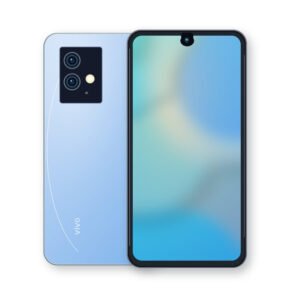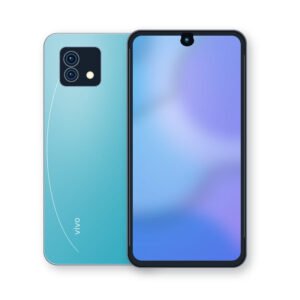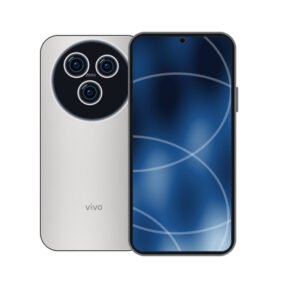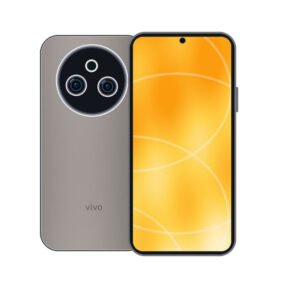
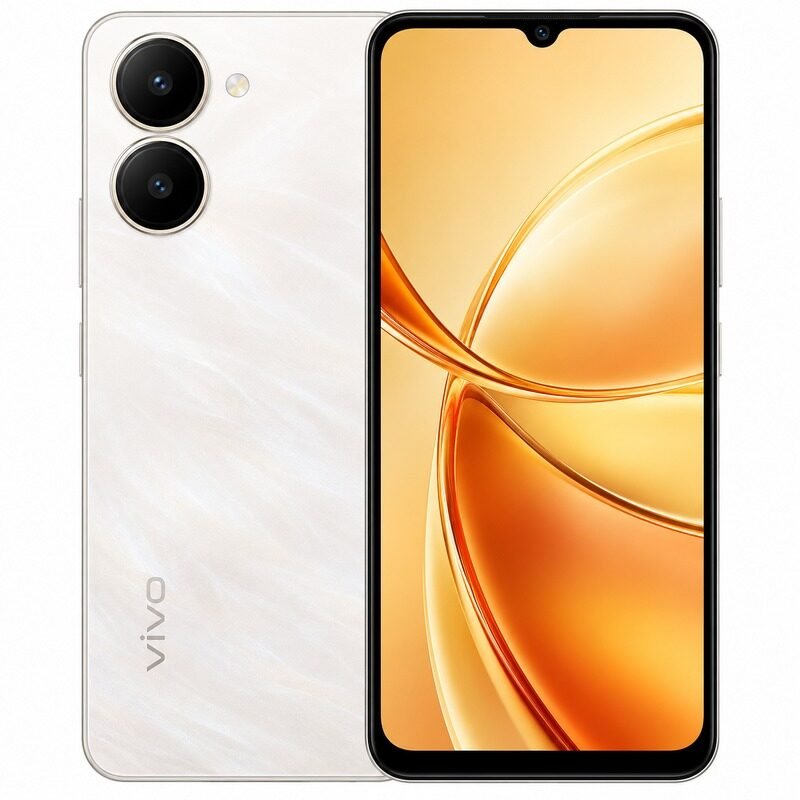
Vivo Y6t Key Features
Vivo Y6t Specifications
General & Launch
- Markets / regions
- China
Processor & Software
- Operating system
- Android 16
- User interface
- OriginOS 6
- Chipset / SoC
- Qualcomm Snapdragon 4 Gen 2
- Fabrication process (nm)
- 4 nm
- GPU
- Adreno 613
Performance Benchmarks
280,000
AnTuTu
Version 10.0
Total scoreAnTuTu
Version 10.0
Geekbench 6
Version 6.0
Scores reflect the listed benchmark versions; results from different tests are not directly comparable.
Build & Design
- Dimensions
- 167.4 × 77.1 × 8.39 mm
- Weight
- 209 g
- Available colors
- Flowing Clouds White, Sunset Blue, Twilight Black
Display
- Display technology
- LCD
- Screen size
- 6.74 inches
- Resolution
- 1600 × 720
- Refresh rate
- 120 Hz
Network & Frequency
- Network technology
- GSM / HSPA / LTE / 5G
- SIM configuration
- Dual nano-SIM
Memory & Storage
- RAM
- 6GB / 8GB
- RAM type
- LPDDR4X
- Internal storage
- 128GB / 256GB
- Storage technology
- UFS 3.1
- Memory configurations
- 6GB+128GB, 8GB+128GB, 6GB+256GB
Cameras & Video
- Rear camera setup
- 13 MP rear camera with autofocus
- Rear video recording
- Up to 1080p video
- Front camera
- 5 MP
- Front video recording
- Up to 1080p video
Connectivity
- Bluetooth
- Bluetooth 5.1
- Infrared port
- Infrared remote control
Sound & Multimedia
- 3.5mm headphone jack
- 3.5 mm headphone jack
Sensors & Security
- Fingerprint reader
- Side-mounted
Durability & Repairability
- IP rating
- IP65
Additional Information
- Model numbers
- V2559A
Battery & Charging
- Battery capacity
- 6500 mAh (typical)
- Wired charging
- 15W wired
- Reverse charging
- OTG reverse charging
Vivo Y6t: the buying picture
Vivo Y6t: The Y6t is a China-market, battery-focused 5G phone. Its main advantage is the 6500 mAh capacity combined with a 120 Hz display, while the 15W wired charging is modest for a battery this large.
For a Pakistan-focused buying decision, the important starting points are the Qualcomm Snapdragon 4 Gen 2, the 6.74-inch 1600 × 720 LCD, 6500 mAh (typical), and 15W wired. These are device specifications, not independent claims about measured speed or endurance. A model sold in a different country does not automatically have the same local pricing, services or registration status.
Design and display: what the numbers mean
The LCD has HD+ rather than Full HD+ resolution. Text remains practical for messaging and browsing, but buyers used to sharper panels will notice the reduced pixel detail on fine text and high-resolution photographs.
The phone measures 167.4 × 77.1 × 8.39 mm and weighs 209 g. The 120 Hz refresh specification is useful when scrolling webpages or switching between menus, but content playback and power management can use a different rate. Consider how the screen shape, size and overall weight fit everyday reading, typing and carrying before selecting a variant.
Screen technology is part of the trade-off. An LCD and an AMOLED can both be usable, but they differ in contrast, dark-scene rendering and visual character. Choosing between them should depend on the verified panel rather than the marketing phrase “large display.” Screen-protection claims require their own evidence; never assume a particular protective glass just because a phone is recent.
Processor, software and storage
Snapdragon 4 Gen 2 is an entry-level 5G platform aimed at straightforward daily tasks. It is reasonable for calls, navigation, social feeds and casual games, but does not establish high graphics settings or stable frame rates in heavy titles.
This device uses Android 16 with OriginOS 6. The software version is relevant to app support, security settings, language options and interface familiarity. A listed version does not establish future upgrade commitments or a guaranteed number of security patches. For an imported model, users should also check that the installed software supports their preferred languages and Google services before paying.
Published memory choices include 6GB / 8GB physical RAM and 128GB / 256GB storage. These are hardware capacities; software-based RAM expansion is not a substitute for actual memory. Storage needs vary greatly: photos and casual applications occupy much less space than offline video libraries, downloaded maps or large games. Match the real configuration on the box to the listing rather than assuming every variant exists in Pakistan.
Rear and selfie cameras
The 13 MP rear camera is a simple imaging setup, with a 5 MP front-facing camera for video chats and basic selfies. There is no verified optical zoom, ultrawide camera, optical stabilisation or premium camera system to justify specialist photography claims.
The recorded main camera specification is 13 MP rear camera with autofocus, while the selfie camera is 5 MP. Megapixels describe image resolution, not the complete photographic result. Sensor size, lens quality, image processing, available light and subject movement affect practical quality. Without reproducible sample testing, claiming that a model decisively beats a different phone in low light would be misleading.
People who photograph printed documents need reliable focus and usable contrast more than a dramatic camera-count label. Those who shoot moving children, sports or night video should inspect actual stabilisation and recording capabilities. Higher-resolution modes can also produce larger files. The sensible choice is to weigh verified camera functions against the type of images a buyer takes most often.
Battery and charging in everyday use
The battery is large, but 15W charging means refills can be comparatively slow. A buyer prioritising long unplugged periods may value this arrangement more than someone who needs rapid charging between short breaks.
The 6500 mAh (typical) specification is a typical capacity, not a promise of a fixed number of hours. Phone calls, video recording, 5G signal strength, mobile hotspot use, screen brightness and background synchronisation can change the outcome substantially. For readers who work outdoors or spend long periods away from a socket, battery size should be considered alongside screen resolution, chipset power demands and handset weight.
The manufacturer-rated input of 15W wired needs a compatible charger and cable for best results. Actual power can reduce as the battery approaches full or warms up. No exact full-charge duration or battery-health guarantee is inferred here. Users who depend on repeated top-ups should pay attention to charging support, power-supply compatibility and the condition of the charging port.
Connectivity and Pakistan use
The model has a China-market launch, not a confirmed official Pakistan price or local warranty. Imported-unit network compatibility and PTA registration must be checked for the exact device rather than assumed from a Chinese listing.
Manufacturer information establishes 5G support, but cellular compatibility is about the specific bands and the device’s exact regional software, not only a 5G logo. Pakistan buyers should check whether their operator’s working 4G bands and relevant features are supported by the unit they are actually considering. A network feature available in one region may be disabled or absent in another.
The Pakistan price field is intentionally blank where a reliable local offer has not been independently verified. A converted foreign price, expected launch figure or third-party “coming soon” amount must not be presented as a confirmed local selling price. Also verify seller identity, written warranty terms, return conditions and PTA approval for the individual IMEI instead of treating device-level compatibility as regulatory clearance.
Strengths, compromises and model identity
The Y6t is a China-market, battery-focused 5G phone. Its main advantage is the 6500 mAh capacity combined with a 120 Hz display, while the 15W wired charging is modest for a battery this large.
The biggest decision is whether the phone’s stated advantages match your routine. A high refresh rate may matter more to someone scrolling all day; charging speed matters more to a person who frequently has only a short plug-in window. Storage speed becomes more noticeable when installing or moving large files, while a more versatile optical camera system matters for portraits and travel photos. None of these priorities is universal.
Always check the full model name, physical RAM and storage configuration. Closely related Vivo names can share a chassis or chipset while changing charging power and storage technology. The exact identity is therefore more useful than a seller headline that mentions only a series. When comparing prices, compare like-for-like hardware, condition and warranty.
Who should consider Y6t?
Consider Vivo Y6t if its 6.74-inch 1600 × 720 LCD, 6500 mAh (typical), and specified camera arrangement fit your priorities and a genuine unit is offered at a defensible local price. It is less appropriate when your main requirement depends on an unlisted feature, unsupported performance claims, or a warranty that cannot be verified.
Before making a decision, match the model number on the device with the listing, verify its physical memory configuration, inspect the screen and camera in person if possible, confirm cellular operation and independently verify registration status. That short checklist protects buyers more effectively than relying on a speculative Pakistan price or impressive but unsupported performance score.