
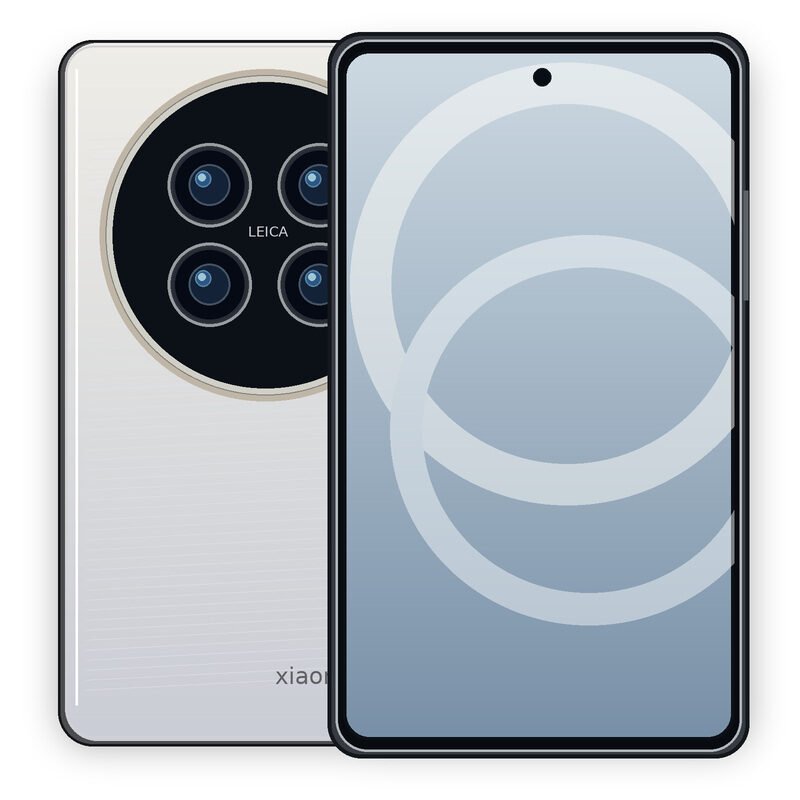
Xiaomi 14 Ultra Key Features
Xiaomi 14 Ultra Specifications
Processor & Software
- Operating system
- Android 14 at launch
- User interface
- Xiaomi HyperOS
- Chipset / SoC
- Snapdragon 8 Gen 3
- Fabrication process (nm)
- 4 nm
Performance Benchmarks
2,050,000
AnTuTu
Version v10
Total scoreAnTuTu
Version v10
Geekbench 6
Version v6
Scores reflect the listed benchmark versions; results from different tests are not directly comparable.
Build & Design
- Dimensions
- 161.4 × 75.3 × 9.2 mm
- Weight
- 219.8 g
- Available colors
- White, Black
Display
- Display technology
- LTPO AMOLED
- Screen size
- 6.73 inches
- Resolution
- 3200 × 1440 pixels
- Pixel density (ppi)
- 522 ppi
- Refresh rate
- 1–120 Hz adaptive
- Brightness (nits)
- 3000 nits peak
- HDR formats
- Dolby Vision; HDR10+
- Display protection
- Xiaomi Shield Glass
Network & Frequency
- Network technology
- GSM / HSPA / LTE / 5G
- SIM configuration
- Dual nano-SIM / regional eSIM options
Memory & Storage
- RAM
- 16GB physical RAM
- RAM type
- LPDDR5X
- Internal storage
- 512GB
- Storage technology
- UFS 4.0
Cameras & Video
- Rear camera setup
- 50MP 1-inch main, variable f/1.63–f/4.0 (OIS)
- Primary sensor
- Sony LYT-900
- Ultrawide camera
- 50MP 12mm ultra-wide
- Telephoto camera
- 50MP 75mm floating telephoto + 50MP 120mm periscope
- Rear camera features
- Leica lenses; four 50MP rear cameras
- Rear video recording
- 8K at 30fps; 4K up to 120fps
- Front camera
- 32MP
Connectivity
- Wi-Fi
- Wi-Fi 7
- Bluetooth
- 5.4
- NFC
- Yes
- USB
- USB 3.2 Type-C
Sound & Multimedia
- Stereo speakers
- Stereo speakers
Sensors & Security
- Fingerprint reader
- In-display fingerprint
Durability & Repairability
- IP rating
- IP68
Battery & Charging
- Battery capacity
- 5000mAh typical (global variant)
- Wired charging
- 90W wired HyperCharge
- Wireless charging
- 80W wireless HyperCharge
- Reverse charging
- Reverse wireless charging
Xiaomi 14 Ultra overview for Pakistan buyers
Xiaomi 14 Ultra is most interesting for a four-camera Leica system with a one-inch main sensor and variable aperture. There is no verified official Pakistan retail price for the exact device and configuration in this profile. Expected prices and currency conversions are not reliable substitutes for a local quotation. It is worth judging the hardware on what it changes in everyday use rather than on a single number in a specification table.
The camera system is the main selling point: a 1-inch 50MP primary sensor with a variable aperture, 50MP floating telephoto, 50MP periscope, and 50MP ultra-wide give photographers meaningful focal-length choices.
Pakistan price, variants and practical purchasing checks
The manufacturer publishes a Pakistan specification page for the Xiaomi 14 Ultra, but the available Pakistan price reference remains an expected rather than confirmed retail figure. No unsupported PKR number is shown.
Before comparing quotations, match the physical RAM, internal storage, operating-system region, warranty paperwork and device identifier. A China-market edition, a global edition and a Pakistan-warranty unit should not automatically be treated as identical. The same commercial model name can cover different network settings, preloaded applications, and included accessories.
Design and screen: what the numbers mean
The Xiaomi 14 Ultra uses a 6.73 inches LTPO AMOLED display with 3200 × 1440 pixels resolution and 1–120 Hz adaptive refresh support. The listed refresh ceiling is a panel capability, not a guarantee that every game or application runs at that frame rate. Adaptive modes also change their behaviour with brightness, video playback and power settings.
161.4 × 75.3 × 9.2 mm and 219.8 g tell a more useful story about daily handling than promotional descriptions of slimness. A person moving from a narrow compact phone should check grip width, the camera island and the height of a protective case. Display brightness figures are measured under particular conditions and should not be read as constant full-screen outdoor brightness.
Chipset, memory and everyday responsiveness
Processing is handled by the Snapdragon 8 Gen 3, paired with 16GB physical RAM (Pakistan specification) and 512GB (Pakistan specification) storage in the described configuration. These are hardware specifications; no independent gaming frame-rate, thermal-throttling or app-launch benchmark is being claimed here.
LPDDR5X memory and UFS 4.0 storage support quicker application loading and moving large files than older entry-level hardware. However, actual performance depends on background tasks, software versions and free space. Physical RAM is distinct from software-based memory expansion, which uses internal storage and is not equivalent to adding memory chips.
Camera arrangement and useful photography choices
The Xiaomi 14 Ultra offers three distinct alternatives to relying only on a standard wide camera. Its 75mm floating telephoto can frame portraits and close-up subjects, the 120mm periscope reaches farther, and the 12mm ultra-wide captures scenes that would not fit through the principal lens. The 1-inch LYT-900 main sensor also has a variable aperture, so its optical design is more specialized than merely fitting four 50MP labels on a rear disc.
The rear system includes 50MP 1-inch main, variable f/1.63–f/4.0 (OIS). Other dedicated lenses include 50MP 75mm floating telephoto + 50MP 120mm periscope and 50MP 12mm ultra-wide. Focal lengths reveal a photographer’s choices more clearly than adding all megapixel counts together. A telephoto lens lets the photographer frame faces or distant subjects differently without relying only on a crop from the main lens.
The front camera arrangement is 32MP. The actual quality of portraits, moving subjects and low-light scenes also depends on processing, focus and stabilization. Optical image stabilization helps to reduce certain kinds of camera shake; it cannot freeze a fast-moving child or vehicle in poor light. Built-in scene modes may help, but they are not substitutes for enough light.
8K at 30fps; 4K up to 120fps. Supported resolution is a recording format, not a guarantee of constant frame rates or consistent lens switching in all modes. Check how much storage long high-resolution clips need, whether stabilization is available at the selected setting, and whether the intended microphone or USB accessory works with the device.
Battery capacity, charging and realistic expectations
The documented battery is 5000mAh typical (global variant), with 90W wired HyperCharge and 80W wireless HyperCharge. Capacity is the nominal battery specification. It does not by itself establish how many hours a buyer will get, because screen brightness, mobile-signal strength, camera use and applications differ widely.
Charging wattage describes a supported peak method with suitable equipment. It is not a promise that the battery will draw maximum power from empty to full. A compatible cable, charging brick, temperature and the phone’s battery-management settings all affect the charging curve. Where wireless charging is listed, the matching charger can be a separate purchase; do not assume it is included in the box.
Software, security and connectivity in Pakistan
The exact battery specification depends on geography. The global version lists 5000mAh typical capacity, whereas Chinese-market discussions often cite a different battery figure. Copying the larger figure into a Pakistan profile would obscure which device is being described. The Pakistan manufacturer page documents the 16GB and 512GB configuration, while a verified current local retail price remains a separate question.
The device was introduced with Android 14 at launch and Xiaomi HyperOS. The version shown on a new retail handset may differ after system updates. The presence of a feature in one region does not confirm it works on every regional firmware build or with every service account.
The network specification supports GSM / HSPA / LTE / 5G. A 5G-capable modem does not guarantee a usable 5G service in a particular city or on a particular plan. For calls and data, confirm the supported band combinations, software configuration, SIM/eSIM provisioning and actual local operator coverage. Imported models deserve special attention to VoLTE, carrier settings and regional restrictions.
Where the advantages end
The strongest reason to consider this phone is the combination of a variable-aperture main camera, a dedicated 75mm telephoto and a longer 120mm periscope. This is a hardware-led benefit with a clear use case, not a claim based on invented hands-on testing. If you seldom use that feature, the difference may not justify a larger budget.
The main drawback is its large circular camera bump, high weight and potentially costly imaging accessories are unlikely to suit minimalist buyers. Price and availability can change faster than the underlying hardware, so keep these separate when judging value. Pay particular attention to post-sale service and replacement parts if buying an imported or older-region edition.
Alternatives and final buying decision
Xiaomi 15 Ultra brings a 200MP telephoto and a different camera design; Xiaomi 14 is a substantially smaller alternative. Comparisons should be made at the same RAM/storage capacity and with equivalent warranty coverage. If the alternative includes a different camera design or smaller screen, that difference can matter more than a slight change in nominal processing power.
Xiaomi 14 Ultra is a sensible candidate for someone who specifically values a four-camera Leica system with a one-inch main sensor and variable aperture. It is less compelling for a buyer who only needs messaging, maps, social media and occasional photos. Compare real quotations, confirm the exact model and Pakistan network status, and check that the features you are paying extra for solve a genuine need.
You can compare more devices in the Xiaomi mobile directory on WhatMobilez. Use the full specifications above for a side-by-side check, not a projected price or a generic overall score.

Xiaomi 18
Xiaomi 18 Pro Max

Xiaomi 18 Pro
Xiaomi Poco C71

Xiaomi Redmi Note 17 Pro Max 5G

Xiaomi Redmi Note 17 Pro 5G
Xiaomi Redmi 17C