
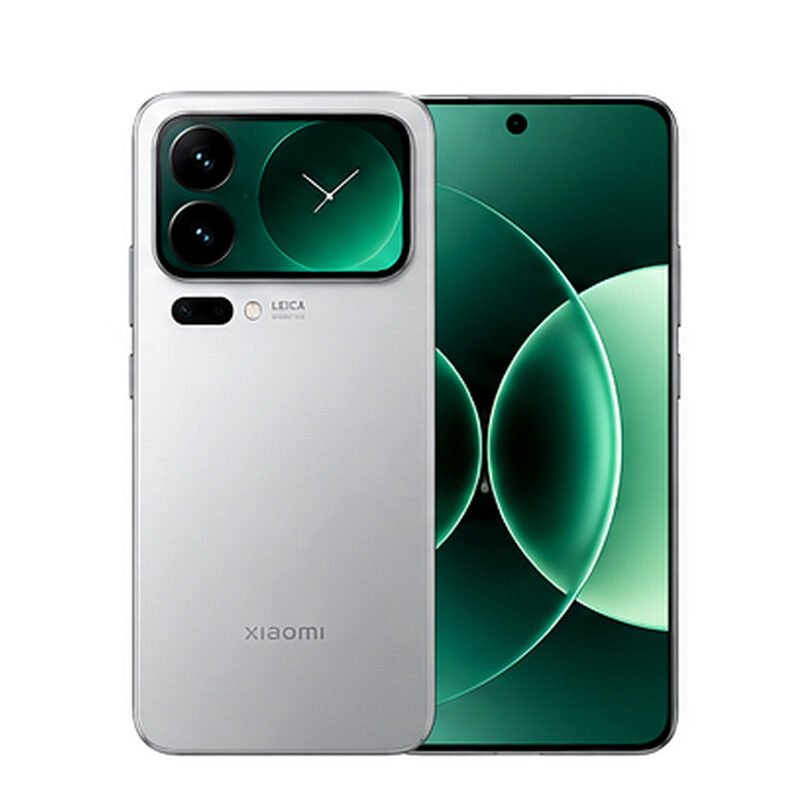
Xiaomi 17 Pro Key Features
Xiaomi 17 Pro Specifications
General & Launch
- Markets / regions
- China
Build & Design
- Dimensions
- 151.1 x 71.8 x 8mm
- Weight
- 192g
- Available colors
- Purple
Network & Frequency
- Network technology
- GSM / HSPA / LTE / 5G
Processor & Software
- Operating system
- Android 16
- User interface
- Xiaomi HyperOS 3
- Chipset / SoC
- Qualcomm Snapdragon 8 Elite Gen 5
- Fabrication process (nm)
- 3nm
Display
- Display technology
- 6.3-inch LTPO OLED
- Screen size
- 6.3 inches
- Resolution
- 2656 x 1220
- Refresh rate
- 1–120Hz
- Secondary display
- 2.7-inch rear AMOLED display, 904 x 572, up to 120Hz
Memory & Storage
- RAM
- 12GB / 16GB
- RAM type
- LPDDR5X
- Internal storage
- 256GB / 512GB / 1TB
- Storage technology
- UFS 4.1
Cameras & Video
- Rear camera setup
- 50MP Light Fusion 950L, OIS
- Ultrawide camera
- 50MP
- Telephoto camera
- 50MP periscope, 5x
- Rear video recording
- 8K at 30fps; 4K at 60fps
- Front camera
- 50MP
Connectivity
- Wi-Fi
- Wi-Fi 7
- Bluetooth
- Bluetooth 5.4
- NFC
- Yes
- USB
- USB Type-C
Sensors & Security
- Fingerprint reader
- In-screen fingerprint
Battery & Charging
- Battery capacity
- 6300mAh
- Wired charging
- 100W wired
- Wireless charging
- 50W
- Removable battery
- No
Durability & Repairability
- IP rating
- IP68
Xiaomi 17 Pro price and buying position in Pakistan
Xiaomi 17 Pro is aimed at enthusiasts who value rear-screen photography and compact flagship hardware. Its headline distinction is 2.7-inch rear display integrated with the camera island. That is more useful when making a shortlist than treating every similarly named Xiaomi phone as the same device with a different price tag.
A reliable Pakistan retail price has not been established for this precise model. It would be misleading to convert a Chinese launch price directly into a local selling price, since taxes, duties, shipping and the importer’s margin can change the result significantly.
The Xiaomi 17 Pro is primarily associated with the China market. For buyers in Pakistan, the key question is not just whether someone can supply a unit. The more important checks are firmware region, Google app support, operating-system language, mobile network compatibility, return policy and repair arrangements. An imported unit is not automatically a locally authorised, PTA-cleared handset.
Display size, handling and everyday design
The 6.3-inch LTPO OLED runs at 2656 x 1220 with a maximum refresh capability of 1–120Hz. Resolution affects how crisp small text appears; refresh rate helps scrolling and supported animations look smoother. Neither specification alone tells you how accurately the display represents skin tones or how well it holds brightness for prolonged outdoor use.
At 192g with stated body dimensions of 151.1 x 71.8 x 8mm, this phone has a very specific handling profile. Screen size is not the whole story: overall width, the height of the body, weight distribution and the position of the power button can determine whether it is comfortable on a commute or while using one hand.
The main practical question is how you use your screen. People reading documents, scanning long webpages and editing photos may prefer more workspace; commuters who type while holding a bag may value narrower hardware. Consider trying the phone’s width before choosing a larger display merely because it looks impressive in a specification chart.
This model also has a 2.7-inch rear AMOLED display, 904 x 572, up to 120Hz. That second panel changes how the device can be used, but its smaller surface and supported app layouts mean it is not simply another full-sized phone display.
Processor, storage and the tasks that matter
Inside is the Qualcomm Snapdragon 8 Elite Gen 5 built on a stated 3nm process. It is paired with 12GB / 16GB RAM and 256GB / 512GB / 1TB listed storage choices. The memory technology is LPDDR5X; internal storage uses UFS 4.1. Those distinctions are relevant when switching among apps, moving large video files and keeping locally stored photographs.
A capable chipset can make multitasking, image processing and high-frame-rate games feel responsive, but a processor name is not an independently measured gaming result. Sustained speed can change with ambient temperature, software versions, graphics settings and the cooling design. Avoid assuming a fixed frame rate in every title simply because the phone has a flagship-class chip.
Leica camera setup, zoom and video capabilities
The rear camera setup includes a 50MP Light Fusion 950L, OIS main camera, a 50MP periscope, 5x telephoto camera, and a 50MP ultra-wide camera. The front camera is specified at 50MP. These are lens and sensor specifications, not promises about image quality in every scene.
The important distinction is what each lens physically does. The main camera is the starting point for most indoor and outdoor photos; the secondary focal lengths change composition and subject distance. The rear screen can assist framing with the stronger rear cameras, while the periscope telephoto enables tighter compositions at distance. Digital zoom may enlarge a smaller area of the picture, but it is not a substitute for a dedicated optical focal length.
For video, Xiaomi lists 8K at 30fps; 4K at 60fps for this model’s supported recording modes. The highest listed mode may be restricted to particular camera sensors or frame-rate combinations, and stabilisation options can differ between resolutions. If you record school performances, sports or travel footage, check which mode keeps the framing and stabilisation you actually need.
Night photography, portraits and moving subjects introduce different challenges. Optical stabilisation can reduce the effect of hand movement, but it cannot freeze a fast-moving child in a dim room. Focus behaviour, exposure choices and available light remain important. The specification sheet is useful for identifying hardware; real sample images of the precise phone variant are the better way to decide whether you like the resulting colour and processing.
Battery life, charging and heat
A 6300mAh battery is paired with 100W wired charging and 50W wireless charging. Actual charging time depends on the compatible adapter, cable, heat, battery state and the charging profile enabled by the software. A wattage rating should not be mistaken for a constant power draw from empty to full.
A larger number of milliamp-hours gives an indication of energy capacity, but it does not guarantee an exact number of screen-on hours. Brightness, radio signal, gaming workload, camera recording and background apps all influence runtime. Someone who spends most of the day on Wi-Fi may have a different result from a person travelling through weak-signal areas while using mobile navigation.
Software, connectivity and local compatibility
The specified software platform is Android 16 with Xiaomi HyperOS 3. Features may change with regional software builds and updates. A device sold with an older factory build can receive later system updates, but the exact update timeline should be checked through the handset’s settings and manufacturer announcements rather than guessed from its processor.
Its published wireless equipment includes Wi-Fi 7 and Bluetooth 5.4 plus NFC. These features still require matching routers, accessories or payment services. A Wi-Fi standard on a spec sheet does not automatically produce faster internet when the home connection or router is the limiting factor.
Pakistani shoppers should distinguish a phone’s stated 5G radio support from usable local 5G service, and they should verify the particular model number and IMEI with the relevant PTA/DIRBS process before relying on a seller’s claim. Also check that your network provider supports the handset’s required LTE bands and, where relevant, eSIM. Imported devices can have different software and service arrangements even when their retail names look identical.
The rear display is 2.7 inches; do not confuse it with the larger rear screen on Pro Max.
Where this model makes sense—and where it does not
The strongest case for Xiaomi 17 Pro is 2.7-inch rear display integrated with the camera island. Its most natural audience is enthusiasts who value rear-screen photography and compact flagship hardware. A buyer who will genuinely use those features has a clearer reason to consider it than someone simply picking the newest-looking model number.
The main trade-off is that china-market firmware, the extra screen and import support make it a less straightforward purchase than the globally offered Xiaomi 17. This deserves attention before paying a premium, especially for a phone expected to remain in use for several years. Durability, authorised repairs, replacement screens and battery service can become more important than a small difference in launch specifications.
A relevant comparison is the Xiaomi 17. Focus on the differences that can be felt in your routine: hand size, optical camera reach, weight, supported wireless charging and the final price of the exact storage version. A side-by-side comparison is more useful than ranking the phones by processor naming alone.
Practical checks before deciding
Start with your current phone. Identify the one frustration that would actually justify replacing it: battery endurance, low-light photography, hand comfort, screen size or storage. Then compare this Xiaomi’s corresponding verified feature with the device you already own. A flashy camera specification is not a meaningful upgrade if you almost never use that camera’s focal length.
Check the precise storage variant and region, inspect the screen and camera glass, confirm charging accessories, and test calls, mobile data, microphones, speakers and fingerprint unlocking when physically examining a unit. For a folding phone, also inspect the hinge motion and inner display.
For a Pakistan purchase, document the invoice, warranty issuer and IMEI information independently. Keep the declared price, the PTA position and any expected import charges separate. WhatMobilez is providing specification and buying information, not selling this phone or certifying a retailer’s stock. The right decision is the configuration whose practical advantages justify its real total cost.

Xiaomi 18
Xiaomi 18 Pro Max

Xiaomi 18 Pro
Xiaomi Poco C71

Xiaomi Redmi Note 17 Pro Max 5G

Xiaomi Redmi Note 17 Pro 5G
Xiaomi Redmi 17C