Xiaomi Redmi Note 13 Pro Key Features
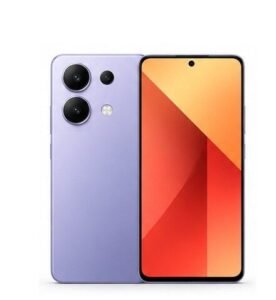
Xiaomi Redmi Note 13 Pro Specifications
General & Launch
- Availability
- Out of Stock
- Markets / regions
- Pakistan
Processor & Software
- Operating system
- MIUI 14
- Chipset / SoC
- MediaTek Helio G99-Ultra
- Fabrication process (nm)
- 6nm
- CPU
- Octa-core, up to 2.2GHz
- GPU
- Mali-G57 MC2
Performance Benchmarks
581,979
AnTuTu
Version v10
Total scoreAnTuTu
Version v10
Geekbench 6
Version v6
Scores reflect the listed benchmark versions; results from different tests are not directly comparable.
Build & Design
- Dimensions
- 161.1 × 74.95 × 7.98 mm
- Weight
- 188g
- Available colors
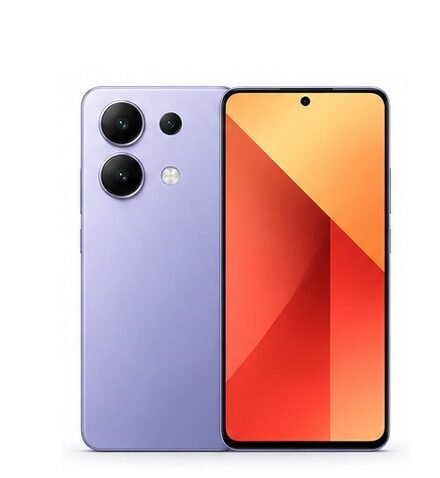
- Midnight Black; Forest Green; Lavender Purple
Display
- Display technology
- AMOLED, 10-bit
- Screen size
- 6.67 inches
- Resolution
- 2400 × 1080 pixels
- Refresh rate
- Up to 120Hz
- Brightness (nits)
- 500 nits typical; 1300 nits peak
- Display protection
- Corning Gorilla Glass 5
Network & Frequency
- Network technology
- GSM / WCDMA / LTE (4G)
- 2G bands
- GSM 850/900/1800/1900 MHz
- SIM configuration
- Hybrid dual SIM (SIM or microSD)
Memory & Storage
- RAM
- 8GB or 12GB LPDDR4X
- Internal storage
- 256GB or 512GB
- Storage technology
- UFS 2.2
- Memory card slot
- microSD, hybrid slot
- Expandable storage
- Up to 1TB
- Memory configurations
- 8GB + 256GB; 12GB + 512GB
Cameras & Video
- Rear camera setup
- 200MP main, f/1.65
- Ultrawide camera
- 8MP, f/2.2
- Macro / depth camera
- 2MP, f/2.4
- Optical stabilization
- Yes, main camera
- Rear video recording
- 1080p 30/60fps
- Front camera
- 16MP, f/2.4
- Front video recording
- 1080p 30/60fps
Connectivity
- Wi-Fi
- 802.11 a/b/g/n/ac
- Bluetooth
- Bluetooth 5.2
- Positioning / GNSS
- GPS, GLONASS, BDS, Galileo
- USB
- USB-C
- Infrared port
- IR blaster
Sound & Multimedia
- Speakers
- Dual speakers
- Stereo speakers
- Yes
- 3.5mm headphone jack
- 3.5mm jack
- Audio codecs / features
- Dolby Atmos
Sensors & Security
- Sensors
- Proximity, ambient light, accelerometer, compass, gyroscope
- Fingerprint reader
- Under-display
- Face unlock
- AI face unlock
Durability & Repairability
- IP rating
- IP54
Additional Information
- Technical notes
- Redmi Note 13 Pro 4G; not the separate 5G model
Battery & Charging
- Battery capacity
- 5000mAh (typical)
- Wired charging
- 67W wired USB-C
Xiaomi Redmi Note 13 Pro: A Camera-Focused Phone With a Premium Display
The Xiaomi Redmi Note 13 Pro is a mid-range smartphone built around three important features: a 200MP camera with optical image stabilization, a 120Hz AMOLED display, and 67W fast charging. It is particularly appealing to buyers who value photography, screen quality, and everyday usability more than high-end gaming performance.
The standard Redmi Note 13 Pro discussed here is the 4G version powered by the MediaTek Helio G99-Ultra. It should not be confused with the Redmi Note 13 Pro 5G, which uses a different Snapdragon processor and display configuration.
For buyers in Pakistan, the phone offers a practical combination of substantial storage, useful camera hardware, and a familiar Xiaomi software experience. However, its 4G-only connectivity and modest gaming capabilities are worth considering before making a purchase.
Xiaomi Redmi Note 13 Pro Price in Pakistan
The Xiaomi Redmi Note 13 Pro price in Pakistan depends on the RAM and storage configuration, warranty coverage, and whether the handset is officially distributed or imported.
The commonly listed configurations include 8GB RAM with 256GB storage and 12GB RAM with 512GB storage. Availability can differ between retailers.
The 8GB/256GB model is a sensible starting point for most buyers. It provides enough physical memory for everyday multitasking and generous internal storage for applications, photographs, downloaded videos, and documents.
The 12GB/512GB configuration makes more sense for users who regularly record videos, store large media collections, or keep numerous applications installed.
When comparing prices, check the exact configuration and warranty. Also verify the handset’s IMEI and PTA registration status rather than assuming that every Redmi Note 13 Pro offered in Pakistan has the same approval or warranty coverage.
Design and Build Quality
The Redmi Note 13 Pro has a clean, modern design with flat sides, relatively slim screen borders, and a prominent rear camera arrangement.
At approximately 188 grams and 7.98mm thick, it offers a manageable balance between screen size and portability. The large display still makes two-handed typing more comfortable for some users.
Xiaomi offers the phone in finishes including Midnight Black, Forest Green, and Lavender Purple, although available colours depend on the market.
The front uses Corning Gorilla Glass 5, providing additional resistance to everyday scratches and minor impacts. A protective case and screen protector remain worthwhile because strengthened glass is not damage-proof.
Another useful feature is its IP54 dust and splash resistance rating. This provides limited protection against dust and water splashes, but the phone is not designed for underwater use. Water resistance may also deteriorate with wear.
AMOLED Display: A Major Reason to Choose This Phone
The Redmi Note 13 Pro features a 6.67-inch AMOLED display with a resolution of 2400 × 1080 pixels and a refresh rate of up to 120Hz.
AMOLED technology produces deep blacks, strong contrast, and rich colours. These characteristics are particularly noticeable when watching videos, viewing photographs, or using applications with dark interfaces.
The 120Hz refresh rate makes scrolling through menus, social media feeds, and supported applications appear smoother than on a conventional 60Hz screen.
Xiaomi specifies a peak brightness of 1300 nits. This peak figure applies under particular conditions and should not be confused with continuous full-screen brightness. Outdoor visibility will depend on lighting and the content displayed.
Gorilla Glass 5 protection, reading modes, and screen-dimming features add to the display’s everyday practicality.
For people who spend considerable time watching YouTube, browsing websites, reading articles, or using social media, the display is one of this phone’s strongest selling points.
MediaTek Helio G99-Ultra Performance
The Redmi Note 13 Pro 4G runs on the MediaTek Helio G99-Ultra, a 6nm octa-core processor paired with Mali-G57 MC2 graphics.
This chipset is designed to balance everyday performance with power efficiency.
For routine smartphone activities, its hardware is suitable for:
- WhatsApp, Facebook, Instagram, and other communication applications.
- Web browsing, online banking, and productivity applications.
- Video streaming and online classes.
- Photo editing and ordinary multitasking.
- Casual and moderately demanding mobile games.
The phone can handle popular games such as PUBG Mobile and Call of Duty Mobile, although graphics settings and frame rates depend on the game and software version.
Buyers who prioritise consistently high frame rates, demanding graphics, or prolonged competitive gaming should consider a phone with a more powerful processor.
The important distinction is that Helio G99-Ultra is a capable 4G mid-range chipset, not a flagship gaming processor.
RAM, Storage, and Memory Expansion
The phone uses LPDDR4X RAM and UFS 2.2 storage.
UFS storage helps with application loading, file transfers, and general responsiveness compared with slower storage technologies.
The Redmi Note 13 Pro also supports memory extension, which uses part of the internal storage as additional virtual memory. This feature should not be confused with physical RAM, and it does not provide the same performance benefits as installing more physical memory.
Expandable microSD storage is supported through a hybrid SIM arrangement. Using a memory card may therefore require giving up the second SIM position.
200MP Rear Camera: What Makes It Useful?
Photography is one of the main reasons to consider the Redmi Note 13 Pro.
Its rear camera system includes:
- 200MP main camera with optical image stabilization.
- 8MP ultra-wide camera for wider scenes.
- 2MP macro camera for close-up subjects.
The 200MP primary sensor offers considerable resolution, but megapixel count alone does not determine image quality.
Sensor performance, lighting, image processing, stabilization, and focusing all contribute to the finished photograph.
Main Camera and Optical Image Stabilization
The main camera includes OIS (Optical Image Stabilization), which physically compensates for small camera movements.
This is particularly useful when taking handheld photographs indoors or in less favourable lighting.
The camera also uses pixel-binning technology, combining information from multiple pixels to produce more manageable images with improved light capture.
Full-resolution shooting can preserve additional detail in suitable lighting, but it creates larger files and does not guarantee better results in every situation.
For everyday photography, the standard camera mode is generally the more convenient option.
Ultra-Wide and Macro Photography
The 8MP ultra-wide camera is useful for landscapes, group photographs, and situations where stepping farther back is difficult.
However, its lower resolution means it should not be expected to match the primary camera’s fine detail.
The 2MP macro sensor provides a dedicated close-up option, but its limited resolution restricts the detail it can capture.
For many close-up subjects, taking a photograph with the main camera and cropping carefully may provide a more useful result.
Selfie Camera and Video Recording
On the front, the Redmi Note 13 Pro has a 16MP selfie camera for video calls, portraits, and social media photography.
Both the front and rear cameras support video recording up to 1080p at 60fps on the standard 4G model.
This is adequate for ordinary videos and social media clips, although buyers who require 4K recording should consider another model.
Battery Life and 67W Fast Charging
The Redmi Note 13 Pro includes a 5000mAh battery with support for 67W wired fast charging.
The battery capacity is appropriate for a phone with a large AMOLED screen and an efficient mid-range processor.
For typical use involving messaging, browsing, calls, and video streaming, the hardware is designed to support comfortable daily usage. Actual battery endurance depends on brightness, mobile signal strength, background activity, and gaming habits.
The 67W charging system is an important advantage over slower-charging alternatives.
Xiaomi advertises rapid charging under controlled conditions, but real charging time can change with temperature, battery level, charger compatibility, and whether the phone is being used.
A compatible charger and cable are important for obtaining the supported charging speed.
Software, Security, and Everyday Features
The Redmi Note 13 Pro originally shipped with MIUI 14 based on Android 13. The software installed on an individual device may differ depending on updates and regional distribution.
Xiaomi’s interface provides customization options, multitasking tools, privacy controls, and battery-management settings.
The phone includes an in-display fingerprint sensor and AI face unlocking. Fingerprint authentication is particularly convenient for everyday access and supported applications.
Other useful features include stereo speakers with Dolby Atmos support, a 3.5mm headphone jack, Bluetooth 5.2, dual-band Wi-Fi, and an infrared blaster.
The infrared blaster can be useful for controlling compatible home appliances through supported remote-control applications.
These practical additions make the phone more versatile than its camera specifications alone might suggest.
Redmi Note 13 Pro 4G vs Redmi Note 13 Pro 5G
The names are similar, but the two phones should not be treated as identical.
| Feature | Redmi Note 13 Pro 4G | Redmi Note 13 Pro 5G |
|---|---|---|
| Processor | Helio G99-Ultra | Snapdragon 7s Gen 2 |
| Mobile network | 4G LTE | 5G |
| Display | 6.67-inch FHD+ AMOLED | 6.67-inch 1.5K AMOLED |
| Main camera | 200MP with OIS | 200MP with OIS |
| Battery | 5000mAh | 5100mAh |
| Charging | 67W wired | 67W wired |
The 5G version offers a different performance platform, higher display resolution, and support for newer mobile networks.
The 4G version remains worth considering when its selling price is meaningfully lower and 5G connectivity is not a priority.
Buyers can explore additional devices through the Xiaomi mobile phones directory and compare their specifications before choosing.
Advantages and Limitations
The Redmi Note 13 Pro has several meaningful strengths. Its AMOLED panel provides an attractive viewing experience, the 200MP stabilized main camera offers flexible photography options, and 67W charging reduces the inconvenience of a depleted battery.
Generous storage, stereo speakers, a headphone jack, and expandable memory further strengthen its everyday appeal.
There are limitations, however. The 4G model lacks 5G connectivity, the ultra-wide and macro cameras are less capable than the main sensor, and its processor is not intended for premium-level gaming.
Buyers should also consider the phone’s original software generation and confirm the update status of the particular unit they intend to purchase.
Is the Xiaomi Redmi Note 13 Pro Worth Buying in Pakistan?
The Xiaomi Redmi Note 13 Pro 4G is best suited to photography enthusiasts, students, social media users, and everyday smartphone buyers who want a sharp AMOLED screen, generous storage, and convenient fast charging.
Its strongest advantage is the combination of a stabilized high-resolution main camera and a quality display in a practical mid-range package.
It is less suitable for buyers who specifically require 5G connectivity, demanding gaming performance, or advanced video-recording features.
The final decision should come down to the verified selling price, RAM and storage variant, warranty, PTA status, and the alternatives available within the same budget.
For a wider comparison, browse mobile prices and specifications in Pakistan before deciding which smartphone offers the features you will actually use.