
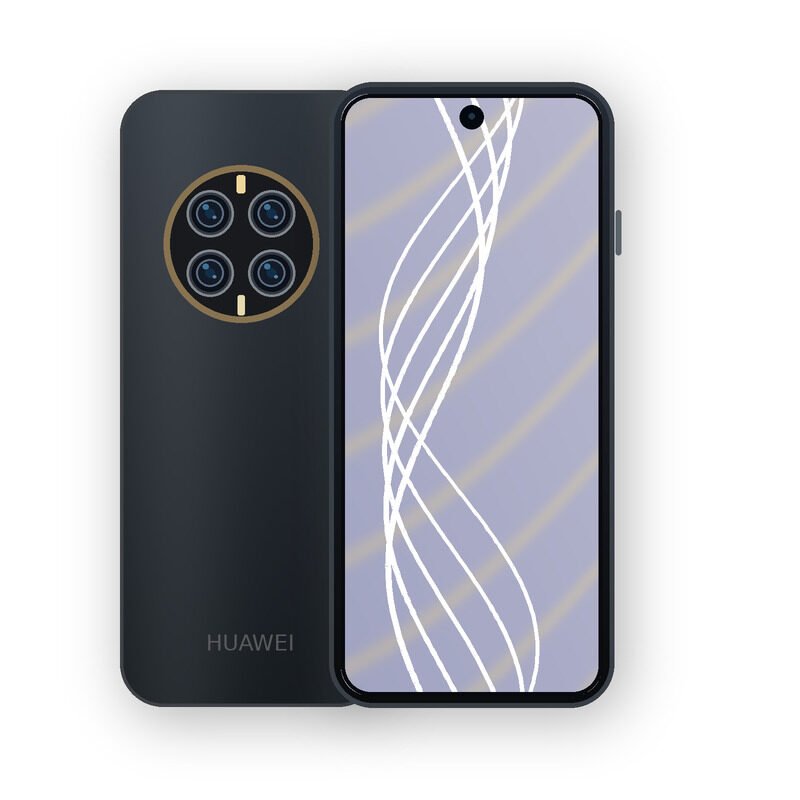
Huawei Mate 50 Key Features
Huawei Mate 50 Specifications
Body & Design
- Dimensions
- 161.5 × 76.1 × 7.98 mm
- Weight
- 206 g
Network & Cellular
- Network technology
- GSM / HSPA / LTE
- Cellular data speed
- 4G LTE
- SIM configuration
- Nano-SIM; dual-SIM version
Software & Processor
- User interface
- EMUI 13
- Chipset / SoC
- Snapdragon 8+ Gen 1 4G
- GPU
- Adreno
RAM & Storage
- RAM
- 8 GB
- Internal storage
- 256 GB
- Memory configurations
- 8 GB RAM; 256 GB storage
Display
- Display technology
- OLED, 1.07 billion colours
- Screen size
- 6.7-inch OLED
- Resolution
- 1224 × 2700 pixels
- Refresh rate
- 90 Hz
Camera & Video
- Rear camera setup
- 50 MP variable-aperture main (f/1.4–f/4.0)
- Ultrawide camera
- 13 MP ultra-wide
- Telephoto camera
- 12 MP telephoto with OIS
- Optical stabilization
- Telephoto optical stabilisation
- Rear video recording
- up to 4K
- Front camera
- 13 MP ultra-wide
- Front video recording
- up to 4K
Battery & Charging
- Battery capacity
- 4460 mAh typical
- Wired charging
- 66 W wired SuperCharge
- Wireless charging
- 50 W wireless SuperCharge
- Removable battery
- No
Audio
- Speakers
- Loudspeaker
- Stereo speakers
- Yes
Wireless & Connectivity
- Wi-Fi
- Wi-Fi 6
- Bluetooth
- 5.2
- Positioning / GNSS
- GPS, GLONASS, BeiDou and Galileo
- USB
- USB Type-C
- Tethering / hotspot
- Wi-Fi hotspot
Sensors & Security
- Fingerprint reader
- Under-display
Durability & Repairability
- IP rating
- IP68
Additional Information
- Model numbers
- CET-LX9
Price last checked: 2026-10-31
Prices may vary by variant and local market.
The Huawei Mate 50 brings a variable-aperture 50 MP main camera and Snapdragon 8+ Gen 1 4G to a conventional 6.7-inch OLED handset. Compared with the Pro, it uses a 90 Hz display and a different telephoto sensor while keeping 66 W wired charging.
Price and availability in Pakistan
There is no reliable confirmed live Pakistani retail price in the references checked for this model. Expected launch figures circulating in phone catalogues are not the same as an actual dealer quote.
For an older or import-market handset, price depends on the exact storage option, physical condition, battery condition, packaging and warranty rather than a single permanent number. Ask for the actual product code and a complete price that clearly states whether taxes and registration are covered. Do not confuse an overseas listing with an official Pakistani distributor price.
PTA registration is an individual device matter. A supported network band, a dual-SIM tray or the presence of a Pakistani shop listing is not proof of approval. Check the device identifier against the official PTA process before depending on a local SIM, especially when considering an imported or previously used unit.
Screen, size and everyday handling
A 90 Hz OLED offers rich contrast and detailed text; the Pro model is the one with a 120 Hz panel.
Unlike the Pro’s wide notch, the regular Mate 50 uses a smaller front camera cut-out. It is thinner than the Pro while retaining the recognisable circular rear camera arrangement.
The display refresh rate is 90 Hz. Higher refresh rate can make menus and scrolling smoother where supported, but brightness, colour calibration and touch response are separate characteristics. If you often read small Urdu or English text, compare the font clarity and minimum brightness in person.
Processor, memory and actual performance
The processor is Snapdragon 8+ Gen 1 4G. Its CPU class supports demanding everyday apps and substantial processing workloads, although software optimisation and battery condition still shape responsiveness.
With 8 GB RAM and 256 GB storage, the practical questions are how many apps stay open and how much room remains after the system and installed software take their share. The visible memory figure refers to physical RAM; it should not be inflated with so-called virtual or extended memory advertising.
For gaming, the chipset and graphics processor set the broad performance class, but sustained frame rate needs real tests of this precise model. Treat unverified benchmark screenshots and claims of a fixed gaming FPS cautiously. Thermals, updates and game settings can change the experience.
Rear cameras and photo flexibility
The rear arrangement starts with a 50 MP variable-aperture main (f/1.4–f/4.0), supported by 13 MP ultra-wide, and 12 MP telephoto with OIS.
The headline is a 50 MP variable-aperture primary camera. Its 13 MP ultra-wide and optically stabilised 12 MP telephoto complete a useful three-lens setup for everyday focal lengths.
A higher pixel count can help in suitable light, but final image quality also depends on sensor, optics, focus and processing. No hands-on photograph or laboratory score is claimed here.
Selfies, video and calls
The front setup is 13 MP ultra-wide. It is suitable for the phone’s intended tier, but lighting and software behaviour determine video-call quality as much as resolution.
The documented rear video ceiling is up to 4K. This should not be confused with a promise that every lens, mode and frame-rate combination can use that setting. Stabilisation and night-video quality require testing rather than assumptions from a spec sheet.
Test speech pickup, framing and focus during a real video call. Even a large selfie-camera pixel count cannot compensate for poor lighting or a weak mobile signal.
Battery capacity and charging
The phone has a 4460 mAh typical battery and specifies 66 W wired SuperCharge. It also supports 50 W wireless SuperCharge.
A 4460 mAh rated typical cell accompanies 66 W wired and 50 W wireless charging. Huawei’s compatible charging equipment is needed for maximum specified rates.
Battery figures are manufacturer ratings, not a promised number of screen-on hours. Cellular signal strength, screen brightness, camera recording, hotspot use and background activity can change the result dramatically. For a second-hand phone, battery health may matter more than the number printed in the original brochure.
Check charging port condition, cable fit and whether the charger is compatible with the stated charging protocol. A high-wattage third-party charger does not necessarily deliver the manufacturer’s maximum rate. Heat while charging and swollen batteries warrant professional inspection, not home experiments.
Software, applications and long-term use
The specified software is EMUI 13. This is a Huawei Mobile Services environment, so the presence of familiar Android app names in advertising should not be treated as evidence of built-in Google Mobile Services.
Before switching devices, list the apps you rely on for work, university, banking, navigation and two-factor sign-in. Check each one on the specific phone rather than assuming every service works because the hardware is capable.
For Huawei devices, AppGallery, web apps and alternative sign-in methods may cover some needs, but they are not automatically equivalent to every Play Store dependency. Some applications require certified Google components or particular security checks. Check these before migrating important accounts.
Connectivity, security and Pakistan network checks
The handset supports 4G LTE, with Wi-Fi 6, Bluetooth 5.2 and USB Type-C. It includes Stereo speakers.
Check the actual regional model and cellular band support before choosing it for Jazz, Zong, Ufone or Telenor. Even when a handset supports the LTE technology, local signal quality and carrier provisioning can affect calls and mobile data. A working mobile-data test is more convincing than a generic global band table.
The fingerprint reader is under-display. Lock-screen biometrics are convenient, but they do not replace a strong PIN, regular backups and careful control of account recovery. For a used handset, perform a proper factory reset and check that previous account locks have been cleared.
USB standard, headphone connector and charging connector determine which accessories can be reused. Match any new cable and charger to the stated port rather than assuming a newer connector is present.
Practical limitations and comparisons
The Mate 50 Pro has a larger camera notch, higher refresh rate and higher-resolution telephoto hardware. The regular Mate 50 has a cleaner front silhouette and narrower set of compromises.
The key trade-off is clear: the Mate 50 offers a camera-led flagship specification but not every convenience found on newer competing phones. Think about app compatibility, charging accessories and practical service options before focusing on a single number.
For a folding device, The IP68 rating describes controlled fresh-water testing, not blanket protection from moisture, salt water or aging seals.
Who this model suits
It suits photographers who prefer a conventional flagship shape and can work within Huawei’s software ecosystem. Anyone requiring official Google Play support or a 5G modem should consider alternatives.
A photographer comparing Mate 50 with Mate 50 Pro should not assume the regular phone has the same zoom hardware simply because both share a circular camera motif. The 12 MP stabilised telephoto is different from the Pro's 64 MP unit, and the OLED refresh rate is 90 Hz rather than 120 Hz. The regular version keeps a smaller front cut-out and a relatively slim body. Buyers who want a conventional phone for photos and navigation may appreciate that trade. Check the regional model code before assuming the listed memory or SIM combination matches the unit offered.
A sensible purchase starts with the exact model code, realistic app needs and a clear understanding of what the quoted amount buys. Compare the actual device in hand with its stated memory and camera configuration. There is no need to pay extra for an irrelevant feature, nor to accept uncertainty about approval, repairs or software compatibility simply because a familiar brand is on the back.
If camera flexibility matters, check the useful focal lengths, natural colours and handling before treating the largest sensor number as decisive.
Huawei nova 10
Huawei nova Y90

Huawei nova 10 Pro
Huawei nova Y70
Huawei Mate Xs 2

Huawei nova 9 SE

Huawei nova Y70 Plus