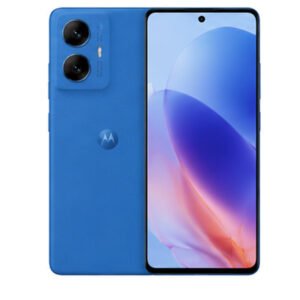
RAM & Storage Variants
Motorola Moto E14 Key Features
Motorola Moto E14 Specifications
Body & Design
- Dimensions
- 163.49 × 74.53 × 7.99mm
- Weight
- 178.8g
- Build materials
- PMMA
Network & Cellular
- Network technology
- GSM / HSPA / LTE (4G)
Software & Processor
- Operating system
- Android 14 (Go edition)
- Chipset / SoC
- Unisoc T606
- CPU
- Octa-core (2× Cortex-A75 + 6× Cortex-A55) up to 1.6GHz
- GPU
- Mali-G57 MP1
RAM & Storage
- RAM
- 2GB physical RAM
- Internal storage
- 64GB UFS 2.2
- Memory card slot
- microSD up to 1TB
- Memory configurations
- 2GB + 64GB
Display
- Display technology
- IPS LCD, Gorilla Glass 3
- Screen size
- 6.56 inches
- Resolution
- 1612 × 720 pixels
- Pixel density (ppi)
- 269 ppi
- Refresh rate
- 90Hz
Camera & Video
- Rear camera setup
- 13MP, f/2.2, PDAF
- Rear video recording
- 1080p at 30fps
- Front camera
- 5MP, f/2.2
- Front video recording
- 1080p at 30fps
Battery & Charging
- Battery capacity
- 5000mAh
- Wired charging
- 15W wired supported
Audio
- Speakers
- Mono speaker with Dolby Atmos
- 3.5mm headphone jack
- 3.5mm jack
Wireless & Connectivity
- USB
- USB Type-C 2.0
Durability & Repairability
- IP rating
- IP52
Price last checked: 2026-10-30
Motorola Moto E14: What matters about this phone
The Motorola Moto E14 is an entry-level 4G smartphone designed around Android 14 Go edition rather than heavy multitasking. Motorola documents a 6.56-inch 90Hz HD+ screen, Unisoc T606 processor, 2GB physical RAM, 64GB storage and 5000mAh battery. Its appeal is basic communication and media at a budget level, but a verified current official Pakistan selling price for this exact variant is not established.
Design and handling
The Moto E14 uses a straightforward body measuring 163.49 by 74.53 by 7.99mm and weighing 178.8g. Its material is PMMA, a plastic-based finish that avoids the weight of a glass-backed design. The front is protected by Gorilla Glass 3, while the shell carries an IP52 water-repellent rating. That rating can help with limited splashes and dust conditions, but it is not comparable to the immersion protection of some expensive smartphones. The phone is reasonably light for its screen size.
Display quality and everyday viewing
The 6.56-inch IPS LCD uses a 1612 by 720 resolution and a 90Hz refresh rate. For messages, video calls, news and maps, that is a usable amount of screen space. A 90Hz interface may look smoother than a fixed 60Hz budget panel, but low-power apps and individual content can run at different speeds. With a density of about 269ppi, small print and sharp-edged graphics will not match a modern Full HD panel. Gorilla Glass 3 is a useful specified protection rather than a vague claim of scratch resistance.
Chipset, memory and real-world use
Unisoc T606 combines two performance-oriented Cortex-A75 cores with six efficiency-focused Cortex-A55 cores. Motorola pairs that with only 2GB of physical RAM, making Android Go edition an important part of the product rather than a cosmetic software label. Go edition is tailored for modest memory hardware, but it cannot make a 2GB device behave like an 8GB phone. Light messaging and single-app tasks make more sense than constantly switching among many tabs or running demanding games.
Cameras and video expectations
The Moto E14 includes a 13MP main rear camera with phase-detection autofocus and a 5MP selfie camera. Motorola specifies Full HD video at 30 frames per second for both capture directions. That covers simple family clips, quick document photos and video calls, not advanced zoom photography or professional low-light recording. No independent photo samples or stabilisation measurements were supplied, so the safest expectation is basic imaging with better results in adequate light.
Battery capacity and charging
The 5000mAh battery is generous relative to the processing and display class. Motorola lists support for 15W charging, although the included power adapter can differ by market package. The endurance promise should still be judged against real use: weak signal, hotspot activity and high brightness increase power demands. The USB-C connector is a convenient modern standard, but it does not imply fast data transfer or the same charging protocol as every USB-C charger.
Connectivity and software considerations
The Moto E14 is a 4G handset, not a 5G phone. Its traditional 3.5mm headphone socket remains useful for inexpensive wired accessories and shared family use. MicroSD expansion up to 1TB can offset the small built-in 64GB storage capacity, provided the apps and files involved support use of the card. Expansion does not increase physical RAM or turn slower removable storage into a replacement for internal UFS memory. Check PTA registration and supported local bands on any imported unit.
Pakistan price, variants and ownership checks
A listing that advertises 4GB RAM through memory boost should be read carefully: Motorola specifies 2GB installed RAM with an option to expand the available memory allocation virtually. Do not price the phone as though it contains 4GB physical memory. Verify battery health, screen condition, charger and whether the exact version has the documented software. If the buyer needs multiple banking apps, large educational files or long-term multitasking, it may be better to allocate more budget to RAM.
How it compares with nearby choices
Compared with the Sparx Mate 10, the Moto E14 offers a clearly documented Android Go build, Gorilla Glass 3 and a light body, but its 2GB RAM is much more restrictive. Sparx lists a larger physical RAM configuration and a higher main-camera headline. Motorola’s choice makes more sense when the desired workload is modest and the specific imported unit is trustworthy. Do not let a nominal refresh-rate advantage obscure memory and storage differences.
Managing limited storage and memory
A 64GB phone needs deliberate storage habits. Downloaded videos, messaging attachments, app caches and software updates gradually consume the available space. A microSD card is useful for media, but some apps insist on internal storage and may slow when that space is nearly full. Keep automatic downloads under control and periodically remove duplicate files. Because Android Go is designed for modest hardware, users should avoid assuming that every resource-intensive app available on higher-end Android devices will run equally well.
Who should choose it
The Motorola Moto E14 is best for calls, basic apps, simple browsing and someone comfortable with an entry-level Android Go experience. It is not the right choice for heavy gaming, demanding multitasking or a buyer who expects a verified local official warranty without further checking. Confirm the handset’s exact configuration and PTA status before purchasing in Pakistan.
Motorola Moto G Stylus 5G

Motorola Moto G55 5G

Motorola Moto G56 5G
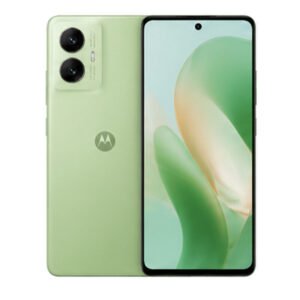
Motorola Moto G64 5G

Motorola Moto G75 5G

Motorola Moto G85 5G
Motorola Moto G86 5G