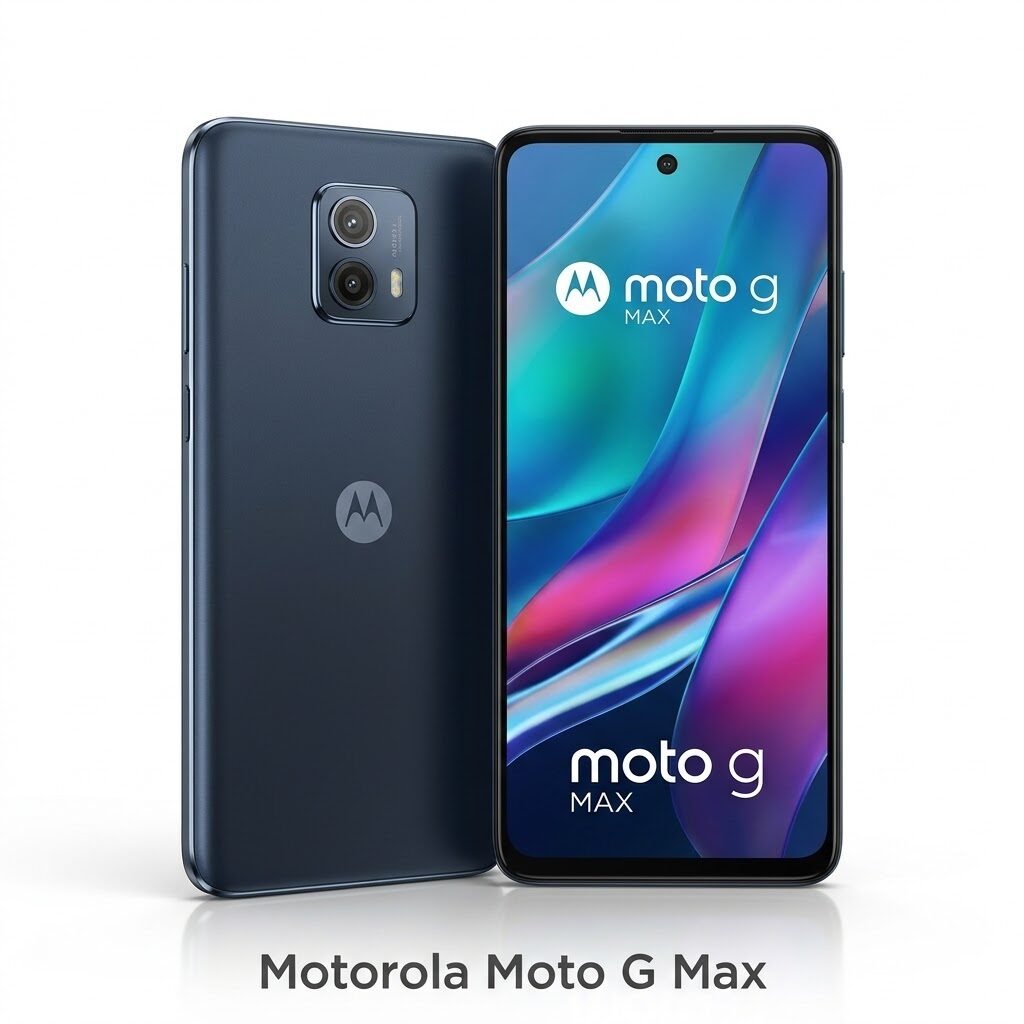
Motorola Moto G Max Key Features
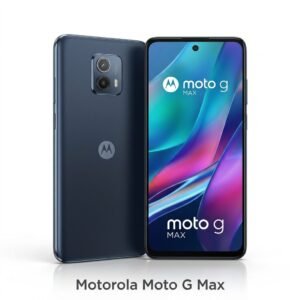
Motorola Moto G Max Specifications
Processor & Software
- Operating system
- Android 16
- User interface
- Hello UI
- Software update commitment
- 2 OS upgrades; 3 years security updates
- Chipset / SoC
- Snapdragon 6s Gen 4 (4 nm)
- Fabrication process (nm)
- 4 nm
- CPU
- Octa-core: 4 × 2.4 GHz A78 + 4 × 1.8 GHz A55
Build & Design
- Dimensions
- 166.23 × 76.5 × 8.6 mm
- Weight
- 213 g
- Build materials
- Plastic frame; satin-inspired rear
- Available colors
- PANTONE Stargazer, Alaskan Blue, Malaga
- Water / dust resistance
- IP64; MIL-STD-810H
Display
- Display technology
- LCD, 8-bit
- Screen size
- 6.72 inches
- Resolution
- 2400 × 1080 pixels
- Pixel density (ppi)
- 391 ppi
- Refresh rate
- 120 Hz
- Touch sampling rate
- 120 Hz
- Brightness (nits)
- Up to 1050 nits HBM
- Aspect ratio
- 20:9
- Display protection
- Corning Gorilla Glass 7i
Network & Frequency
- Network technology
- GSM / WCDMA / LTE / 5G
- SIM configuration
- Dual nano-SIM
Memory & Storage
- RAM
- 4 GB / 6 GB
- RAM type
- LPDDR5X (6 GB configuration)
- Internal storage
- 128 GB
- Storage technology
- UFS 3.1
Cameras & Video
- Rear camera setup
- 50 MP Sony LYTIA 600, f/1.8, PDAF
- Primary sensor
- Sony LYTIA 600
- Ultrawide camera
- 8 MP, f/2.2, 119.5°
- Front camera
- 32 MP, f/2.2, fixed focus
- Front video recording
- Up to 2K at 30 fps
Connectivity
- Wi-Fi
- Wi-Fi 5 (802.11ac), 2.4/5 GHz
- Bluetooth
- Bluetooth 5.1
- Positioning / GNSS
- GPS, GLONASS, Galileo, QZSS, BeiDou
- NFC
- No (India support specification)
- USB
- USB Type-C 2.0
- FM radio
- FM radio
Sound & Multimedia
- Speakers
- Stereo speakers
- Stereo speakers
- Yes
- 3.5mm headphone jack
- 3.5 mm jack
- Audio codecs / features
- Dolby Atmos; Hi-Res Audio
Sensors & Security
- Sensors
- Accelerometer, gyroscope, proximity, ambient light, compass
- Fingerprint reader
- Side-mounted fingerprint
- Face unlock
- Yes
Durability & Repairability
- IP rating
- IP64
- Glass / frame durability
- Gorilla Glass 7i
Battery & Charging
- Battery capacity
- 7000 mAh
- Wired charging
- 30 W TurboPower wired
- Removable battery
- No
A big-battery phone for everyday needs
The Motorola Moto G Max is designed around everyday stamina: a 7000 mAh battery, a 6.72-inch 120 Hz LCD and a Snapdragon 6s Gen 4 chipset. It also offers a 50 MP Sony main camera, stereo sound and a 3.5 mm headphone connection. Compared with more expensive Edge models, its priorities are practical endurance and familiar phone features rather than flagship image processing or premium display technology.
The documented specification comes from Motorola’s India-market product and support pages. No reliable Pakistan retail price has been confirmed, so the price field is intentionally empty. Indian sale prices cannot simply be relabelled as Pakistani rupees; importing also raises separate questions about local warranty, band compatibility and legitimate PTA registration.
A large LCD with smooth scrolling
The Moto G Max has a 6.72-inch 2400 × 1080 LCD with a 120 Hz refresh rate and a quoted high-brightness mode up to 1050 nits. This is a practical Full HD+ resolution for reading, videos, social apps and navigation. The panel is LCD rather than OLED, so buyers who prioritise very deep blacks and per-pixel lighting should recognise the difference.
At 166.23 × 76.5 × 8.6 mm and 213 g, the phone has a substantial footprint. Corning Gorilla Glass 7i is specified for the front, while the rear uses a satin-inspired finish. A narrow bezel or bright screen cannot make a large handset genuinely compact; check your grip if you type one-handed.
Snapdragon 6s Gen 4 and memory
The Qualcomm Snapdragon 6s Gen 4 is a 4 nm mobile platform with four Cortex-A78 performance cores and four Cortex-A55 efficiency cores. That gives the device a defined midrange foundation for communication, web browsing, maps and common multitasking. It is not a basis for inventing high-end gaming results or claiming the phone beats a flagship chipset.
The India store identifies 4 GB and 6 GB RAM versions with 128 GB storage, while its detailed specification identifies UFS 3.1 storage. Certain marketing pages mention RAM Boost, which uses storage as virtual memory. Virtual RAM is not the same as physical RAM. Buyers should confirm the real installed amount in settings and pick the configuration that matches their app habits.
What the two rear cameras do
A 50 MP Sony LYTIA 600 camera with f/1.8 aperture and phase-detection autofocus handles most everyday photographs. An 8 MP ultra-wide adds room for group photos, buildings and scenery when stepping further back is not possible. The front has a 32 MP fixed-focus camera. The manufacturer does not list a dedicated optical telephoto lens for this model.
The main camera’s multi-pixel processing and night modes provide software flexibility, but photography results vary with light and subject motion. Digital enlargement is not a replacement for an optical zoom lens. For family photos, documents and casual travel shots, checking how it handles faces and indoor scenes is more valuable than counting megapixels alone.
Video and sound for ordinary use
The front-facing camera supports up to 2K recording at 30 fps and standard Full HD recording modes. Motorola also identifies electronic video stabilisation and slow-motion features. The supplied specification does not justify a claim that every recording mode supports a high frame rate or that the phone has flagship-level night video.
The stereo speakers include Dolby Atmos and Hi-Res audio support, and a standard 3.5 mm headphone jack remains available. That wired connection can be a genuine benefit for students and commuters who do not want to depend entirely on Bluetooth earphones. FM radio is also listed in Motorola’s support specification.
7000 mAh battery versus charging speed
The 7000 mAh battery is the headline reason to consider the Moto G Max. Motorola pairs it with 30 W TurboPower charging, a more modest wattage than its high-end Edge phones. Capacity may support longer use between charges, but the real result still depends on coverage, brightness, refresh rate and the time spent gaming or recording video.
A larger battery is not automatically a faster-charging battery. Ask whether the correct adapter is included in the particular retail box, and avoid assuming every generic USB-C charger will reach the supported rate. Battery longevity also benefits from avoiding excessive heat and using intact charging accessories.
Android software and supported security period
Motorola lists Android 16 with a policy of two operating-system upgrades and three years of security maintenance. The exact timing of new software depends on the manufacturer and region. This is a defined commitment, not a reason to promise a particular future Android version or update date.
The phone includes a side fingerprint reader, face unlock, Smart Connect-style productivity features and Google-linked software tools. Some connected experiences may require a compatible computer or updated application. For a person who values a familiar Android workflow, this software environment is a practical contrast with the Chinese HarmonyOS phones also in this batch.
Networking, SIMs and missing NFC
The India-market Moto G Max supports 5G, LTE, dual physical SIM cards, Bluetooth 5.1 and dual-band Wi-Fi. Motorola’s support document explicitly lists no NFC for that configuration. Do not assume contactless terminal payments or NFC accessory pairing will work just because similarly priced phones offer the technology.
Network band support is region-sensitive. If buying in Pakistan, ask for the exact variant and verify compatible bands with the chosen operator. Also check device registration and PTA status using the appropriate official channels. Neither dual-SIM support nor a phone being listed online proves that it has already been lawfully registered for local network use.
Durability and everyday trade-offs
IP64 dust and splash resistance, MIL-STD-810H testing and Gorilla Glass 7i provide a useful durability package for this segment. IP64 is not a rating for water immersion. The phone can still suffer damage from drops, impacts or moisture in conditions outside those controlled tests.
The main compromises are a less premium LCD instead of AMOLED, the absence of a dedicated telephoto camera, a relatively large body and no NFC on the documented India variant. Those trade-offs should be weighed against the battery, wired headphone connection and practical camera setup. A phone does not need flagship specifications to be the better fit for a particular routine.
Who should buy the Moto G Max
The Motorola Moto G Max makes the strongest case for commuters, students and everyday Android users who value long battery capacity, a readable big screen, familiar wired audio and straightforward photography. Users who care most about OLED contrast, high-end gaming or advanced optical zoom should compare pricier alternatives instead.
Before paying a Pakistan seller, inspect the physical RAM and storage configuration, check the IMEI and legitimate network registration, and obtain clear warranty and return information. Once those basics are confirmed, the Moto G Max has an understandable purpose: battery-focused everyday utility rather than inflated performance claims.