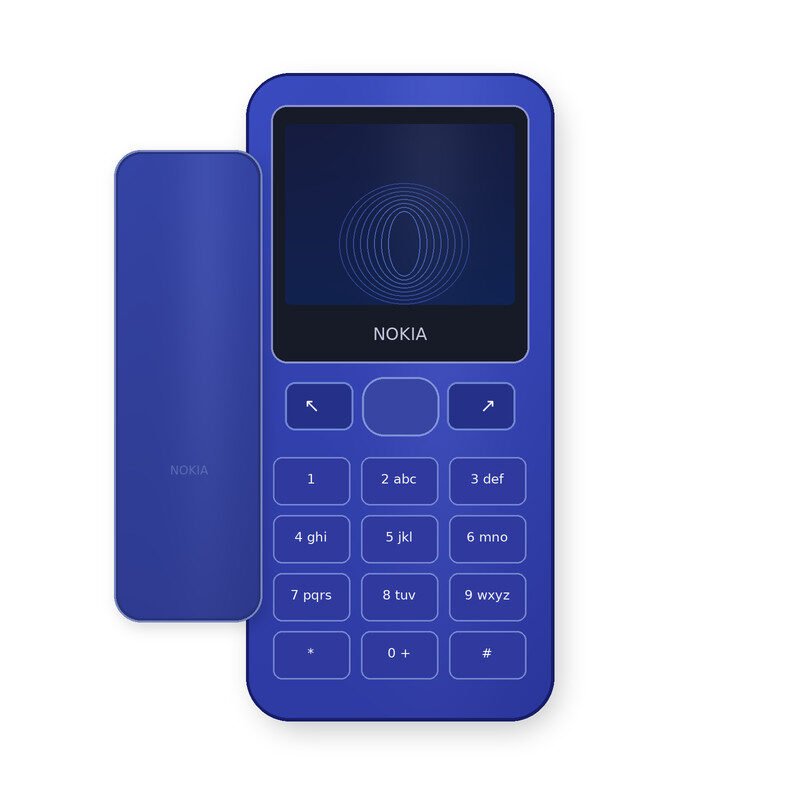
Nokia 105 Classic Key Features
Nokia 105 Classic Specifications
General & Launch
- Availability
- Available
Processor & Software
- Operating system
- Series 30+ (S30+)
- Chipset / SoC
- Unisoc 6531E
Build & Design
- Dimensions
- 115.2 × 49.9 × 14.3 mm
- Weight
- 74 g
- Build materials
- Polycarbonate back and frame
- Available colors
- Blue, Charcoal, Red Terracotta
Display
- Screen size
- 1.77 inches
- Resolution
- QQVGA
Network & Frequency
- Network technology
- 2G GSM only
- 2G bands
- GSM 900 / 1800 MHz
- SIM configuration
- Mini SIM
Memory & Storage
- RAM
- 4MB
- Internal storage
- 4MB / 8MB (regional)
Connectivity
- USB
- Micro-USB 1.1
- FM radio
- Wireless FM radio
Sound & Multimedia
- 3.5mm headphone jack
- 3.5 mm
Additional Information
- Extra Features
- Built-in flashlight and Snake game
Battery & Charging
- Battery capacity
- 800 mAh
- Wired charging
- Micro-USB (USB 1.1)
- Removable battery
- Yes
- Published battery-life test
- Up to 12 h talk / 18 days standby (manufacturer claim)
Nokia 105 Classic: the buying picture
Nokia 105 Classic is best understood through its actual hardware rather than a headline price. The important points are its 1.77-inch QQVGA non-touch screen, Unisoc 6531E and 4MB RAM with 4MB/8MB internal storage by region. Those details set expectations for the way the phone feels to use and the types of tasks it handles comfortably.
Its strongest practical arguments are physical keys, wireless FM radio and a removable 800mAh battery. Equally important, the limitations include 2G-only connectivity, a very small non-touch display and no smartphone apps or data capability. For a buyer in Pakistan, the real decision also depends on the exact regional unit, its physical condition, and whether the device has independently verified PTA registration for the SIM that will be used.
A true calling phone, not a small Android device
The Nokia 105 Classic is for conventional voice calls and text messages. It does not run Android or iOS and should not be compared with a touch-screen smartphone on the basis of processor speed, web browsing or app storage. Its physical keypad and compact body make sense for somebody who prefers a straightforward dial pad over touch gestures.
The 1.77-inch QQVGA screen is enough for caller information, menus and basic messages. It is not a display for watching videos, reading complex websites or navigating modern applications. The Series 30+ system keeps the interface focused on the small number of tasks the phone was built to perform.
2G network compatibility matters more than specifications
HMD specifies GSM 900/1800 MHz for this Classic model, with Mini SIM support. That makes carrier compatibility a practical buying question. A 4G or 5G phone being supported in an area does not establish that a separate 2G handset will receive service there. Check the network operator’s continuing 2G availability before depending on this model for an important number.
The phone does not become a 4G device when a new SIM is inserted. If mobile internet, WhatsApp, QR payments or video calling are required, choose a supported smartphone or a specifically identified 4G feature phone instead. The model name Nokia 105 on a shop shelf is not enough: inspect the exact variant.
Battery, charging and everyday handling
The removable 800 mAh battery is smaller than the battery fitted to the separate non-Classic Nokia 105. HMD quotes up to 12 hours of talk time and 18 days of standby under its test conditions. These figures are manufacturer limits, not a guarantee for every signal strength, battery age or calling pattern.
Charging uses Micro-USB rather than USB-C. A removable battery is helpful if a compatible genuine replacement remains available, but replacing it with an unverified pack can introduce safety and reliability problems. The light 74 g body is convenient as a backup handset, especially when a compact device matters more than an expansive screen.
FM radio, simple storage and small conveniences
The built-in wireless FM radio can be used without plugging in a headset, a useful distinction from handsets whose radio depends on a wired antenna. A torch and preloaded games, including Snake, provide basic extras without turning the phone into an internet device.
HMD lists 4 MB of RAM with regional internal-storage differences of 4 MB or 8 MB. These capacities are intended for its basic operating system and contacts/messages rather than app installation. Do not compare them directly with the gigabytes marketed on smartphones. The headphone jack remains a practical feature for private listening. For families buying a basic emergency handset, the simplest checks are loud and clear voice calling, dependable reception, an undamaged battery and easy keypad use.
Know which Nokia 105 you are buying
The words Nokia 105 Classic and Nokia 105 can refer to different models. The Classic carries an 800 mAh battery and a 1.77-inch screen; the other phone uses a 1000 mAh battery and an approximately 1.8-inch screen. It is also different from the Nokia 105 4G. Packaging, handset design and the exact model descriptor should agree.
For local purchases, check the charger port, battery compartment, loudspeaker, earpiece, keypad responsiveness and the device identifier. A low retail price is not enough if the handset cannot register on the intended network. A shop claiming “PTA approved” should have supporting information for the specific device, not merely a generic advertisement.
Who should choose it?
The Classic makes sense as a simple calling phone for a user who mainly needs a numeric keypad, ordinary SMS, a light body and occasional radio listening. It can also suit a secondary number when the local carrier still offers the necessary GSM service.
Do not choose it for maps, online banking, streaming, document sharing, large contact databases synced to cloud apps or mobile data. The central choice is between reliability for basic calls and the convenience of modern software. If mobile internet is part of the plan, a genuine 4G-capable alternative is the more appropriate category.
Nokia X10
Nokia X100
Nokia G300
Nokia C21
Nokia 8210 4G
Nokia G11 Plus
Nokia C21 Plus