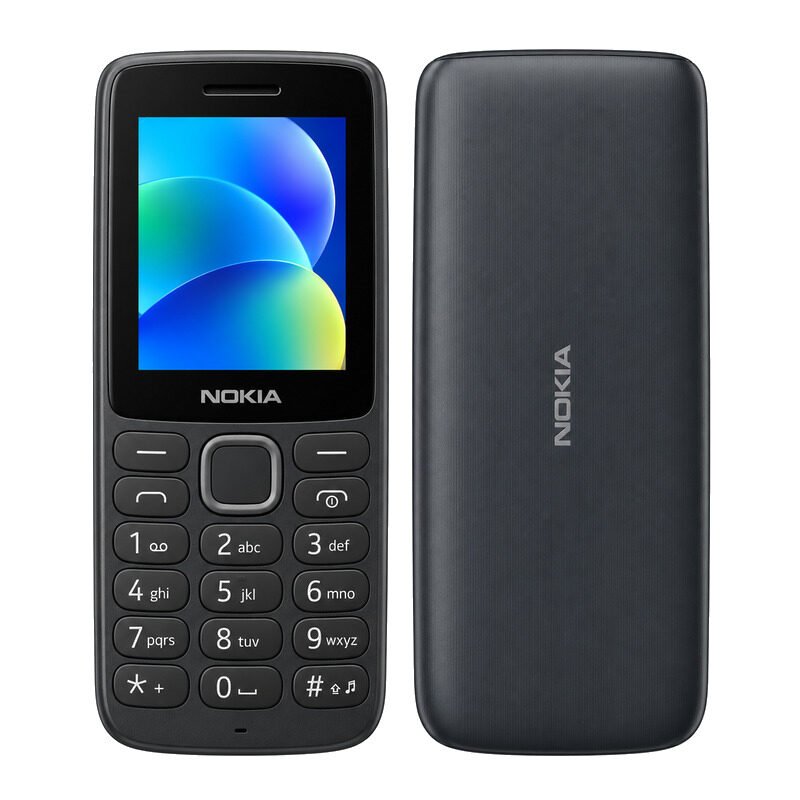
Nokia 106 4G Key Features
Nokia 106 4G Specifications
Processor & Software
- Operating system
- S30+
Performance Benchmarks
- Extra Features
- Up to 8 hours talk time and 12 days standby (manufacturer estimates)
Build & Design
- Dimensions
- 121.5 × 50 × 14.4 mm
- Weight
- 93 g
- Build materials
- Nano-textured polycarbonate
- Available colors
- Charcoal, Blue
Display
- Display technology
- LCD, QQVGA
- Screen size
- 1.77 inches
- Resolution
- 120 × 160 pixels (QQVGA)
Network & Frequency
- Network technology
- GSM / WCDMA / LTE (4G)
- 2G bands
- GSM B3 / B5 / B8 (India version)
- 3G bands
- WCDMA B1 / B5 / B8 (India version)
- 4G LTE bands
- LTE B1 / B3 / B5 / B8 / B28 / B38 / B39 / B40 / B41 (India version)
- SIM configuration
- Nano-SIM
Memory & Storage
- RAM
- 48 MB
- Internal storage
- 128 MB
- Memory card slot
- microSD up to 32 GB
Connectivity
- Bluetooth
- 5.0
- USB
- Micro-USB 2.0
Sound & Multimedia
- Speakers
- Single loudspeaker
- 3.5mm headphone jack
- 3.5 mm
- Audio codecs / features
- Wired and wireless FM radio; MP3 player and voice recorder with microSD
Durability & Repairability
- IP rating
- IP52
Battery & Charging
- Battery capacity
- 1450 mAh
- Removable battery
- Yes
Nokia 106 4G: what matters before buying
Nokia 106 4G is the LTE-enabled version of a very simple Nokia keypad phone. The important upgrade is cellular connectivity rather than smartphone apps.
Unlike the 2G Nokia 106, this handset supports 2G, 3G and 4G, uses a nano-SIM and has a 1,450 mAh removable battery. The source specifications describe the India-market configuration; frequency compatibility for any imported unit needs its own check.
This model is best understood as a dedicated secondary or primary voice handset. The hardware puts the number pad first, and the practical question is whether that simplicity fits your daily routine. It does not provide Android applications, a large web browser or WhatsApp. For those tasks, a smartphone is necessary.
Screen, keypad and daily handling
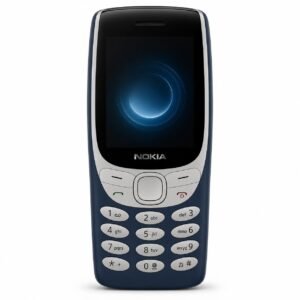
The 1.77-inch QQVGA panel remains deliberately basic. Its small dimensions suit short menus and phone numbers rather than photographs, long articles or messaging apps. Controls are physical and navigation is by the central key.
HMD specifies a 93 g body for this version. Small keypad phones can be easy to slip into a pocket, but their physical buttons and tiny screens are not ideal for entering long names, typing detailed messages or reading lengthy notifications. If a family member has difficulty with small print, inspect a working handset before purchase.
It is worth looking closely at the number-key labels, the visibility of the call and end keys, and the on-screen text size. A familiar keypad may feel immediately easier than a touchscreen, but actual comfort depends on the user’s eyesight and hand movement.
Calling, cellular networks and Pakistani SIM use
Nokia 106 4G uses 2G, 3G and 4G radio technology. That is an important reason to consider it over a GSM-only handset, though usable 4G calling still depends on network services, local support and the exact imported frequency variant.
Before paying for any imported or second-hand phone, verify the exact hardware label, SIM size and local IMEI registration through the proper official channels. A model name alone does not prove that the particular handset is PTA approved. Test an actual call with the mobile operator you intend to use, including indoor reception at home.
For travel or keeping a backup in a bag, network compatibility is more important than a long feature list. The device should connect reliably where it will be used; a strong published standby figure is not helpful if the signal is unavailable.
Radio, sound and stored music
Bluetooth 5.0, FM radio, a headphone socket, MP3 playback and a voice recorder give it several audio options despite the small screen. The media player and recorder depend on a separate microSD card; they are not a replacement for online music services.
FM radio can be genuinely useful when mobile data is not the point of the device. Reception will depend on local stations and conditions, and listening through the loudspeaker affects battery usage. A wired headset may be more comfortable in crowded places even when wireless reception is supported.
A feature-phone MP3 player, where specified, is not the same as a modern music streaming service. Files must be loaded onto a compatible memory card, and file formats or card condition can affect playback. Never assume cloud synchronization, a large app store or voice assistants are part of the package.
Camera and everyday limitations
There is no rear camera listed by HMD for the Nokia 106 4G. Its strongest use remains calling and text. A customer who needs even occasional snapshots could look at the 110 4G, though that camera is also low resolution.
The more important trade-off is the lack of smartphone software. Modern bank apps, ride-hailing, QR-based services and rich group messaging require capabilities that a standard S30+ keypad phone does not provide. The handset is better for a quick voice conversation, an SMS or listening to radio.
Anyone replacing a smartphone should think through their routine first: whether they need maps while travelling, family video calls, school-group messages, mobile documents or two-factor login apps. A very simple Nokia can complement a smartphone, but it will not replace those functions.
Battery and charging
The maker specifies a 1,450 mAh battery and estimates up to eight hours of talk time or 12 days of standby. These published figures refer to testing conditions and do not guarantee matching battery life on every network.
The manufacturer lists 1450 mAh for this handset. A battery specification tells you nominal capacity, not guaranteed days of use. Talk time, standby, screen brightness, network search, speaker volume and battery condition all influence how long a charge lasts.
Charging uses Micro-USB 2.0. Check the charging port on a used handset for wear, inspect the cable and do not confuse a simple feature phone with a high-wattage fast-charging smartphone. If the battery is removable, replacement quality and correct fit are important.
Durability, design and upkeep
The Nano-textured polycarbonate case is intended for simple daily handling, and the published IP52 rating is a limited resistance classification, not permission to soak the phone. Keep the charging socket dry and avoid leaving the device in a hot car.
Small phones often survive ordinary pockets and bags well, but keypads and charging sockets can still wear with heavy use. When inspecting older stock, test each number key, speaker, microphone, flashlight and charging connection rather than judging condition by the external shell alone.
A protective case can help with minor knocks, but finding a correctly sized accessory for a specific generation is more important than buying one advertised for every similarly named Nokia.
Alternatives and who should buy it
The standard Nokia 106 is lighter and simpler but 2G only. The Nokia 110 4G adds a QVGA rear camera. The Nokia G42 is in a completely different category, with Android apps and a large touchscreen.
A useful buying test is to make one ordinary phone call, write a short text and try the radio. Those three activities show the main strengths and limitations faster than a long list of specifications. Check the exact included battery and charger contents on the physical product packaging.
Choose Nokia 106 4G if its specific mix of basic calling, keypad usability and supported extras is what you need. If mobile data apps, detailed pictures or regular video communication matter, move to a documented Android model instead of hoping a feature phone will behave like one.