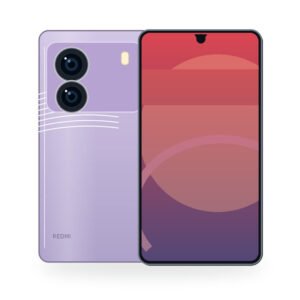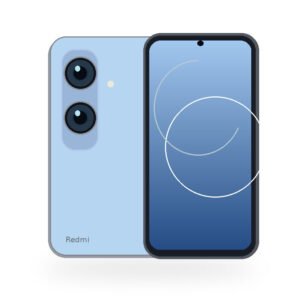
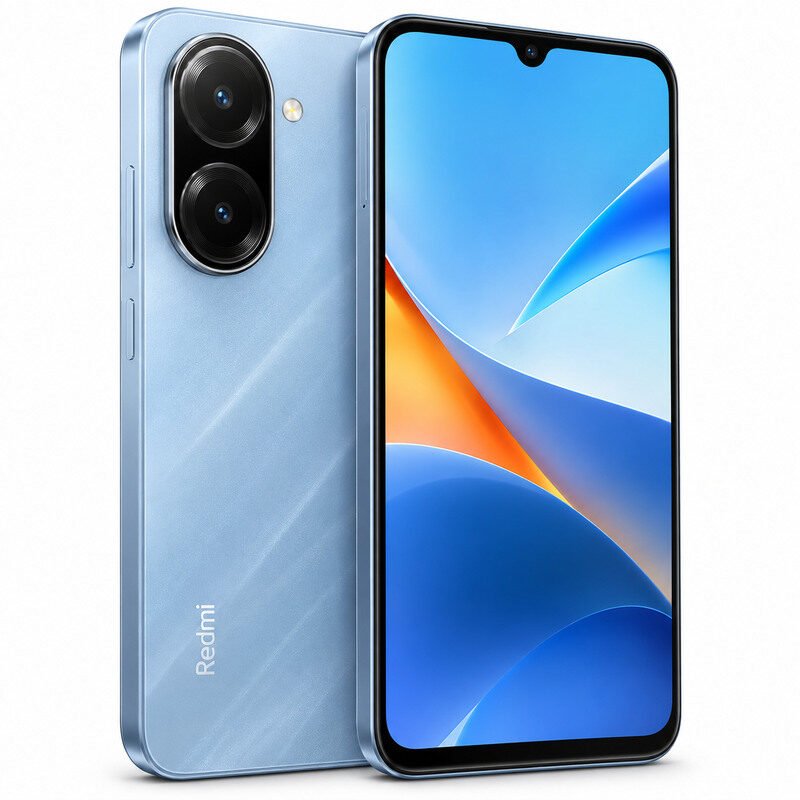
Redmi A7 Pro 5G Key Features

Redmi A7 Pro 5G Specifications
Processor & Software
- Operating system
- Android 16
- User interface
- Xiaomi HyperOS 3
- Software update commitment
- Four Android version updates; six years of security updates
- Chipset / SoC
- Unisoc T8300 5G
- Fabrication process (nm)
- 6 nm
- CPU
- Octa-core; 2 × Cortex-A78 up to 2.2 GHz + 6 × Cortex-A55 up to 2.0 GHz
- GPU
- Mali-G57
Build & Design
- Dimensions
- 171.56 × 79.47 × 8.15 mm
- Weight
- 210 g
- Available colors
- Mist Blue, Sunset Orange, Black
Display
- Display technology
- IPS LCD
- Screen size
- 6.9 inches
- Resolution
- HD+
- Refresh rate
- Up to 120 Hz
- Touch sampling rate
- Up to 240 Hz
- Brightness (nits)
- 800 nits peak
Network & Frequency
- Network technology
- 2G / 3G / 4G LTE / 5G
- 4G LTE bands
- FDD B1/3/5/8/28; TDD B40/41
- 5G bands
- n1/3/5/8/28/40/41/78
- SIM configuration
- Dual 5G SIM
Memory & Storage
- RAM
- 4GB / 6GB physical RAM
- RAM type
- LPDDR4X
- Internal storage
- 64GB / 128GB
- Storage technology
- UFS 2.2
- Memory card slot
- Dedicated microSD support
- Expandable storage
- Up to 2TB
- Memory configurations
- 4GB+64GB; 4GB+128GB; 6GB+128GB
Cameras & Video
- Rear camera setup
- 32MP wide, f/2.0
- Rear camera features
- LED flash, HDR, portrait mode
- Front camera
- 8MP, f/2.0
Connectivity
- Wi-Fi
- Dual-band 2.4 / 5 GHz Wi-Fi 5
- Bluetooth
- 5.4
- Positioning / GNSS
- GPS, GLONASS, Galileo
- USB
- USB Type-C; OTG
- FM radio
- FM radio
Sound & Multimedia
- Speakers
- Built-in loudspeaker
- 3.5mm headphone jack
- 3.5 mm headphone jack
Sensors & Security
- Sensors
- Virtual proximity, virtual ambient light, electronic compass
- Fingerprint reader
- Side-mounted fingerprint sensor
Durability & Repairability
- IP rating
- IP52
Battery & Charging
- Battery capacity
- 6300 mAh (typical)
- Wired charging
- 15W wired
- Reverse charging
- 7.5W wired reverse charging
- Removable battery
- No
What matters about the Redmi A7 Pro 5G
The Redmi A7 Pro 5G is an entry-level 5G handset whose priorities are clear: a big 6.9-inch display, a 6,300mAh typical battery and modern Android software rather than a premium camera array. It is built for people who spend a lot of time messaging, watching videos, following maps and handling ordinary applications. The Unisoc T8300 provides 5G connectivity, while the memory choices range from 4GB to 6GB of physical RAM. That balance makes more sense for everyday users than for those expecting high graphics settings in demanding games.
The important naming distinction is the 5G suffix. The standard Redmi A7 Pro is a different product, with a different camera and battery configuration. A seller who describes both as the same device could lead you to buy the wrong model.
Pakistan price, PTA and the right version
A consistently verified official Pakistan retail price for this exact 5G model is not established here. That is why the structured price field is empty rather than filled with a converted Indian price or an unsupported estimate. Likewise, an overseas retail listing is not proof that a particular unit is PTA compliant. If you intend to use a local SIM, confirm the device identity and IMEI status before making a payment.
The Indian specification lists 4GB with either 64GB or 128GB storage, plus a 6GB/128GB option. These are physical memory combinations, not inflated memory-extension figures. The 128GB version is easier to live with when social apps, saved videos and system updates accumulate.
Large LCD with a faster refresh option
The 6.9-inch LCD gives maps, short-form video and reading a generous viewing area. Xiaomi advertises an adaptive refresh rate up to 120Hz, which can make interface movement smoother when supported. However, the panel uses an HD+ resolution. On such a large screen, fine text and detailed photographs will not look as sharp as they do on a good Full HD+ AMOLED display. That trade-off is important for anyone who reads documents for hours.
The manufacturer also lists wet-touch handling and eye-comfort features. Those are convenience features, not medical guarantees. If display sharpness and deep OLED contrast matter more than sheer size, compare the phone against higher-resolution alternatives before deciding.
Unisoc T8300 and everyday performance
The six-nanometre Unisoc T8300 uses two performance-oriented Cortex-A78 cores and six efficiency-focused Cortex-A55 cores. This is a sensible layout for everyday multitasking, calling, browser tabs and social apps. A 4GB model should be treated as a budget phone, especially if you often switch between many applications. The 6GB version offers more breathing room without promising flagship-class performance.
UFS 2.2 storage is a useful positive at this level: it is intended to improve access to saved data compared with slower storage technologies. It does not turn the device into a high-end gaming phone. Actual game frame rates vary with settings, software and temperature, so there is no trustworthy fixed FPS figure to publish.
The camera is for uncomplicated photography
A 32MP rear main camera and 8MP front camera cover everyday snapshots, video calls and occasional portraits. The lens arrangement may look more elaborate than the hardware really is; megapixel counts alone do not establish zoom quality, optical stabilisation or low-light performance. Xiaomi specifies the primary aperture at f/2.0 but does not establish a dedicated telephoto camera for this model. Avoid buying it in the expectation of optical zoom.
Use good light and a steady hand for the most predictable results. Families who frequently photograph moving children at night may find a mid-range phone with optical image stabilisation more appropriate, even if its printed megapixel number is lower.
A 6,300mAh battery with a charging compromise
Battery capacity is the A7 Pro 5G’s clearest hardware advantage. At 6,300mAh typical, it offers more stored energy than the 5,000mAh batteries common in many other Android phones. How much endurance you actually get will depend on signal strength, brightness, gaming and background apps. Large batteries cannot guarantee a particular number of hours for everyone.
The compromise is 15W wired charging. Filling such a large battery can take patience, so people who repeatedly need fast top-ups may prefer a smaller battery with significantly faster charging. There is also 7.5W wired reverse charging for occasional accessory use, but it is not a substitute for a dedicated power bank.
Software, 5G and useful everyday details
This specific 5G version runs Android 16 with Xiaomi HyperOS 3 in the documented market configuration. Xiaomi lists four generations of Android updates and six years of security updates. Those commitments are unusually relevant for an inexpensive handset that a family may want to keep for several years. Storage and memory remain fixed hardware quantities despite software features that describe virtual RAM expansion.
The handset supports dual 5G SIMs, dual-band Wi-Fi, Bluetooth 5.4, FM radio and a 3.5mm headphone port. A side-mounted fingerprint reader is straightforward to reach. IP52 offers limited resistance to dust and splashes, not protection for immersion or washing under a tap.
Who should choose this Redmi?
Choose the Redmi A7 Pro 5G if you want a large screen, unusually big battery and basic 5G capability at an affordable tier. It suits students, parents, transport users and people who value long intervals away from a socket more than intense gaming. The 6GB/128GB variant is especially worth comparing against the entry memory option when the difference in selling price is reasonable.
Look elsewhere if compact size, pixel-sharp display resolution, fast charging or advanced camera hardware is your top priority. Browse the Redmi phone listings to compare stronger displays and cameras without confusing the 5G handset with the similarly named 4G A7 Pro.