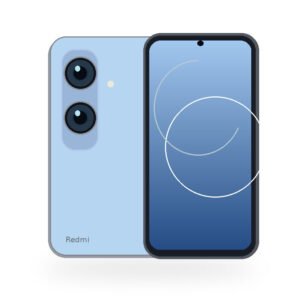
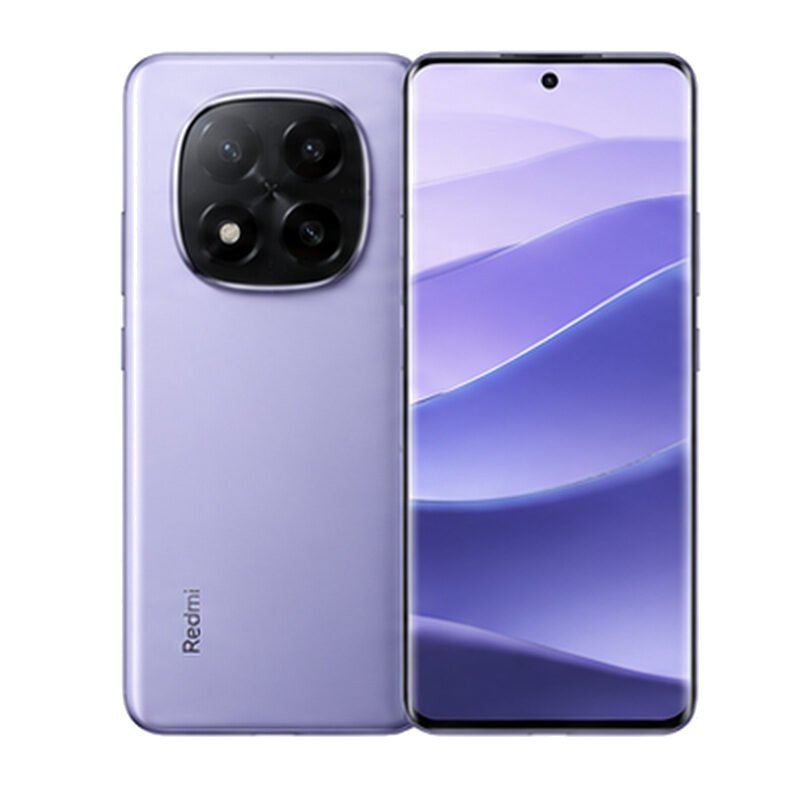
Redmi Note 14 Pro+ 5G Key Features

Redmi Note 14 Pro+ 5G Specifications
General & Launch
- Announcement date
- 10 January 2025 (international launch)
- Markets / regions
- Pakistan
Processor & Software
- Operating system
- Xiaomi HyperOS
- Chipset / SoC
- Qualcomm Snapdragon 7s Gen 3
- Fabrication process (nm)
- 4nm
Performance Benchmarks
660,000
AnTuTu
Version v10
Total scoreAnTuTu
Version v10
Geekbench 6
Version v6
Scores reflect the listed benchmark versions; results from different tests are not directly comparable.
Build & Design
- Dimensions
- 162.5 × 74.7 × 8.8 mm
- Weight
- 205g–210g
- Available colors
- Midnight Black, Frost Blue, Lavender Purple
Display
- Display technology
- AMOLED
- Screen size
- 6.67 inches
- Resolution
- 2712 × 1220 pixels
- Pixel density (ppi)
- 446 ppi
- Refresh rate
- 120Hz
- Brightness (nits)
- 3000 nits (peak)
- Display protection
- Gorilla Glass Victus 2
Network & Frequency
- Network technology
- GSM / HSPA / LTE / 5G NR
- 5G bands
- 5G NR supported
- SIM configuration
- Dual SIM (regional tray options)
Memory & Storage
- RAM
- 8GB | 12GB
- RAM type
- LPDDR4X
- Internal storage
- 256GB | 512GB
- Storage technology
- UFS 2.2
Cameras & Video
- Rear camera setup
- 200MP main camera
- Ultrawide camera
- 8MP ultra-wide camera
- Macro / depth camera
- 2MP macro
- Optical stabilization
- Yes, main camera
- Rear video recording
- 4K at 30fps
- Front camera
- 20MP front camera
Connectivity
- Wi-Fi
- Wi-Fi 6
- Bluetooth
- Bluetooth 5.4
- USB
- USB Type-C
- Infrared port
- IR blaster
Sound & Multimedia
- Speakers
- Built-in loudspeaker
Sensors & Security
- Fingerprint reader
- Under-display fingerprint reader
Durability & Repairability
- IP rating
- IP68
Battery & Charging
- Battery capacity
- 5110mAh (typical)
- Wired charging
- 120W wired
Redmi Note 14 Pro+ 5G is a 5G Android smartphone built around a 6.67-inch AMOLED, a 120Hz refresh rate, the Qualcomm Snapdragon 7s Gen 3 processor and a 5110mAh typical battery. Its headline rear camera is 200MP with optical image stabilisation, while wired charging supports up to 120W. This is the faster-charging member of the Note 14 Pro family. The 120W wired charging system is much more meaningful for a busy commuter than a small difference in theoretical benchmark numbers.
For Pakistan buyers, the useful starting point is the exact connectivity version and storage configuration, not the product family name. Redmi Note 14 Pro+ 5G is 5G capable, although actual 5G access depends on supported service and local rollout. The model label should match the specification on the box and the seller’s invoice.
Price in Pakistan and the variant to choose
A Pakistan price reference lists Redmi Note 14 Pro+ 5G at PKR 144,999. This is a reference price, not a promise that every store or colour is in stock at that amount. The relevant figure at checkout is the total for the exact factory RAM and storage combination, warranty coverage and PTA-compliant unit.
The documented memory range includes 8GB / 12GB of physical RAM and 256GB / 512GB internal storage. Those are device configurations, not guaranteed combinations in every Pakistani shop. Expanded or virtual RAM is not a replacement for physical memory; it reserves storage to help with background processes and does not turn a lower-memory handset into a higher-tier chipset.
Screen, handling and everyday visibility
The 6.67-inch AMOLED has 2712 × 1220 resolution and an up-to-120Hz refresh rate. More pixels can improve text crispness, while the higher refresh option makes scrolling, menus and supported animations smoother. Neither number guarantees that every game will run at the same frame rate. Display brightness modes and power-saving settings can also change the experience outdoors.
Curved display; Gorilla Glass Victus 2. The quoted body weight is 205g–210g; that matters when a phone is used for long reading sessions or held for video calls. A curved screen can feel sleek but complicate protector selection. A larger flat panel can be easier to handle with a case, while narrow bezels make the device look smaller than its screen diagonal suggests.
Chipset, RAM and practical performance
Qualcomm Snapdragon 7s Gen 3 is built on a 4nm process. The hardware is suitable for common tasks such as navigation, banking apps, video playback, messaging and document handling. Heavier gaming workloads depend on graphics settings, thermal management and the particular title; a chipset name alone is not evidence of a fixed FPS result.
Its 5G modem offers network-generation headroom, but buyers in Pakistan should still care about stable 4G coverage, carrier bands and SIM reliability. Keeping apps updated, avoiding a nearly full storage drive and choosing suitable graphic settings can make a greater day-to-day difference than chasing an unverified benchmark. There are no independently established gaming or battery endurance measurements for this article.
The interface is Xiaomi HyperOS. Built-in optimisation options, notification controls and security settings affect how the phone feels after several months. Update eligibility can differ by market and software channel, so it is safer to check the device’s own update page than assume that another regional variant follows the same timetable. Backup important files before a major system upgrade.
Rear cameras, selfies and video limits
The rear system centres on a 200MP main camera with OIS, alongside an 8MP ultra-wide camera and a 2MP macro unit. The front camera is rated at 20MP. Megapixels describe output resolution rather than a guaranteed advantage in low-light photographs or skin tones. Lens quality, exposure, processing and subject movement still matter.
Optical image stabilisation helps the main camera compensate for small hand movements in some shooting situations. It does not guarantee sharp moving subjects or make every video mode equally stabilised. The published rear video ceiling includes 4K at 30fps; higher frame rates or resolution should not be assumed for the front camera or every lens.
An ultra-wide camera is useful for groups, buildings and narrow indoor spaces, although its smaller sensor usually needs more light than the main unit. Macro and depth units are secondary tools, not interchangeable with an optical telephoto zoom. For family photos, pay attention to consistency between lenses and the ease of quickly launching the camera.
Battery capacity, charging and long-term care
The phone has a 5110mAh typical battery and supports 120W wired charging. Capacity is a useful comparison point, but actual runtime changes with brightness, signal strength, video calls, navigation, gaming and refresh settings. A larger battery is not a reliable promise of a particular number of hours. No measured endurance result is claimed here.
At 120W, charging capability is a hardware maximum rather than a constant rate. Charging slows as the battery approaches full, and the result depends on the adapter, cable and temperature. For routine overnight charging, avoid heat-trapping surfaces and unnecessary exposure to high temperatures. Check what charger is actually included with the locally supplied box rather than assuming a global package includes one.
Connectivity, protection and Pakistan-specific checks
The listed wireless features include Wi-Fi 6 and Bluetooth 5.4, alongside GPS navigation and a USB-C connection. SIM and eSIM arrangements can be regional. Verify the actual tray layout before choosing a model for two physical SIMs, expandable storage or eSIM. Do not assume a feature shown on another market’s promotional page is enabled on every imported device.
The advertised dust and water protection is IP68. Such ratings describe defined laboratory conditions; they are not instructions to wash, submerge or charge a wet phone. Seals can deteriorate after repair or impact, and liquid damage may fall outside ordinary warranty terms. Prefer a protective case and a dry charging port in daily use.
For Pakistan, PTA approval or a verified device registration status is a separate purchase check, not something a global specification sheet proves. Compare the IMEI on the box and phone, inspect the local warranty documentation and confirm the relevant network and SIM service before payment. The CSV deliberately does not mark PTA approved without device-specific evidence.
Distinctive strengths and trade-offs
The biggest reason to pay more for the Plus is how quickly it can recover charge between appointments, classes or a commute. That is more tangible than making assumptions about benchmark scores. Its Snapdragon 7s Gen 3 also distinguishes it from the Dimensity-powered regular Pro 5G. Both phones share a similarly sharp 1.5K AMOLED panel and a 200MP OIS main camera, so buyers mainly interested in photos should compare actual processed images rather than treating a higher price as proof of superior output. The 120W charging system also makes charger authenticity especially relevant; an ordinary USB-C adapter may not reproduce the advertised peak capability. The phone is quite substantial in the hand and the curved screen needs a compatible protector. An older Pro+ bought at an inflated asking price can be poor value next to a newer Pro model with a bigger battery.
Where this model fits against the alternatives
The Redmi Note 14 Pro 5G retains a 200MP OIS main camera and similar screen resolution, but uses a Dimensity chipset and 45W charging. Consider that cheaper phone unless charging time and the Snapdragon platform matter.
For someone who mainly reads, calls and watches video, the screen, weight and battery may be more important than the highest listed camera resolution. A mobile gamer should weigh the chipset and cooling reputation; a content creator should inspect stabilisation, front-video limits and lens options. None of these buyer profiles is served by choosing solely from a headline megapixel or charging figure.
Redmi Note 14 Pro+ 5G is worth shortlisting when 5G access, a 120Hz AMOLED display and its specific camera-and-battery balance match your priorities. It is less compelling if you require a capability not established for this version, particularly wireless charging, an optical telephoto lens or guaranteed gaming frame rates. Compare the exact hardware variant and the total ownership cost before deciding.